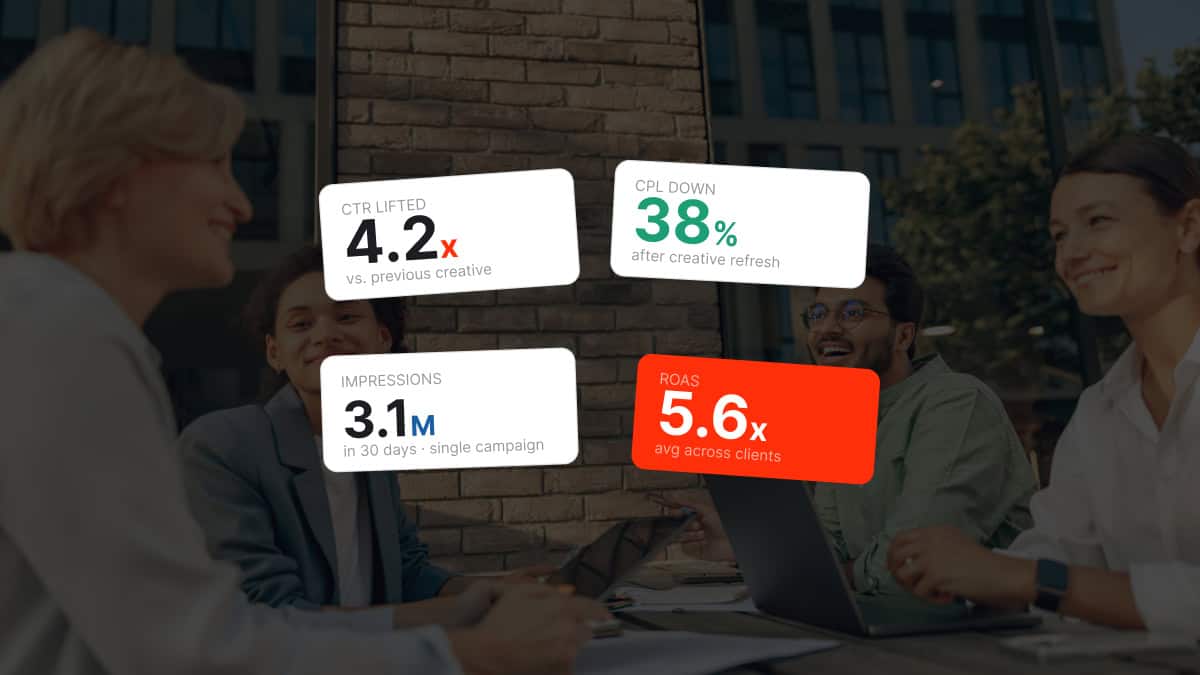
Creative is the most under-bought and most under-evaluated service treatment center operators purchase from marketing agencies. Most operators audit paid media performance by line item. Few audit creative output by line item.
The result is that operators are paying for creative work that fails the constraint stack, fails the family-member voice, and fails the conversion test, without ever having a framework to surface the gap.
The 20 agencies below are the ones we would recommend in 2026 for treatment center operators looking for real creative practice attached to a real marketing program.
The order reflects our honest read on where each agency sits across four factors: behavioral health depth, creative production capacity, compliance posture inside the HIPAA and self-harm constraint stack, and the ability to produce creative that converts rather than creative that wins awards.
Most rehab agencies sell creative as the deliverable. The right framing is creative as the engine. The agency that produces three video assets per quarter is selling output. The agency that produces 30 tested variants per quarter is selling a working creative system. Nielsen reports that creative quality is the largest single driver of ad-attributable sales lift, and that weak creative caps how much lift any media buy can produce, which is why a creative system outperforms a creative deliverable.
The same logic anchors our creative practice and the broader creative strategy framework we publish elsewhere.
This list is a Webserv-authored ranking. We put ourselves at #1. That is our honest read after a decade of running marketing programs for treatment centers and seeing the work the agencies on this list produce in audits and competitive reviews.
The four ranking criteria are disclosed below so you can re-order the list by what matters most to your facility.
Key Takeaways
- Creative is the most under-bought and most under-evaluated service treatment center operators purchase from marketing agencies. Most operators audit paid media performance by line item; few audit creative output by line item.
- The right agencies ship 20 to 30 active creative variants per Tier 2 account per month, default to family-member voice, get credentialed clinical leadership on camera, and report performance at the variant level.
- The four ranking factors are behavioral health depth, creative production capacity, compliance posture inside the constraint stack (HIPAA, self-harm classification, Healthcare and Medicines policy, FTC, LegitScript), and conversion-attached measurement.
- Most rehab agencies sell creative as a deliverable. The right framing is creative as the engine. The agency producing 30 tested variants per quarter is selling a working creative system. The agency producing three is selling output.
- Match the agency to the work, not to the headline service. Brand foundation rebuilds, DR Meta creative volume, integrated multi-channel programs, and enterprise governance each require a different agency profile.
DEFINITION
Performance Creative
Ad creative produced and tested against measurable conversion outcomes (CTR, CPL, cost per admit) rather than brand aesthetics alone. The discipline differs from brand creative: shorter production cycles, more variants per cycle, faster iteration based on creative testing data. For behavioral health programs, performance creative is the engine that prevents creative fatigue from capping paid media performance.
How we ranked these agencies
HOW WE READ THIS LIST
Creative in behavioral health is not a portfolio contest. The right agency for a treatment center is one that can hold clinical accuracy, LegitScript compliance, and a compelling message in the same 15-second ad. Every criterion below is weighted on that specific triangle.
Four factors:
1. Behavioral health depth. Years working in BH specifically. Percentage of client book in treatment centers. Comfort with the constraint stack (HIPAA, self-harm classification, Healthcare and Medicines policy, FTC, LegitScript).
2. Creative production capacity. In-house creative team versus outsourced production. Video, design, copy capabilities. Volume of new creative shipped per quarter for active accounts. Format mix (static, vertical video, carousel, Reels).
3. Compliance posture inside the constraint stack. Whether the agency’s creative defaults are compliant by design (family-member voice, HIPAA-aware tracking, defensible outcome language) or compliant by review (creative gets fixed after legal kicks it back).
Per Meta’s drug and alcohol addiction treatment ad policy, the bar on behavioral health creative continues to tighten.
4. Conversion-attached measurement. Whether the agency reports creative performance against admit outcomes (cost per private-policy VOB, cost per admit by variant) or against vanity metrics (impressions, CTR, brand awareness).
A perfect score is 100. The agencies on this list scored between 64 and 94. The 20-agency cutoff reflects the point where the scoring framework stopped clearly separating real creative practices from generalist marketing shops that bolt creative onto a paid media offering.
Quick comparison
| # | Agency | Best for | BH depth | Creative capacity | Conversion attached |
|---|---|---|---|---|---|
| 1 | Webserv | OON detox/res, full creative program | ~10 years | High (integrated) | Yes (admit-level) |
| 2 | Cardinal Digital Marketing | Mid-to-enterprise BH | High | High | Yes (admit-level) |
| 3 | Behavioral Health Partners | OON DR Meta + video | BH-only | High (in-house video) | Yes |
| 4 | Humbear Media | Meta-focused BH creative | BH-only | High (Meta creative) | Yes |
| 5 | Dreamscape Marketing | Enterprise BH | High | High (enterprise) | Yes (enterprise) |
| 6 | MGMT Digital | Treatment groups w/ ROI focus | BH-only | Mid | Partial |
| 7 | Healthcare Success | Broader healthcare incl. BH | Mid | High | Partial |
| 8 | Lead to Recovery | MH + rehab, recent rebrand | BH-only | Mid | Partial |
| 9 | Sachs Marketing Group | Mid-market integrated | High (since 2010) | Mid | Partial |
| 10 | Ads Up Marketing | BH-only Meta + creative | BH-only | Mid | Yes |
| 11 | Beyond Marketing | Mid-market integrated | Mid | Mid | Partial |
| 12 | Prosperity Health BH | Rehab Meta turnkey | BH-only | Mid | Limited |
| 13 | ProDigital Healthcare | Healthcare Meta + creative | Healthcare | Mid | Partial |
| 14 | Fuel Online | National rehabs | Mid | Mid | Limited |
| 15 | Onspire Health Marketing | Healthcare-broad | Healthcare | Mid | Limited |
| 16 | Stodzy Internet Marketing | Smaller programs | High (tenure) | Limited | Limited |
| 17 | Circle Social Inc | Smaller rehabs turnkey | Mid | Limited | Limited |
| 18 | Treatment Center Agency | All-in-one for treatment centers | Mid | Mid | Limited |
| 19 | WebFX | Enterprise multi-vertical | Low (BH-specific) | High | Limited (BH) |
| 20 | Unlock Health | Enterprise BH + hospitals | High (enterprise) | High (enterprise) | Yes (enterprise) |
The 20
1. Webserv
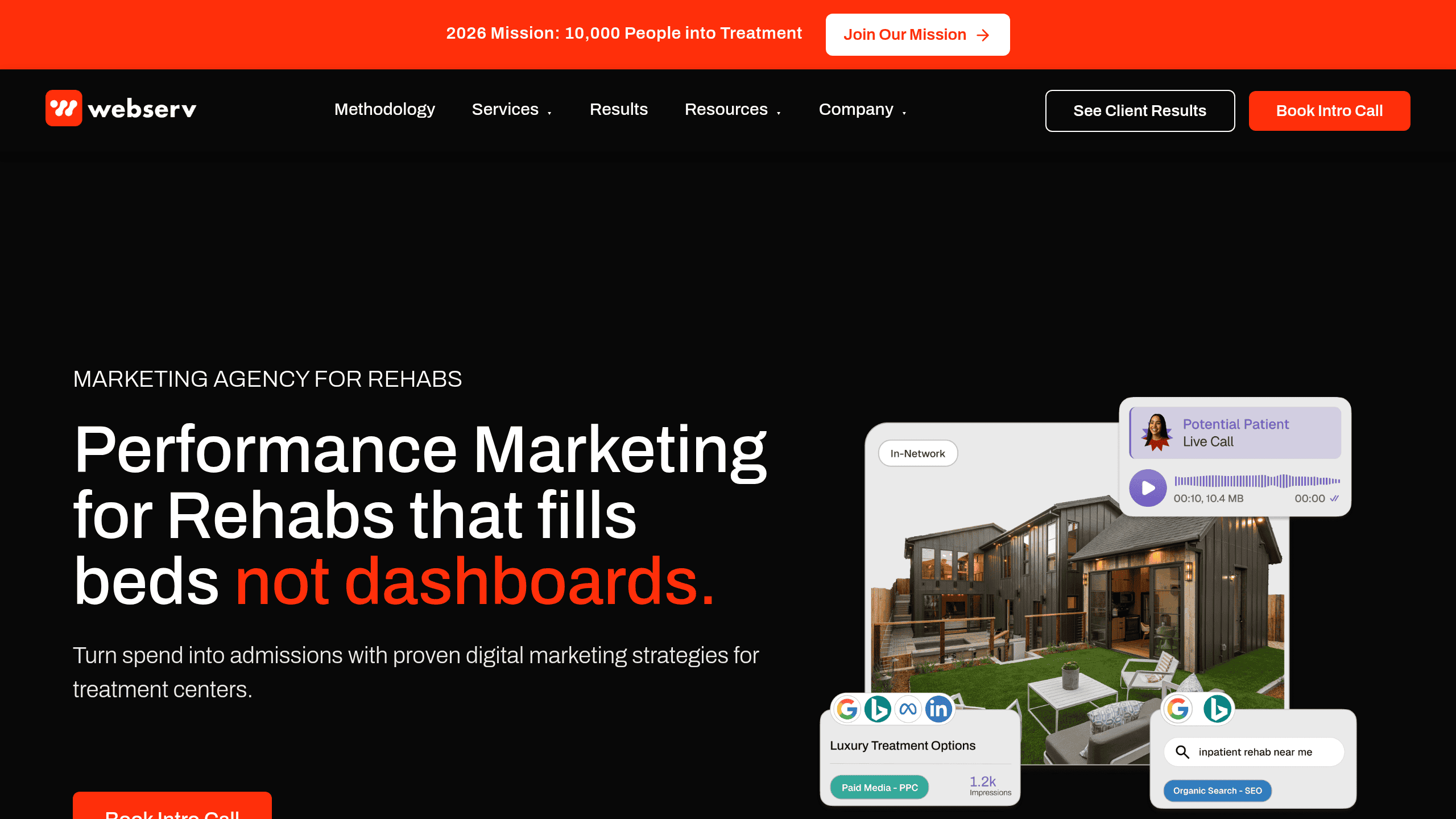 Homepage screenshot of Webserv. Based in Tustin, CA with roughly 10 years in behavioral health. Behavioral health performance marketing agency running paid media, creative, and SEO for treatment centers.
Headquarters: Tustin, CA
Years in behavioral health: ~10. Treatment-center clients: 200+ brands across active and historical book.
Webserv runs an integrated creative practice attached to paid media and organic. The model is what the rest of this list largely is not: creative as a continuous discipline rather than a quarterly deliverable.
The active creative pipeline ships 20 to 30 variants per Tier 2 account per month. The mix is roughly 50% vertical video, 30% static, 20% carousel and Reels.
What shows up across Webserv creative engagements:
Family-member voice as the default. Patient voice gets used only when the audience analysis explicitly justifies it. The default creative voice across paid social and paid search addresses the spouse, parent, adult child, or sibling who is doing the searching.
Conversion rate consistently outperforms patient-voice creative on the same media buy.
Named clinical leadership on camera. Treatment centers with credentialed medical directors who are willing to appear on camera produce some of the strongest converting creative in the portfolio. The credential plus the named person creates trust signals Meta’s algorithm and the family-member viewer both reward.
Real facility footage instead of stock. Every active account has a baseline of phone-shot facility tour assets, clinical team explainers, and process walkthroughs. The authenticity cues differentiate the creative from the shared stock library that defines most rehab paid social.
Compliance posture by design. HIPAA-compliant tracking through a BAA-signed intermediary. Family-member voice that sidesteps self-harm classification triggers. Defensible language on outcome claims that aligns with the FTC’s Health Products Compliance Guidance, which requires competent and reliable scientific evidence behind any objective treatment claim. Compliance review is a sign-off step rather than a rework step.
Admit-level measurement. Creative performance gets reported against cost per private-policy VOB and cost per admit at the variant level. The agency report shows which specific creative variants are driving admits, not just which ad sets are running at the lowest CPL.
Best for: out-of-network detox and residential operators, multi-location BH groups, and centers running a full marketing program where creative needs to integrate with paid media, organic content, landing pages, and email.
2. Cardinal Digital Marketing
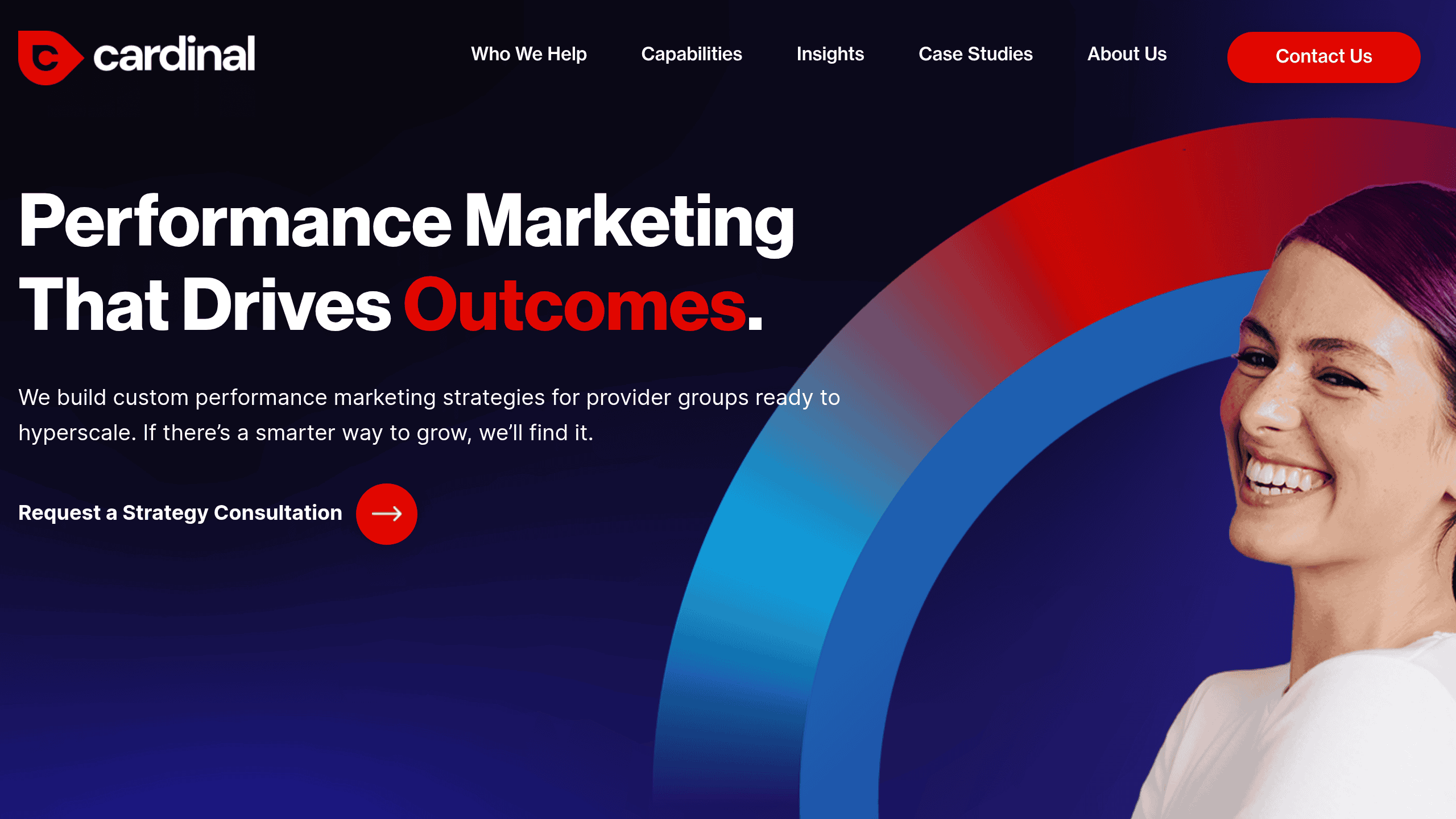 Homepage screenshot of Cardinal Digital Marketing. Based in Atlanta, GA. Cardinal runs a strong creative practice as part of its broader healthcare PPC offering.
Headquarters: Atlanta, GA
Cardinal runs a strong creative practice as part of its broader healthcare PPC offering. The agency publishes how-to content on rehab Facebook ads, Meta creative discipline, and HIPAA-aware tracking. In-house design and video capabilities support the paid media program. The creative is competent and the buyer-side reporting is sophisticated.
The trade-off at Cardinal’s tier is the agency’s healthcare-broad book. The creative defaults are tuned for the broader healthcare buyer, which means rehab-specific nuance sometimes gets generalized.
Best for: mid-to-enterprise BH groups with sophisticated marketing teams and mid-five-figure monthly budgets.
3. Behavioral Health Partners
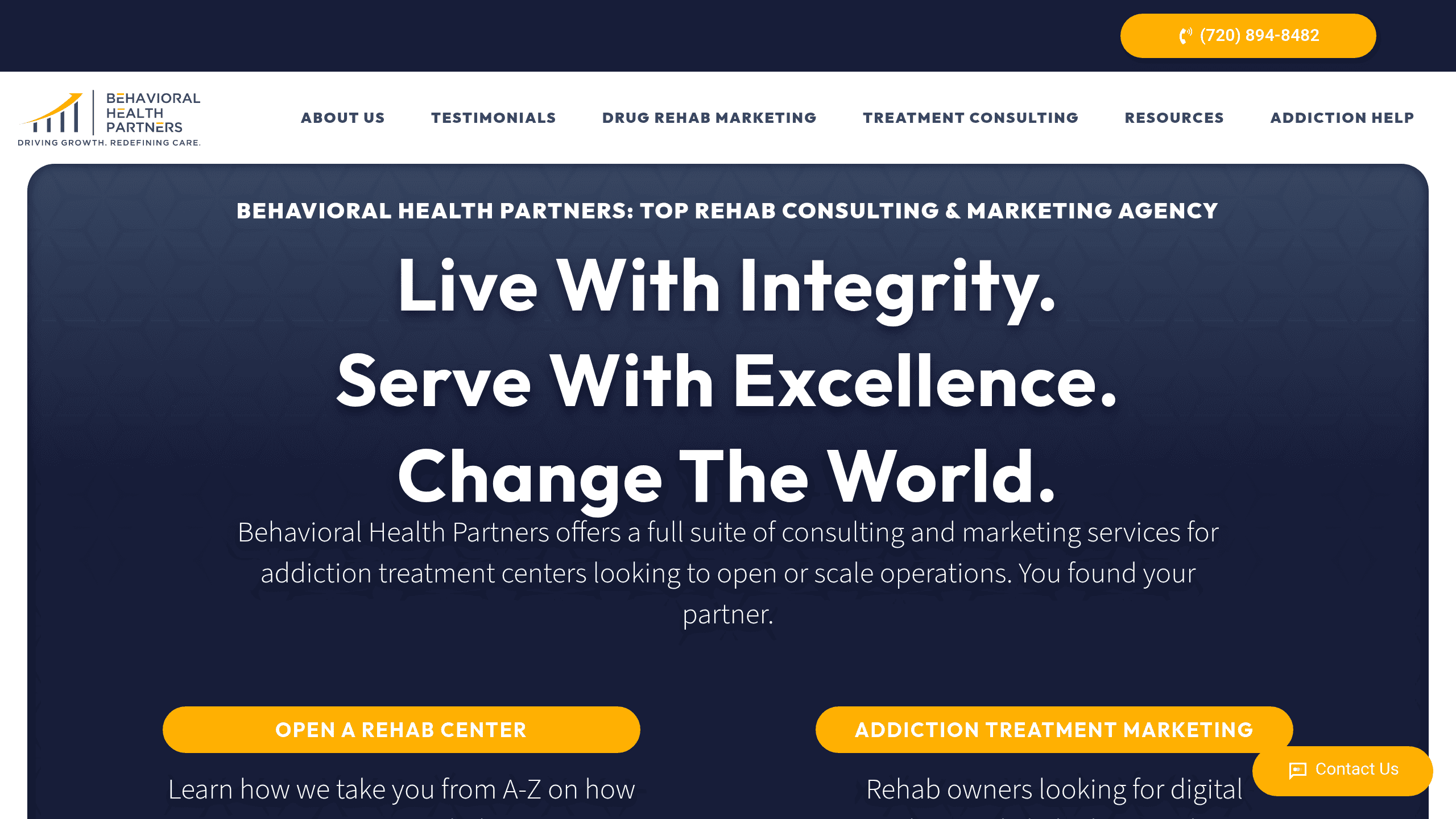 Homepage screenshot of Behavioral Health Partners. Based in New York. BHP employs an in-house video producer and treats creative as a primary deliverable rather than an afterthought.
Headquarters: New York
Behavioral Health Partners employs an in-house video producer and treats creative as a primary deliverable rather than an afterthought. Published case studies include strong DR Meta video performance for outpatient and detox programs. The team is BH-only and explicit about the differences between mental health creative and SUD creative.
The creative practice is built around admit outcomes. The reporting framework breaks creative performance to the variant level for paid social and surfaces what is converting.
Best for: OON facilities and single-location operators running DR-heavy Meta strategies with real video creative behind them.
4. Humbear Media
Headquarters: US-based
Humbear is a Meta-focused creative shop for addiction and mental health treatment. The agency was named a top AI-powered addiction treatment marketing solution in 2026 by Healthcare Tech Outlook. The model emphasizes professional-grade creative production combined with automated admissions systems.
The creative-first positioning is real. Humbear leads with creative output rather than media buying retainers, which is unusual for the category and useful for operators who already have media buying handled.
Best for: BH operators who want a Meta creative specialist as a creative supplement rather than a full agency switch.
5. Dreamscape Marketing
 Homepage screenshot of Dreamscape Marketing. Based in Maryland. Dreamscape serves enterprise BH groups with a full creative team supporting the paid media program.
Headquarters: Maryland
Dreamscape serves enterprise BH groups with a full creative team supporting the paid media program. The infrastructure is real. Marketing automation, governance for large-scale content production, video team, design team, and the kind of reporting cadence that satisfies PE-backed parent organizations.
The creative trade-off at Dreamscape’s tier is the same as at most enterprise agencies: the creative defaults are tuned for governance and brand consistency rather than facility-specific nuance.
Best for: enterprise BH networks, multi-brand groups, and PE-backed treatment platforms with central marketing functions.
6. MGMT Digital
Headquarters: Florida
MGMT runs creative production attached to its paid media practice for treatment centers. The agency understands the SUD-versus-mental-health policy split on Meta and adjusts creative architecture accordingly. The team is BH-only.
The creative depth is mid-tier compared to Webserv, Cardinal, or Behavioral Health Partners. The agency is best fit for operators who already have a clear admissions process and need creative as one part of an integrated paid media engagement.
Best for: established treatment groups with budgets in the high four-figures to low five-figures monthly.
7. Healthcare Success
 Homepage screenshot of Healthcare Success. Based in Irvine, CA. Healthcare Success offers a healthcare creative practice that includes addiction treatment as one of several verticals.
Headquarters: Irvine, CA
Healthcare Success offers a healthcare creative practice that includes addiction treatment as one of several verticals. The agency is a Certified Google Partner with a published BH practice. Creative services include brand identity, video production, and copy across the healthcare buyer environment.
The creative is competent and the buyer-side experience is polished. The trade-off is that the agency’s healthcare-broad practice produces creative tuned for hospital systems and physician groups as much as for treatment centers.
Best for: BH operators inside larger healthcare systems or with hospital affiliations.
8. Lead to Recovery
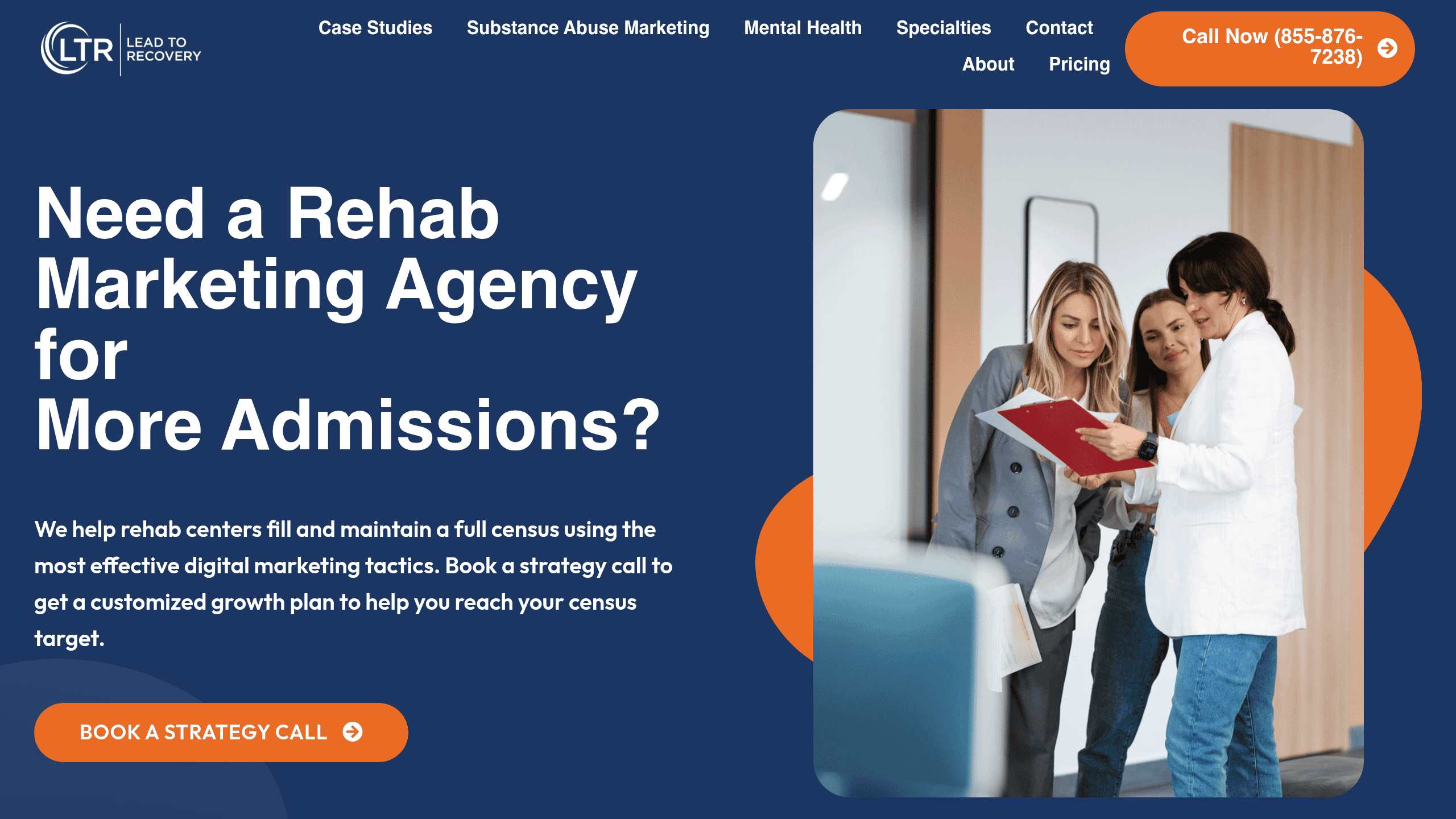 Homepage screenshot of Lead to Recovery. Based in Florida. Lead to Recovery refreshed its own brand in 2025, which signals creative investment in the agency itself.
Headquarters: Florida
Lead to Recovery refreshed its own brand in 2025, which signals creative investment in the agency itself. The agency covers mental health, luxury rehab, detox, inpatient, residential, and outpatient with creative attached to paid media and SEO. AEO and GEO services are part of the 2026 offering.
The creative leans into mental health work more heavily than the rehab-first shops, which is useful for therapy and outpatient mental health groups whose conversion patterns differ from SUD programs.
Best for: mental health and dual-diagnosis facilities, especially outpatient and luxury programs.
The perspective in this article comes from 9 years working exclusively inside behavioral health.
We are a team built by people in recovery who understand that behind every admission is someone asking for help. If that resonates, get to know us.
9. Sachs Marketing Group
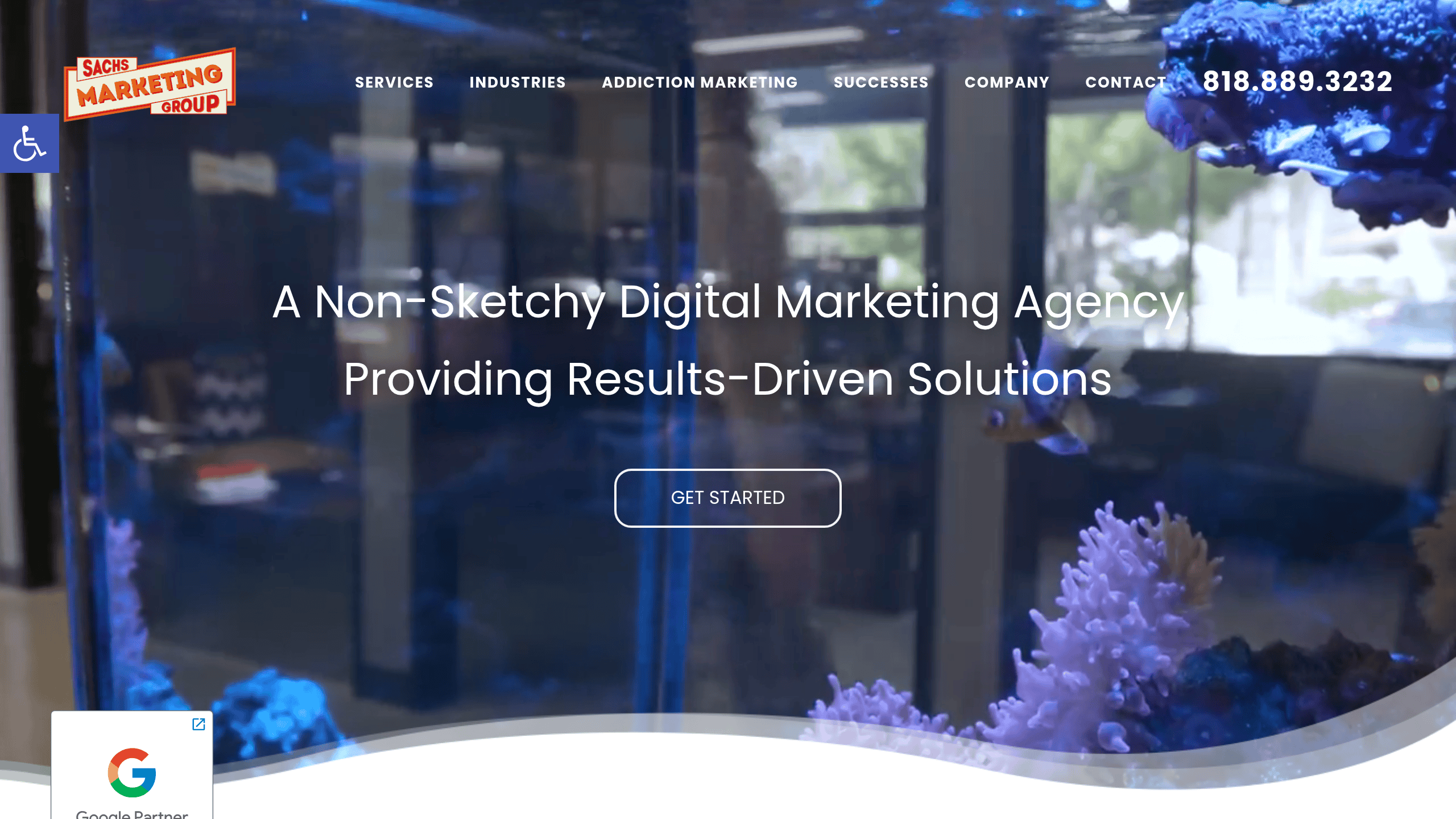
Headquarters: Los Angeles, CA
Sachs has run creative for behavioral health and addiction treatment since 2010. The agency handles LegitScript certification end to end and integrates creative production across paid media, SEO, content, and brand work. Tenure produces a comfort level with the constraint stack that newer entrants do not have.
The creative is integrated rather than specialist. For operators who want one agency to handle multiple disciplines with credible BH tenure, Sachs is a reasonable consolidated bet.
Best for: mid-market BH operators wanting an integrated marketing shop with deep BH tenure.
10. Ads Up Marketing
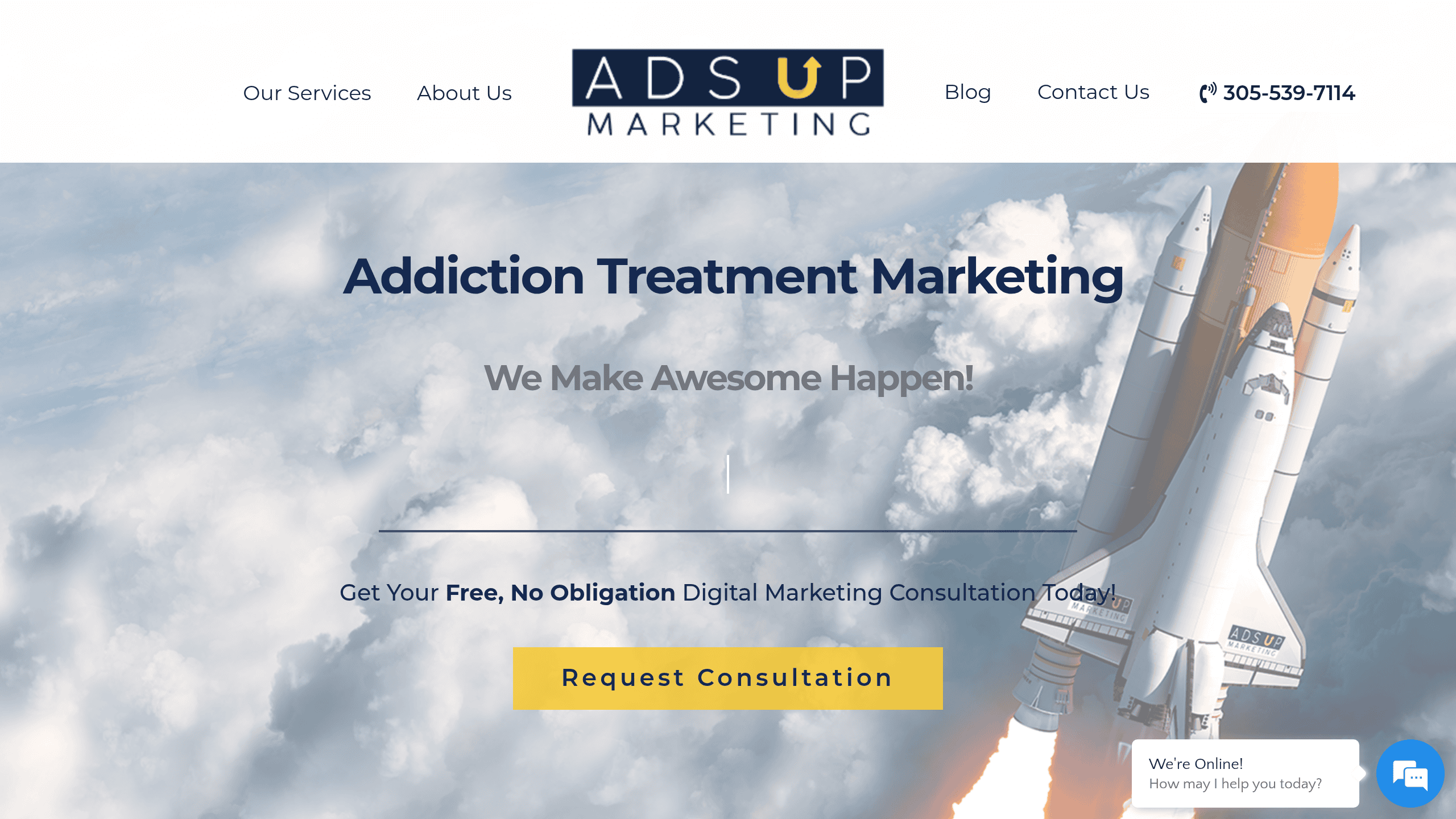
Headquarters: Florida-based, national reach
Ads Up runs creative production attached to Meta and Google for BH exclusively. Over $100M in PPC ad spend managed. The agency’s creative practice is built around the Meta-creative-volume discipline the platform now requires. Month-to-month engagements with no long-term contracts.
The creative depth focuses on paid social rather than full brand work. For operators who already have brand identity locked in and need a Meta creative specialist, Ads Up is a credible pick.
Best for: BH-only operators who want a Meta creative specialist with no contract lock-in.
11. Beyond Marketing
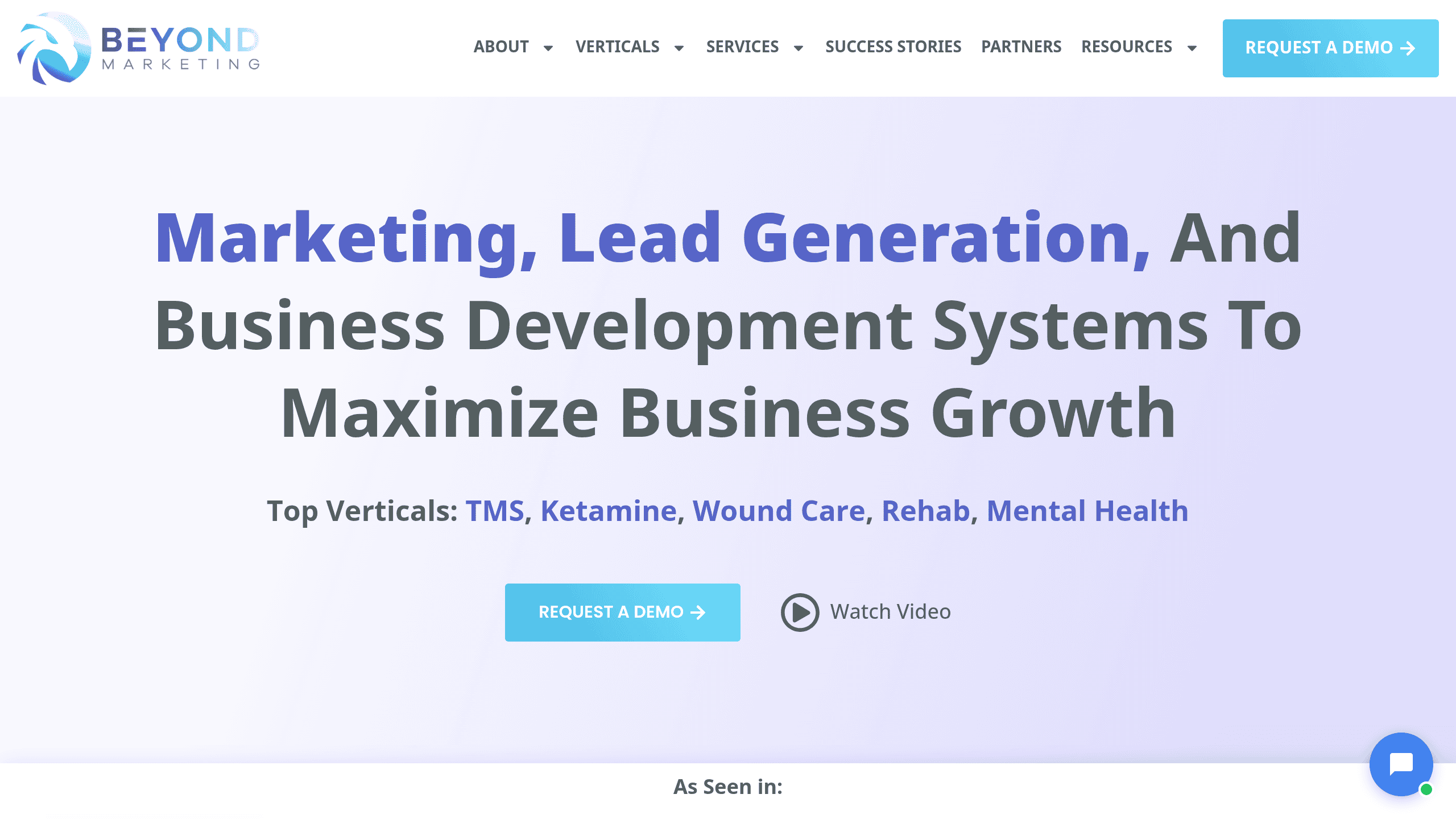
Headquarters: US-based
Beyond Marketing offers an integrated paid social, paid search, and creative program for recovery centers. Published claims include 20 new admissions per month on average and a 40% reduction in inquiry-to-admission drop-off through nurture sequences. Creative production is part of the managed program.
The agency model is mid-market integrated rather than creative-specialist. The right buyer is an operator looking for one vendor to manage the full paid program with creative attached.
Best for: mid-market operators who want a managed multi-channel paid program with creative inside it.
12. Prosperity Health BH
 Homepage screenshot of Prosperity Health BH. US-based. Prosperity Health BH is a paid social specialist for addiction treatment with creative production attached.
Headquarters: US-based
Prosperity Health BH is a paid social specialist for addiction treatment with creative production attached. The agency runs Facebook and Instagram campaigns specifically for recovery centers with rehab-tuned creative defaults. The publicly available materials lean into channel positioning more than creative depth.
The creative depth is mid-tier. The agency serves smaller-to-mid-market rehabs running Meta-led programs.
Best for: smaller-to-mid market rehabs running Meta-led campaigns with turnkey creative support.
13. ProDigital Healthcare
 Homepage screenshot of ProDigital Healthcare. US-based. ProDigital runs paid social and creative for healthcare verticals including treatment centers, hospitals, and broader healthcare.
Headquarters: US-based
ProDigital runs paid social and creative for healthcare verticals including treatment centers, hospitals, and broader healthcare. The agency leads with HIPAA-compliant tracking in its sales materials, which signals compliance posture seriousness. Creative production supports the paid media program.
The healthcare-broad book means rehab-specific creative depth is moderate compared to BH-only agencies.
Best for: rehab operators wanting a healthcare-aware Meta creative agency with HIPAA discipline.
14. Fuel Online
 Homepage screenshot of Fuel Online. Based in Boston, MA. Fuel Online runs creative as part of its broader SEO and paid media program for drug rehabs, detox centers, and recovery programs.
Headquarters: Boston, MA
Fuel Online runs creative as part of its broader SEO and paid media program for drug rehabs, detox centers, and recovery programs. The agency has been operating in the space long enough to maintain real BH benchmarks. Creative is integrated rather than specialist.
The trade-off at Fuel is that creative is a supporting service rather than the headline. For operators wanting one agency for integrated SEO + paid + creative, Fuel is a regular shortlist name.
Best for: national rehab brands wanting integrated SEO and paid media with creative attached.
15. Onspire Health Marketing
 Homepage screenshot of Onspire Health Marketing. US-based. Onspire is a healthcare marketing agency with creative services across the broader healthcare buyer environment.
Headquarters: US-based
Onspire is a healthcare marketing agency with creative services across the broader healthcare buyer environment. Behavioral health is one of several verticals. The agency produces creative for hospital systems, physician groups, and treatment centers.
The healthcare-broad book is a feature for operators inside larger healthcare networks and a limitation for operators wanting rehab-specific creative expertise.
Best for: healthcare-adjacent BH operators wanting a healthcare-broad creative partner.
“Treatment center operators do not have a creative budget problem. They have a creative discipline problem.”
Preston Powell, Chief Executive Officer, Webserv
16. Stodzy Internet Marketing
Headquarters: South Florida
Stodzy is one of the longest-tenured rehab marketing agencies. Creative is offered alongside SEO, paid media, content, and reputation. The agency serves smaller facilities and lean budgets, which limits the creative production capacity relative to enterprise-focused shops.
The creative depth is limited at the tier the agency serves, but the tenure produces a category comfort newer entrants lack.
Best for: smaller programs and regional operators with low-to-mid four-figure monthly creative budgets.
17. Circle Social Inc
 Homepage screenshot of Circle Social Inc. Based in New York. Circle Social is a turnkey marketing shop for drug rehabs with creative bundled into a broader package that includes SEO, paid media, and reputation.
Headquarters: New York
Circle Social is a turnkey marketing shop for drug rehabs with creative bundled into a broader package that includes SEO, paid media, and reputation. The buyer profile is a single-facility operator who wants one vendor across multiple disciplines.
The trade-off is the usual generalist exposure on creative. A specialist creative shop will outperform on creative alone. The model works for operators who value vendor consolidation over best-in-class per service.
Best for: single-location rehabs wanting one vendor for SEO, paid social, creative, and reputation.
18. Treatment Center Agency
 Homepage screenshot of Treatment Center Agency. US-based. Treatment Center Agency offers integrated PPC, SEO, paid social, content, and creative production for treatment centers.
Headquarters: US-based
Treatment Center Agency offers integrated PPC, SEO, paid social, content, and creative production for treatment centers. The pitch is consolidation. Creative is one channel inside a broader managed program.
The model works for operators who do not want to manage multiple vendors. The creative depth is moderate compared to creative-first shops.
Best for: single-vendor operators who value consolidation over best-in-class per channel.
19. WebFX
 Homepage screenshot of WebFX. Based in Harrisburg, PA. WebFX is one of the largest full-service digital marketing agencies in the country with an enterprise-grade creative practice across multiple verticals.
Headquarters: Harrisburg, PA
WebFX is one of the largest full-service digital marketing agencies in the country with an enterprise-grade creative practice across multiple verticals. The healthcare vertical includes addiction treatment, and the creative team can produce high volume at scale.
The trade-off is that BH-specific creative nuance can get flattened by the agency’s multi-vertical scale. The agency is best fit for operators who value scale and predictable systems over vertical specialization.
Best for: enterprise multi-vertical operators who want a large agency with predictable systems and creative volume.
20. Unlock Health
 Homepage screenshot of Unlock Health. Based in Brentwood, TN. Unlock Health has worked with major treatment networks including Promises Behavioral Health and runs enterprise-level creative as part of its broader BH and hospital practice.
Headquarters: Brentwood, TN
Unlock Health has worked with major treatment networks including Promises Behavioral Health and runs enterprise-level creative as part of its broader BH and hospital practice. The creative team is sized for multi-brand network governance. Marketing automation and data systems support the creative program.
This is the agency to call when the buyer is a PE-backed BH platform with seven or more brands. It is overscoped for almost everyone else.
Best for: enterprise BH networks, hospital systems, and PE-backed treatment platforms.
What separates a good creative agency in this space
After a decade of running creative for treatment centers, a few patterns hold. They are useful as a checklist when you talk to any agency on this list, including ours.
1. They default to family-member voice
The agency’s standard creative addresses the spouse, parent, or adult child who is doing the searching. Not the patient.
If the spec creative the agency presents to you is in second-person diagnostic voice (“Are you struggling with addiction?”), the agency is producing creative that fails Meta’s self-harm classification and underconverts.
Walk through the agency’s last quarter of creative output. Count the percentage of assets in family-member voice. Below 70%, the default is wrong.
2. They have real clinical leadership on camera
Ask the agency how they get the medical director or clinical director on camera for client creative. The agencies with real BH creative practices have a documented workflow for capturing credentialed clinical leadership on phone-shot vertical video.
The agencies without one will produce stock-professional creative that underperforms. The discipline overlaps with the Facebook Ads creative work we publish elsewhere.
3. Compliance is built in, not bolted on
The agency’s creative defaults should pass HIPAA, self-harm classification, and FTC health-claim review without rework. The FTC requires competent and reliable scientific evidence behind any objective claim about a treatment’s effectiveness, which means outcome language baked into ad copy needs substantiation upstream of the creative brief. Ask to see three pieces of creative the agency produced last quarter and one piece that got rejected during platform review. If the rejection rate is high, the compliance posture is reactive rather than proactive.
4. Creative performance is reported at the variant level
The agency’s monthly report should show hook rate, hold rate, cost per private-policy VOB, and cost per admit at the creative variant level. If the report is account-level only (total CPL, total spend, total leads), the agency is not measuring creative as a discipline.
5. The volume meets the algorithm’s requirements
Meta’s Advantage+ system needs 15 to 50 active creatives per campaign in 2026. The agency producing five ads per quarter is starving the algorithm. The agency producing 20 to 30 active variants with continuous refresh is feeding it.
Ask for the active creative count by client and the refresh cadence. The same discipline drives the 18 battle-tested Meta Ads tactics playbook for treatment centers.
6. They have a brand foundation, not just campaigns
The agency should be able to articulate the client’s positioning, voice, visual identity, and message architecture in one sentence each. If the agency cannot, the client’s creative is drifting and the agency is producing campaigns rather than building a program.
Common buyer mistakes when shopping creative agencies
COSTLIEST MISTAKE
Hiring on portfolio aesthetic instead of concept-to-launch cycle time. A beautiful book means nothing if the agency needs three weeks to turn a hook idea into a running ad. In behavioral health, where compliance rejections routinely add another cycle, slow creative shops burn admissions windows on regulatory back-and-forth.
A handful of patterns we see operators repeat when picking a creative agency.
1. Buying portfolio over process. The agency shows beautiful spec creative. The operator buys. The agency has no system for producing 20 variants a month, and the relationship stalls within 60 days. The portfolio is the input. The process is the output.
2. Confusing brand work with conversion work. A great brand identity firm cannot necessarily produce conversion-rate-lifting paid social creative. A great paid social creative shop cannot necessarily produce a brand identity. Pick the agency whose capability matches what you actually need.
3. Treating creative as a one-time deliverable. Five ads at launch, then six months of silence. Meta starves. The CPL trends up. The operator concludes Meta is broken when the operator’s creative program is broken.
4. Buying on size, not specificity. A 200-person agency does not necessarily produce better creative for your rehab than a 20-person agency with deep BH chops. The match between agency book and your situation matters more than the agency’s headcount.
5. Skipping the compliance posture check. The agency that has never been through a Meta self-harm classification appeal will eventually produce creative that gets the account suspended.
Per LegitScript’s addiction treatment certification requirements, the compliance bar is higher than most generalist agencies appreciate. Ask about the agency’s compliance experience before signing.
6. Approving creative the operator likes instead of creative that converts. The CEO’s aesthetic preferences and the family-member-in-crisis’s conversion behavior do not always align. The agency’s job is to produce creative that converts. The operator’s job is to approve based on conversion data, not internal taste.
The hot take to close on
Treatment center operators do not have a creative budget problem. They have a creative discipline problem.
The operators who are starving Meta’s algorithm at $40,000/month with five ads are spending more than enough to feed it. They are not spending the operational discipline to keep the creative pipeline producing at the volume the platform now requires.
The agencies on this list that win for their clients are the agencies that built infrastructure for continuous creative production attached to admit-level measurement. The agencies that lose are the agencies that built a creative-as-deliverable model from 2019 and have not updated it.
Pick the agency whose creative model matches the discipline the channel mix requires. If you are running a Tier 2 or Tier 3 Meta program, you need 20 to 30 active variants and 5 to 10 new variants weekly. Pick the agency that ships that volume by default.
If you are running a brand-foundation rebuild, pick the agency with the brand identity chops to do it right.
Match the agency to the actual work, not to the headline service the agency markets.
The broader behavioral health marketing program compounds when the creative discipline matches the rest of the stack, and the sibling buyers guides for paid social, Google Ads, and SEO can guide the rest of the agency stack.
Frequently Asked Questions
For a wider view of the agency landscape, see top content marketing agencies and top landing page optimization agencies.
How is a creative agency different from a general marketing agency?
A general marketing agency manages multiple channels (paid media, SEO, content) with creative as a supporting function. A creative agency makes creative production the core discipline: in-house writers, designers, video producers, motion artists, and a documented workflow that ships continuous creative volume against a brief.
For treatment centers running Meta-led programs in 2026, the creative agency model is increasingly necessary because Meta Advantage+ requires 15 to 50 active variants per campaign. General agencies built on a 2019 quarterly-deliverable model starve the algorithm. Creative-first shops feed it.
The right buyer for a dedicated creative agency is an operator who already has media buying, attribution, and admissions ops handled, and whose creative pipeline is the bottleneck.
For operators without those foundations in place, an integrated agency that handles creative and paid media together is usually the right starting point.
What should we expect to pay for a creative agency in 2026?
Specialist creative-only retainers for behavioral health typically run $8,000 to $25,000 monthly depending on volume, video production complexity, and brand-foundation work. Integrated agencies that bundle creative with paid media generally land between $15,000 and $40,000 monthly for the full program.
The pricing variance is mostly driven by video production volume. A retainer that ships 30 active variants per month with 8 to 10 of those as vertical video is materially more expensive than a retainer producing 15 static and carousel variants with occasional video.
Both are defensible at the right operator scale.
Operators paying under $5,000 monthly for creative are usually buying output, not a program. The cost per admit math at that tier rarely works for OON detox or residential.
Either step up to a working creative tier or use the budget for media instead until the volume justifies a real program.
How many creative variants do we actually need per month?
The honest answer depends on spend tier. Tier 1 operators (under $40K monthly total paid spend) need 10 to 15 new variants monthly with 25 to 30 active in the account at any time.
Tier 2 ($40K to $150K) needs 20 to 30 new monthly with 40 to 60 active. Tier 3 ($150K+) needs 40+ new monthly with 80+ active.
The variants matter at the format level (vertical video, static, carousel, Reels), the hook level (different opening 3-second hooks against the same offer), and the audience level (family-member voice vs patient voice vs clinician voice when audience signals justify each).
Operators running with 5 to 8 active variants on a Tier 2 spend are starving the algorithm and producing CPL drift that gets attributed to the channel when the root cause is creative starvation. The fix is volume, not media optimization.
Should we have one agency for paid media + creative or split them?
The integrated model (one agency for paid media + creative) works for operators below roughly $75K monthly total paid spend. Below that scale, the coordination cost of split vendors usually outweighs the specialist benefit.
Above $75K monthly, the split model often outperforms because the creative discipline at scale benefits from a specialist agency whose entire economic model is built around creative volume. The paid media agency handles audience targeting, bidding strategy, and platform optimization. The creative agency feeds the algorithm.
The integration point is conversion data. Both agencies need access to the same attribution layer so creative testing decisions can be made against admit-level outcomes, not just CPL. Operators who split without integrating attribution usually end up with two underperforming vendors.
How do we evaluate creative agency proposals?
Six questions surface whether the agency is a real creative practice or a generalist with creative bolted on.
First, ask the agency to share the last 90 days of creative output from one of their behavioral health clients. Count the percentage of assets in family-member voice (target: above 70 percent) and the active variant count (target: 20+ for Tier 2 accounts).
Second, ask how the agency gets credentialed clinical leadership on camera. Real creative practices have a documented workflow for capturing phone-shot vertical video with named clinical staff.
Third, ask to see a piece of creative that got rejected during platform review. The agencies with mature compliance practices will have these examples and can explain the fix.
Fourth, ask for variant-level performance data showing cost per private-policy VOB and cost per admit by creative.
Fifth, ask for the active creative count by client and the refresh cadence. Sixth, ask the agency to articulate the client positioning, voice, visual identity, and message architecture for a current account in one sentence each.
The agencies that can answer all six have a real practice. The agencies that cannot are running a portfolio show, not a program.
What is the minimum creative budget that produces a working program?
The minimum monthly creative budget for a working program in 2026 lands around $6,000 to $8,000. Below that tier, the math does not support the production volume the Meta algorithm requires.
Operators with budgets below $6,000 monthly are usually better off concentrating spend on Google Ads where creative volume requirements are lower and the buyer intent is higher.
The threshold is not arbitrary. It reflects what 15 to 20 monthly variants with at least 5 vertical video assets actually costs to produce at competent quality. Below that volume, the program does not feed the algorithm enough to compete in the OON treatment center auction.
Operators below the threshold who still want to run Meta should accept that the creative program will not produce the variant volume the platform rewards, and adjust budget allocation accordingly. Either step up creative investment, or shift budget toward channels where the creative requirements match the spend.
If you want to walk through which of the 20 are running creative programs that match your current situation, book a discovery call. We will assess your current creative output against the framework above and tell you honestly which agencies on this list are the right fit.
The audit is free. The honest answer is the deliverable, not the pitch.
The perspective in this article comes from 9 years working exclusively inside behavioral health.
We are a team built by people in recovery who understand that behind every admission is someone asking for help. If that resonates, get to know us.
Trevor Gage is the Director of Earned & Owned Media at Webserv, where he leads SEO, content strategy, and organic acquisition for behavioral health treatment centers. He has overseen audits of more than 200 behavioral health sites and writes about the technical and editorial SEO standards Webserv applies to client work.