Paid social for addiction treatment is the part of the channel mix where most agencies get exposed. Meta requires LegitScript certification and Meta’s written permission before an addiction treatment ad can run, and its personal attributes policy rules out copy that implies a viewer’s condition or a family member’s. Webserv’s paid social service for treatment centers is built around the specific compliance surface those rules create.
The standard Meta pixel is non-compliant on a rehab website because it transmits PHI-adjacent signals.
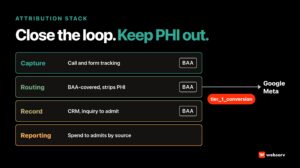
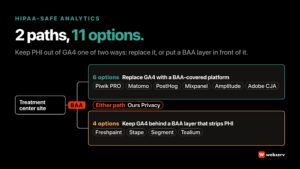
The conversion path has to run through a HIPAA-compliant intermediary with a signed BAA before any event reaches Meta’s Conversions API. Most agencies that pitch rehab Facebook ads do not have that infrastructure built. The full compliance pattern is in our Meta CAPI HIPAA guide for treatment centers and our HIPAA-compliant Facebook ads playbook.
The standard Meta pixel on a rehab site is a HIPAA exposure. CAPI direct from your tag manager is also a HIPAA exposure. If the agency’s tracking stack does not include a HIPAA-compliant intermediary with a BAA, the campaign is not really running paid social. It is running a compliance incident waiting to happen.
Mitch Marowitz, Director of Paid Admissions, Webserv
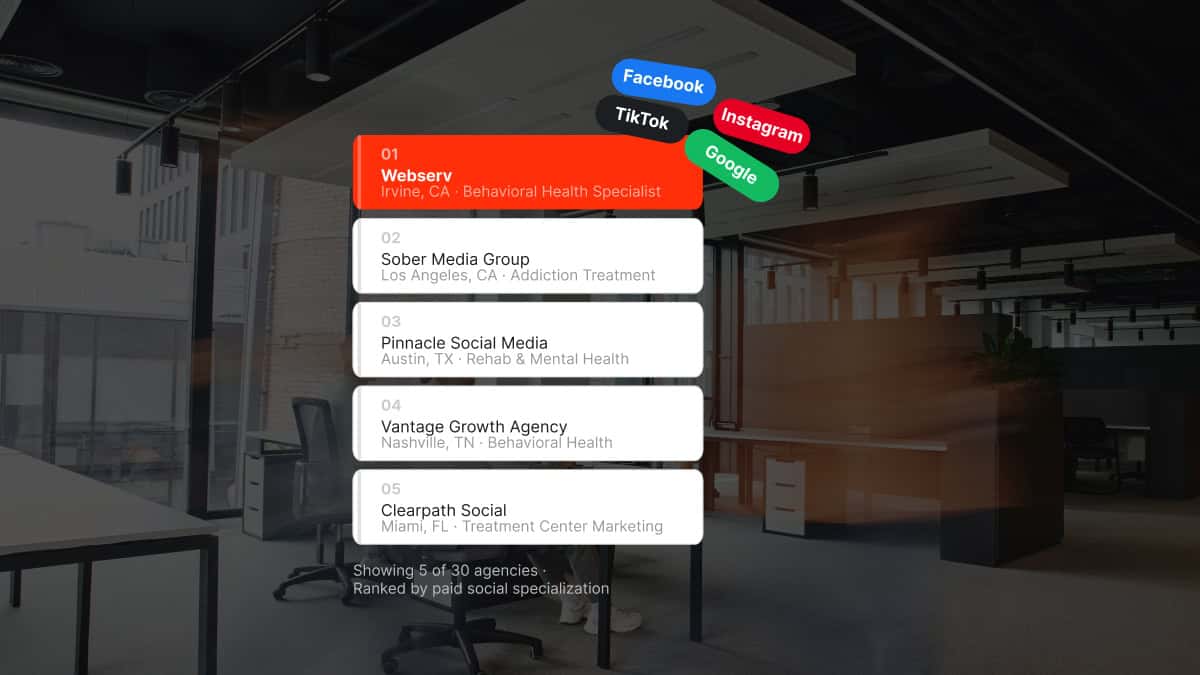
One disclosure before the list: Webserv wrote this list, and we put ourselves at #1. We do this work, so read it as our view of the market, not a neutral review. The criteria below are the ones we applied to every agency, including us, so you can re-rank by what matters to your facility.
Key Takeaways
- Meta requires LegitScript certification and its own written permission for addiction treatment ads, and its personal attributes policy bars copy that implies a viewer’s or family member’s condition. The standard Meta pixel is a HIPAA exposure on any rehab site — conversion events must route through a HIPAA-compliant intermediary with a signed BAA before reaching Meta’s CAPI.
- LegitScript is a two-step posture. Certification is one process. Getting that certification recognized inside Meta is a separate workflow with its own queue, dispute path, and review cycle. Most agencies handle the Google Ads side and stall on the Meta side.
- LinkedIn is a B2B referral channel, not a DR channel. EAPs, primary care groups, interventionists, school counselors, and HR benefits leads decide where patients get referred 6-36 months out. Treatment centers running patient acquisition on LinkedIn are wasting budget.
- There is no retargeting on Meta for addiction treatment. Meta’s Health & Wellness restrictions kill it. Agencies pitching warm-audience retargeting funnels on SUD campaigns are either policy-violating or working off deprecated 2023 documentation.
- Cost per admit (or cost per private-policy VOB for OON facilities) is the only metric that matters. Lead counts and CTR are activity reporting, not outcome reporting. Meta will give you cheap leads on a rehab campaign — most will not be billable.
DEFINITION
Paid Social
Paid advertising on social platforms (Meta, TikTok, LinkedIn, Snapchat) targeting prospective patients and the family members making admit decisions on their behalf. For behavioral health, paid social requires LegitScript certification, HIPAA-safe pixel deployment, and creative that passes Meta’s restricted-category review before campaigns can run at scale.
How we ranked these agencies
HOW WE READ THIS LIST
Paid social for behavioral health is one of the most restricted advertising surfaces on the internet. Ranking these agencies means weighing two things at once: creative and media discipline that actually drives viable VOBs, and compliance depth on Meta ad reviews, LegitScript, and HIPAA-adjacent tracking. Miss either half and you get shut down or you get denied. Our battle-tested Meta ads tactics set the baseline any agency on this list should meet.
Five factors separate paid social agencies that hold up in this category from agencies that get exposed at the first compliance event.
| Factor | What we looked for |
|---|---|
| 1. HIPAA pixel and CAPI posture | Whether the agency runs paid social through a HIPAA-compliant intermediary with a signed BAA, or relies on the standard Meta pixel and direct CAPI calls. |
| 2. LegitScript fluency on Meta | Whether they handle the Meta-side certification application and the policy disputes that follow. |
| 3. Meta policy handling | Whether they know Meta’s addiction treatment requirements and personal attributes policy well enough to write copy that clears review the first time. |
| 4. B2B and LinkedIn coverage | Whether they can build EAP, primary care, and interventionist referral pipelines on LinkedIn, not just run DR Meta. |
| 5. Transparency | Whether benchmarks, case studies, and pricing are documented publicly or hidden behind a discovery call. |
A few words on what is intentionally not here. Lead generators and call centers that resell admits are explicitly disallowed from LegitScript certification, which means they cannot legitimately advertise rehab on Meta. Agencies running that play do not appear on this list.
Sober living homes are also not LegitScript-eligible. The 30 agencies below all serve operators who can clear LegitScript.
Quick comparison
| Rank | Agency | Best for | HIPAA CAPI | LegitScript Meta | LinkedIn B2B | Min retainer |
|---|---|---|---|---|---|---|
| 1 | Webserv | OON detox/res, multi-loc BH | Yes (BAA+intermediary) | Yes | Yes | $15K-$60K/mo |
| 2 | Cardinal Digital | Mid-to-enterprise BH | Yes | Yes | Partial | Not published |
| 3 | Ads Up Marketing | BH-only, month-to-month | Yes | Yes | Limited | Not published |
| 4 | Behavioral Health Partners | OON DR Meta | Yes | Yes | Limited | Not published |
| 5 | MGMT Digital | Treatment groups w/ ROI | Partial | Yes | Limited | Not published |
| 6 | ProDigital Healthcare | Healthcare Meta specialist | Yes | Yes | Yes | Not published |
| 7 | Sachs Marketing Group | Mid-market detox/res | Partial | Yes (2010) | Limited | Not published |
| 8 | Lead to Recovery | Mental health + rehab | Partial | Yes | Partial | Not published |
| 9 | Dreamscape Marketing | Enterprise BH networks | Yes | Yes | Yes | Not published |
| 10 | Healthcare Success | Broader healthcare | Yes | Yes | Yes | Not published |
| 11 | Stodzy | Smaller programs | Limited | Yes | Limited | Not published |
| 12 | Prosperity Health BH | Rehab Meta turnkey | Partial | Yes | Limited | Not published |
| 13 | Beyond Marketing | Mid-market multi-channel | Partial | Yes | Limited | Not published |
| 14 | Web Logix Group | Regional rehabs (SE) | Partial | Yes | Limited | Not published |
| 15 | Circle Social Inc | Smaller rehabs turnkey | Limited | Yes | Limited | Not published |
| 16 | Treatment Center Agency | All-in-one | Limited | Yes | Partial | Not published |
| 17 | Fuel Online | National rehabs | Partial | Yes | Limited | Not published |
| 18 | Bivisee | Single-facility rehabs | Limited | Yes | Limited | Not published |
| 19 | Bloom Consulting | Newer facilities | Limited | Yes (cert) | Limited | Not published |
| 20 | Active Marketing | Regional programs | Limited | Yes | Limited | Not published |
| 21 | BHNR | LinkedIn B2B referrals | N/A | N/A | Yes (specialist) | Not published |
| 22 | Mental Health Ads | Mental health/therapy | Yes | Yes | Yes | Not published |
| 23 | LMR Digital Marketing | Therapy LinkedIn + Meta | Yes | Yes | Yes | Not published |
| 24 | Connective Media Group | Mid-market rehabs | Partial | Yes | Partial | Not published |
| 25 | Unlock Health | Enterprise BH + hospitals | Yes (ent.) | Yes | Yes | Not published |
| 26 | WebFX | Enterprise multi-vertical | Partial | Yes | Yes | Not published |
| 27 | Anytime Digital Marketing | BH generalist | Partial | Yes | Limited | Not published |
| 28 | ForwardCare | Compliance-first launches | Yes | Yes | Limited | Not published |
| 29 | Drug Rehab Agency | Smaller programs | Limited | Yes | Limited | Not published |
| 30 | Drive Lead Media | Healthcare Meta HIPAA | Yes | Yes | Limited | Not published |
The 30
1. Webserv
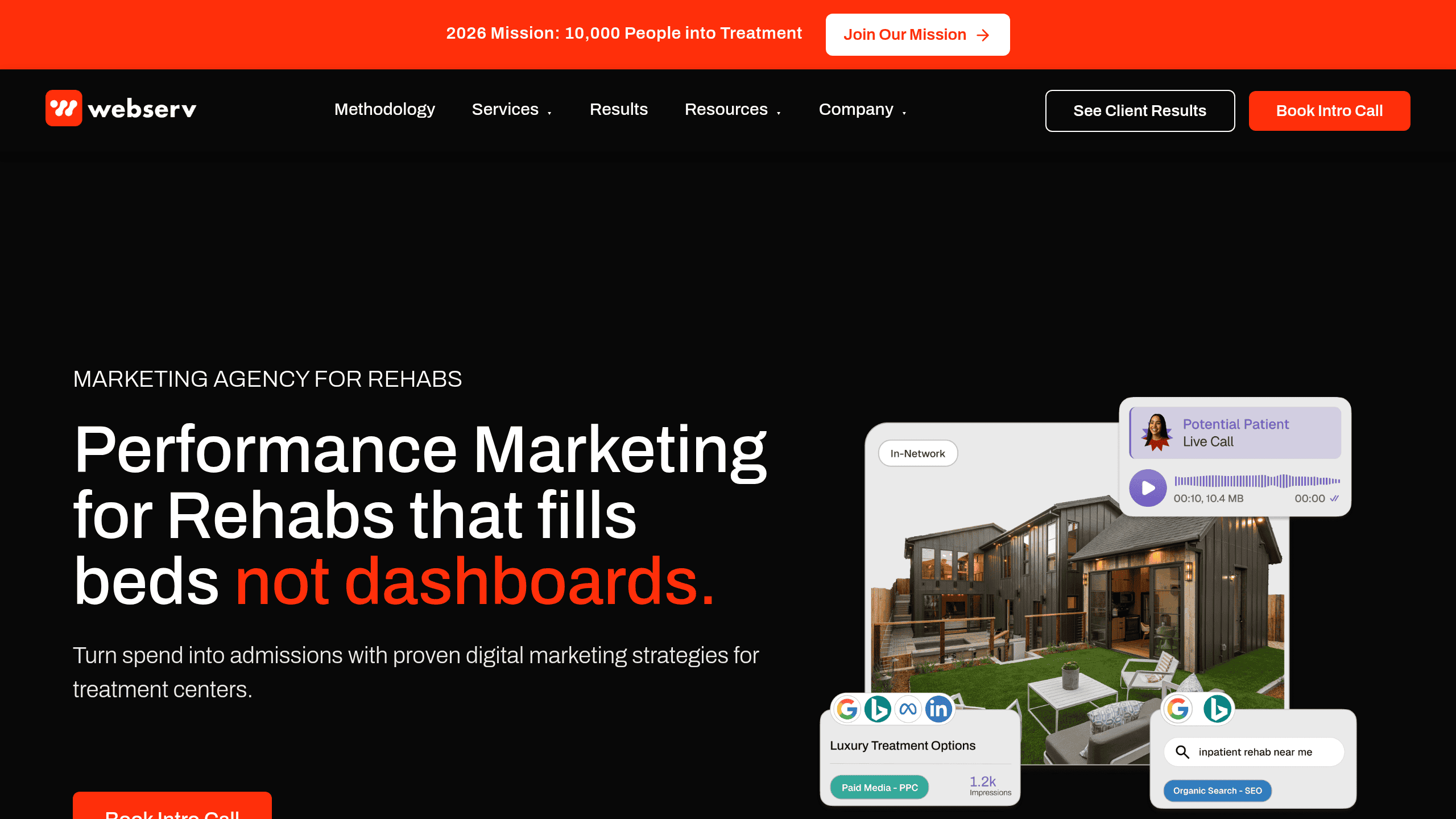 Homepage screenshot of Webserv.
Headquarters: Irvine, CA
Years in behavioral health: ~10
Treatment-center clients managed: 200+
Webserv runs paid social for treatment centers across Meta (Facebook + Instagram) and LinkedIn. The channel mix is selected per operator, not sold as a bundle. For most facilities, Meta is the DR engine. LinkedIn is the referral network builder. Both run inside a single account team with a single attribution model.
A few things that show up across Webserv paid social engagements:
HIPAA-compliant intermediary with a signed BAA, every time. The standard Meta pixel is removed from the client site. Conversion events route through the intermediary, get stripped of PHI, and reach Meta via CAPI with the BAA signed and on file. This is the baseline. Most agencies that pitch rehab Facebook ads cannot show the BAA when asked. The mechanics are in our HIPAA marketing compliance glossary.
LegitScript Meta certification handled in-house. The Google Ads-side LegitScript work is one application. The Meta-side review is a separate process with its own queue and its own dispute path. Webserv runs both. The Meta side gets less attention industry-wide and that is where most accounts stall.
Meta policy handling is built into creative review. Meta’s personal attributes policy bars ads that assert or imply a viewer’s condition, or a family member’s, so “are you struggling with…” and “when your son tells you he needs help” both fail. Webserv copy and creative go through a pre-flight review against those policies before any ad gets uploaded — the same review pattern from our compliant ad headlines guide. The platform’s drug and alcohol addiction treatment ad standards set the LegitScript and written-permission prerequisites every addiction treatment ad has to meet.
No retargeting on Meta for addiction clients. Meta’s Health and Wellness restrictions kill the retargeting play for substance use disorder ads. The strategy compensates with broader prospecting audiences and stronger landing page work, not with creative workarounds that will get the account suspended.
LinkedIn B2B is the durable admit channel most operators ignore. Webserv builds the LinkedIn presence for the clinical leadership of the facility, not the facility brand page. Personal profiles of the medical director, the admissions director, and the clinical staff drive more EAP and primary care referrals than any branded campaign. The work is slower than Meta DR. The admits are stickier.
The channel mix logic scales across a portfolio. Our portfolio-wide paid media case study shows how three brands under one operator each got a different Meta and search allocation depending on level of care.
Meta is where you find the patient in crisis. LinkedIn is where you find the referrer who sends you that patient three years from now. Most rehab marketing budgets are 100% Meta. The right mix is closer to 70/30.
Best for: out-of-network detox and residential facilities, in-network multi-location groups, and operators who want both DR Meta and a durable B2B referral channel on LinkedIn.
Minimum recommended spend: ~$15,000/month for Meta-only at a single location, ~$60,000/month for a national OON paid social program with LinkedIn B2B layered in.
How an inpatient rehab scaled paid media to 95 admits while cutting cost per admission by 24%
Campaign consolidation and PMAX optimization drove 30% admission growth with improved efficiency, all while maintaining OON payer mix.
Read the case study →Q3 2025
2. Cardinal Digital Marketing
Headquarters: Atlanta, GA
Cardinal runs paid social alongside its broader healthcare PPC practice. The agency publishes how-to content on Facebook ads for rehab centers and addresses HIPAA compliance directly in its onboarding materials. The infrastructure exists.
CAPI through an intermediary, BAA signed, and the standard Meta pixel removed when the client comes on board.
The strength is the depth of analytics infrastructure on the back end. The buyer profile is regional and multi-state BH groups with a real marketing director on the other side of the engagement.
Best for: mid-to-enterprise BH groups with sophisticated buyer-side teams.
3. Ads Up Marketing
Headquarters: Florida-based, national reach
Ads Up runs Meta and Google for behavioral health exclusively. Over $100M in PPC ad spend managed. The Meta playbook covers the HIPAA tracking stack and the LegitScript Meta certification work without treating either as a premium feature.
The agency works month to month, which is a buyer-friendly model in this category. LinkedIn coverage is limited compared to Webserv or Dreamscape.
Best for: BH-only operators who want a Meta specialist without an annual lock-in.
4. Behavioral Health Partners
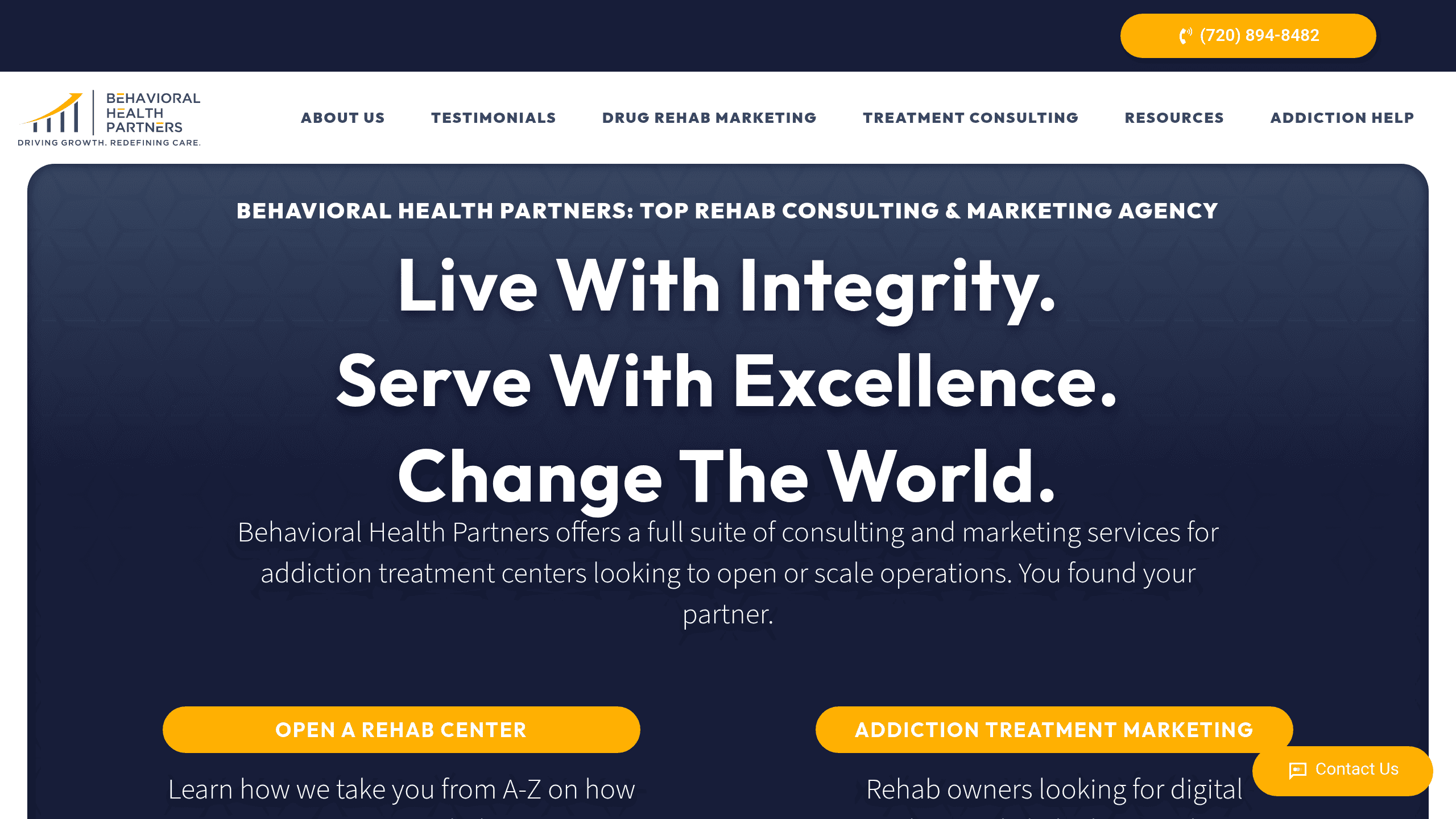 Homepage screenshot of Behavioral Health Partners.
Headquarters: New York
Behavioral Health Partners runs admissions-focused Meta paid social as part of its broader BH practice. Published case studies include outpatient programs growing active patients 9x in five months on Meta-driven funnels and detox CPAs dropping from $16K+ to under $7,500.
The team is BH-only and reports against admits, not lead counts. HIPAA CAPI infrastructure is in place. LinkedIn coverage is more limited.
Best for: out-of-network facilities and single-location operators running DR-heavy Meta strategies.
5. MGMT Digital
Headquarters: Florida
MGMT runs Meta paid social for treatment centers with real budgets. The team understands the SUD-versus-mental-health policy split on Meta and adjusts campaign architecture accordingly. The HIPAA tracking stack is in place for most accounts. Documentation of the BAA workflow is lighter than at Webserv or ProDigital.
Best for: established treatment groups running Meta DR with a paid media ROI focus.
6. ProDigital Healthcare
 Homepage screenshot of ProDigital Healthcare.
Headquarters: US-based
ProDigital is a healthcare Meta marketing agency that handles HIPAA-compliant advertising on Facebook and Instagram. The agency publishes specifically on the addiction treatment Meta workflow and the HIPAA pixel constraints. The team operates across treatment centers, hospitals, and broader healthcare verticals.
ProDigital is one of the few agencies that leads with the HIPAA tracking stack in its sales materials rather than treating it as a premium add-on. For operators who want a Meta specialist where compliance is the headline rather than the footnote, this is a credible shortlist name.
Best for: rehab and broader healthcare operators who want HIPAA-aware Meta as the core engagement.
7. Sachs Marketing Group
Headquarters: Los Angeles, CA
Sachs has run paid social for behavioral health and addiction treatment since 2010. The agency handles LegitScript certification end to end and runs Meta as part of an integrated marketing offering that also includes SEO and content.
The HIPAA tracking stack is implemented case by case rather than as a default workflow.
Best for: mid-market detox and residential facilities wanting an integrated marketing shop with paid social as one channel among several.
8. Lead to Recovery
 Homepage screenshot of Lead to Recovery.
Headquarters: Florida
Lead to Recovery covers paid social for mental health, luxury rehab, detox, inpatient, residential, and outpatient. The agency leans more heavily into mental health Meta work than the rehab-first shops, which is useful because Meta treats those categories differently and the policy implications cascade.
LinkedIn coverage is partial. The agency runs Meta and Google as the primary channels.
Best for: mental health and dual-diagnosis facilities, especially outpatient programs.
9. Dreamscape Marketing
Headquarters: Maryland
Dreamscape serves enterprise behavioral health groups and multi-brand networks. The infrastructure is real. HIPAA CAPI, BAA, and the kind of governance that satisfies PE-backed parent organizations. LinkedIn B2B is part of the standard service for enterprise clients managing networks of referring providers.
The trade-off at this tier is overscope for single-facility operators. Dreamscape is the right answer for groups with central marketing functions and enterprise reporting needs.
Best for: enterprise BH networks, multi-brand groups, and PE-backed treatment platforms.
10. Healthcare Success
Headquarters: Irvine, CA
Healthcare Success runs paid social as part of a broader healthcare marketing practice. The agency understands HIPAA Meta tracking and operates LinkedIn campaigns for hospital systems and physician group referrals. The book is broader than rehab, which is a feature for operators inside larger healthcare systems.
Best for: BH operators inside larger healthcare systems or with hospital affiliations.
11. Stodzy Internet Marketing
Headquarters: South Florida
Stodzy is one of the longest-tenured rehab marketing agencies. Paid social is offered alongside SEO and content. The agency serves smaller facilities and lean budgets, which limits the depth of the HIPAA tracking infrastructure relative to enterprise-focused shops.
Best for: smaller programs and regional operators with low-to-mid four-figure monthly social budgets.
12. Prosperity Health BH

Headquarters: US-based
Prosperity Health BH is a paid social specialist for addiction treatment. The agency understands LegitScript and the Meta-side approval workflow and runs Facebook and Instagram campaigns specifically for recovery centers. Published materials lean into the channel positioning rather than HIPAA tracking architecture, which is more limited at this tier.
Best for: smaller-to-mid market rehabs running Meta-led campaigns with turnkey creative support.
13. Beyond Marketing
Headquarters: US-based
Beyond Marketing offers a managed paid social and search service for recovery centers. Published claims include 20 new admissions per month on average and a 40% reduction in inquiry-to-admission drop-off through nurture sequences. The integrated approach is the differentiator. Meta plus search plus follow-up automation rather than channel specialization.
Best for: mid-market operators who want a multi-channel paid program managed under one roof.
14. Web Logix Group
 Homepage screenshot of Web Logix Group.
Headquarters: Pennsylvania (multi-state coverage)
Web Logix Group runs paid social for regional rehab operators in the Southeast and Mid-Atlantic. The agency is regionally concentrated, which often translates to stronger geo-targeting and local creative work than national shops. The HIPAA tracking stack is implemented case by case.
Best for: regional rehab operators in PA, FL, TN, and KY.
15. Circle Social Inc
Headquarters: New York
Circle Social is a turnkey marketing shop for drug rehabs. Paid social is bundled into a broader package that includes SEO and reputation. The buyer profile is a single-facility operator who wants one vendor across multiple disciplines. Specialist depth on HIPAA Meta is more limited than at Meta-first specialists.
Best for: single-location rehabs wanting one vendor for SEO, paid social, and reputation.
16. Treatment Center Agency
Headquarters: US-based
Treatment Center Agency offers integrated PPC, SEO, paid social, and content. The pitch is consolidation. Paid social is one channel inside a broader managed program. LinkedIn B2B is offered for operators that want referral pipelines on top of DR Meta.
Best for: single-vendor operators who value consolidation over best-in-class per channel.
17. Fuel Online
 Homepage screenshot of Fuel Online.
Headquarters: Boston, MA
Fuel Online runs paid social for drug rehabs and detox centers as part of an integrated digital marketing offering. The agency has been operating in the space long enough to maintain real BH benchmarks. Meta and Google are the primary channels.
Best for: national rehab brands wanting integrated SEO and paid social.
18. Bivisee
Headquarters: US-based
Bivisee runs Facebook ads management for single-facility rehabs. The HIPAA infrastructure is more limited than at specialist Meta agencies. The agency serves operators that need hands-on day-to-day campaign management without enterprise overhead.
Best for: smaller rehabs with budgets that justify a focused Meta presence but not enterprise infrastructure.
19. Bloom Consulting Agency
 Homepage screenshot of Bloom Consulting Agency.
Headquarters: US-based
Bloom publishes one of the better LegitScript certification guides in the industry, which matters because LegitScript gates Meta advertising for rehab. The agency is a reasonable entry point for newer facilities that need certification before they can run paid social at all.
Post-certification Meta sophistication is more limited than at specialists.
Best for: newer facilities needing LegitScript certification and a first paid social launch.
20. Active Marketing
 Homepage screenshot of Active Marketing.
Headquarters: US-based
Active Marketing serves regional treatment programs with paid social as one channel in a broader digital marketing package. The agency is accessible to smaller operators. The HIPAA Meta tracking depth is more limited than at Meta-first specialists.
Best for: regional programs with mid-four-figure monthly budgets.
21. Behavioral Health Network Resources (BHNR)
Headquarters: US-based
BHNR is a LinkedIn-specialist agency for the addiction treatment industry. The agency owns 14 LinkedIn groups for addiction and behavioral health professionals with over 50,000 members and reports a network of 250,000+ addiction professionals nationwide.
BHNR’s offering is built around LinkedIn presence development for clinical leadership at treatment facilities. The pitch is referral network construction rather than paid Meta DR.
For operators that already have Meta handled and want a B2B referral engine on LinkedIn, BHNR is the most specialized name on this list for that specific job.
Best for: treatment centers wanting LinkedIn B2B referral pipelines built and maintained over time.
22. Mental Health Ads
 Homepage screenshot of Mental Health Ads.
Headquarters: US-based
Mental Health Ads runs HIPAA-compliant paid social for therapists, mental health practices, and addiction recovery providers. The agency emphasizes Meta lead form design with HIPAA tracking and runs LinkedIn campaigns for B2B mental health referrals.
The Meta and LinkedIn coverage is real. The depth of treatment-center-specific work is more limited than at rehab-only specialists.
Best for: therapy practices, mental health groups, and dual-diagnosis programs with a mental health primary admit profile.
23. LMR Digital Marketing
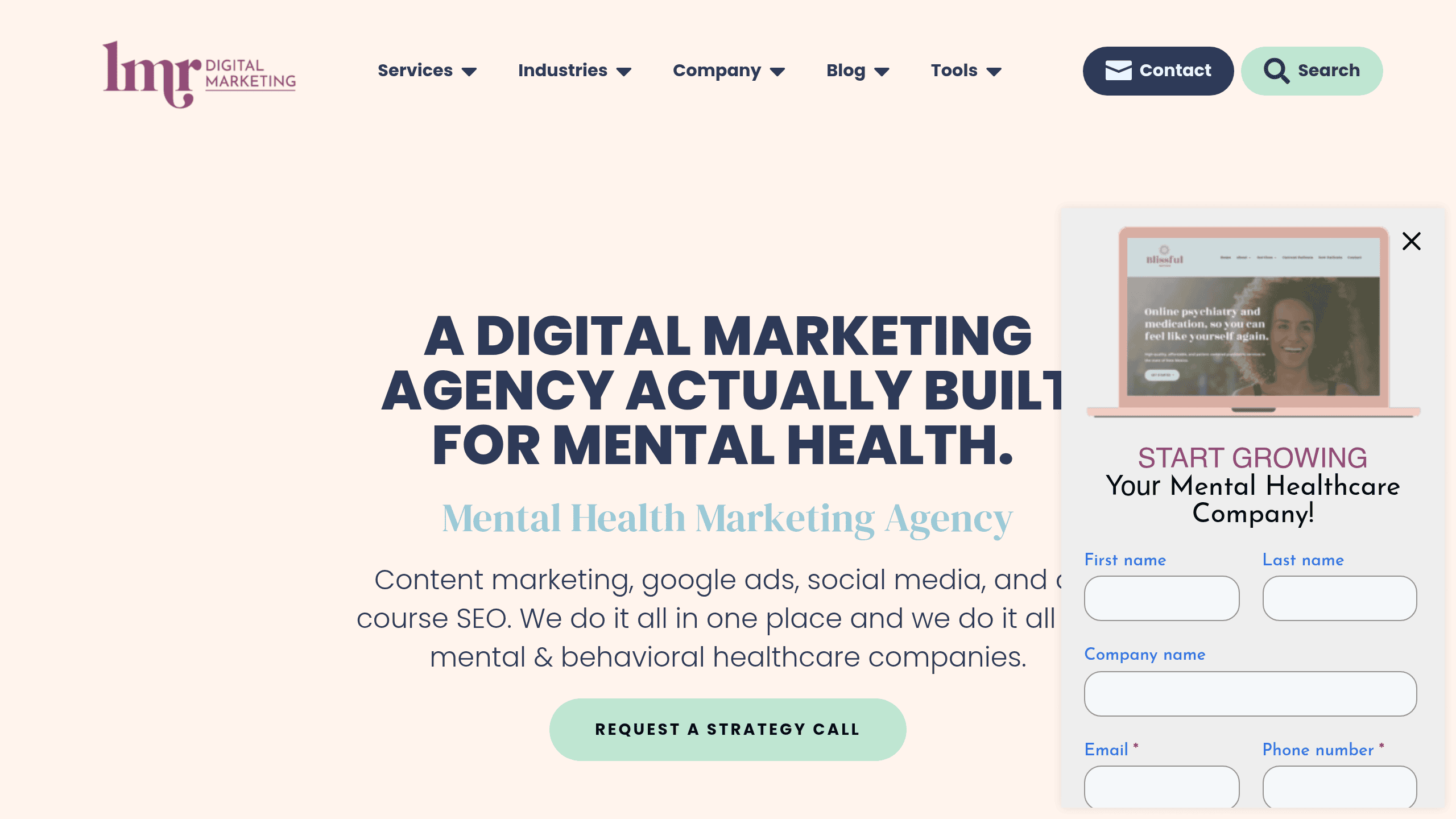 Homepage screenshot of LMR Digital Marketing.
Headquarters: US-based
LMR Digital Marketing runs HIPAA-compliant Meta and LinkedIn campaigns for therapy practices and mental health groups. The agency publishes specifically on HIPAA-compliant Facebook ads for therapists and treats the tracking stack as a core deliverable rather than an upsell.
Best for: mental health practices and therapy groups running Meta and LinkedIn together.
24. Connective Media Group (CMG)
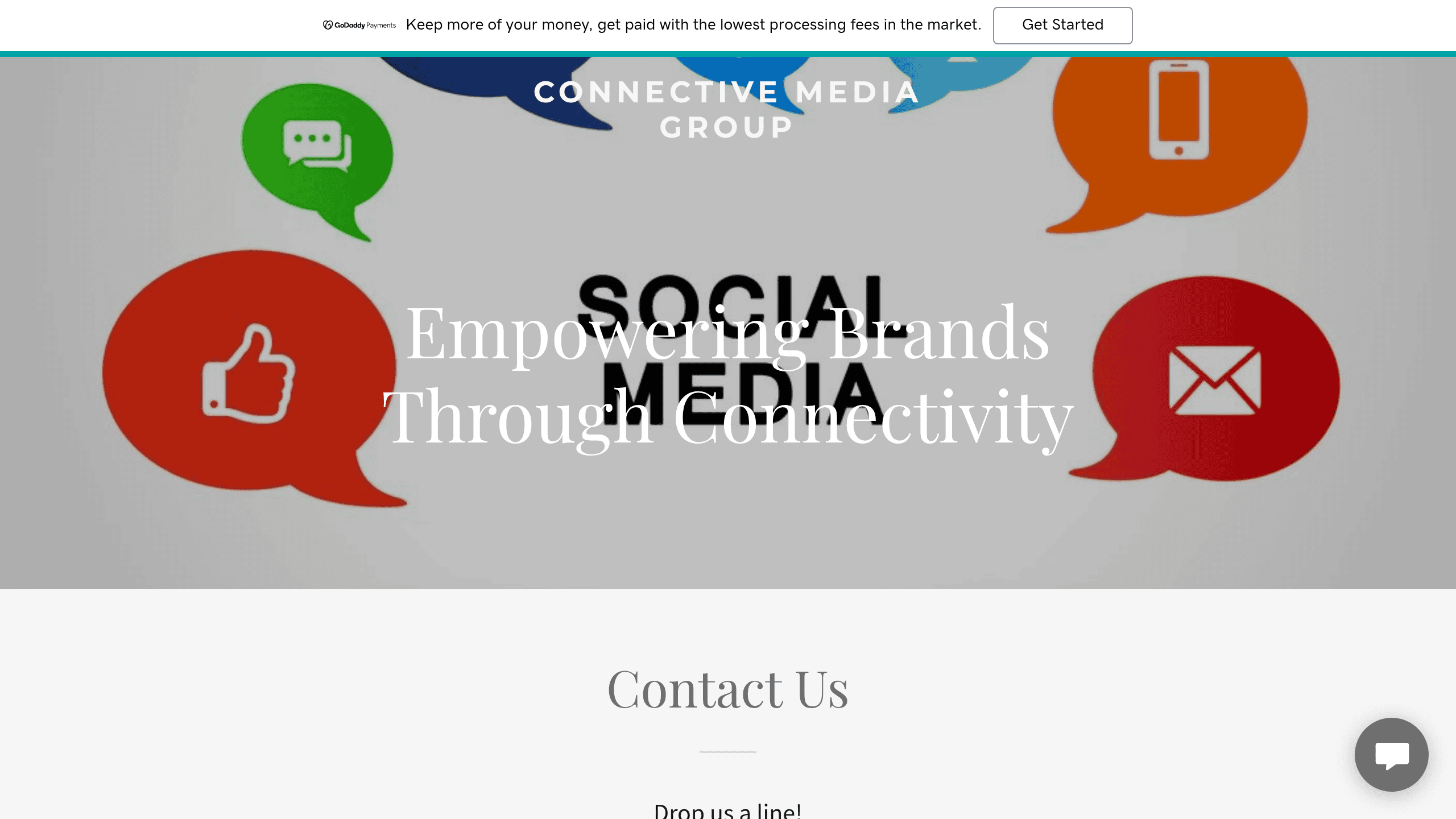 Homepage screenshot of Connective Media Group (CMG).
Headquarters: US-based
Connective Media Group runs paid social as part of a broader marketing program for rehab centers. The agency publishes operator-facing content on rehab marketing strategy and operates Meta campaigns alongside SEO and content. LinkedIn coverage is partial.
Best for: mid-market rehabs wanting an integrated paid social and content program.
25. Unlock Health
Headquarters: Brentwood, TN
Unlock Health has worked with major treatment networks including Promises Behavioral Health. The agency offers enterprise-level paid social infrastructure including HIPAA CAPI, LinkedIn for hospital and large-network referral programs, and marketing automation across the funnel.
This is the agency to call when the buyer is a PE-backed BH platform with seven or more brands. It is overscoped for almost everyone else.
Best for: enterprise BH networks, hospital systems, and PE-backed treatment platforms.
26. WebFX
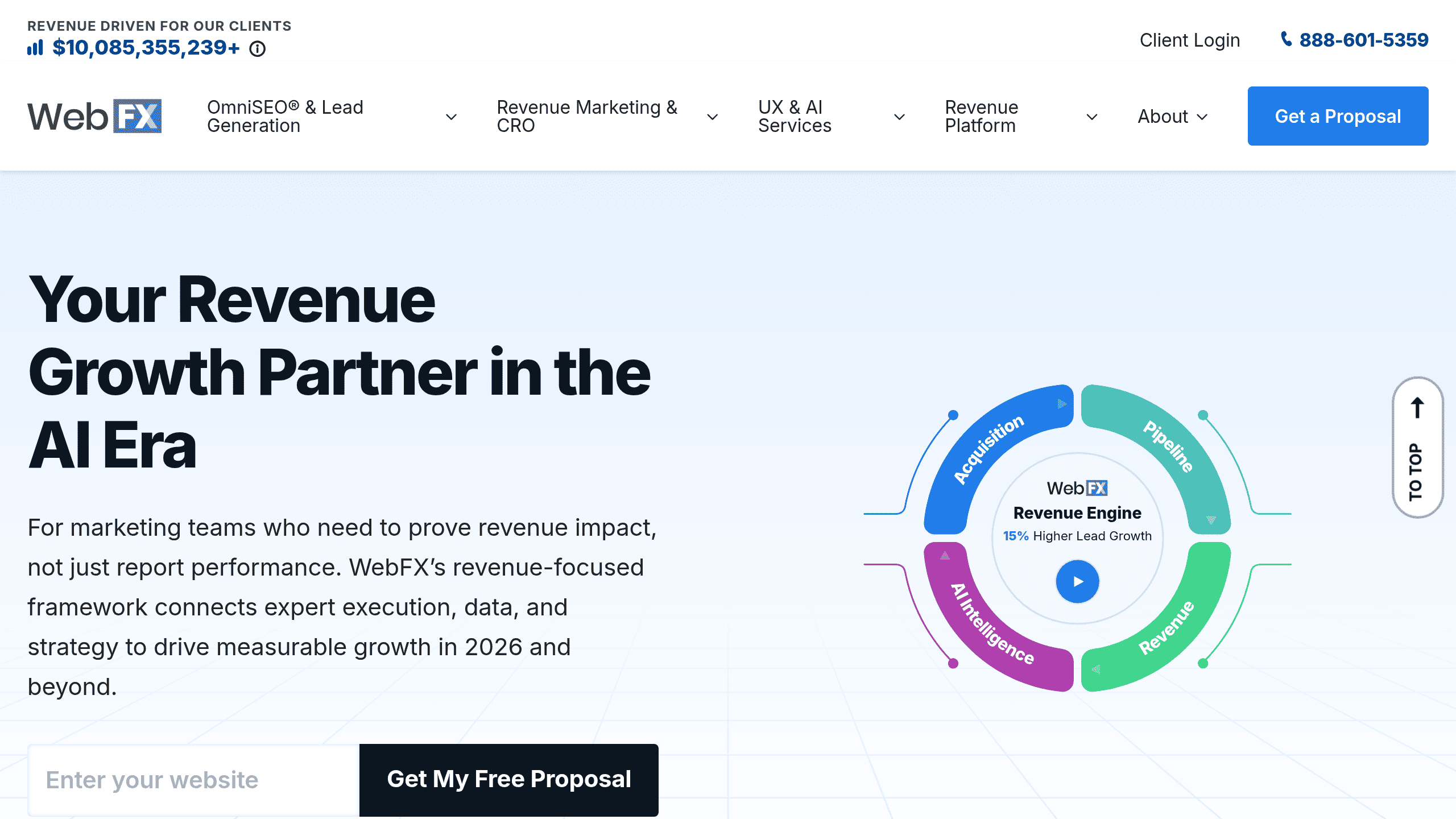
Headquarters: Harrisburg, PA
WebFX is one of the largest full-service digital marketing agencies in the country. The healthcare vertical includes addiction treatment, and the paid social offering is enterprise-grade across Meta and LinkedIn. BH-specific HIPAA depth can be flattened by the agency’s multi-vertical scale.
Best for: enterprise multi-vertical operators who want a large agency with predictable systems.
27. Anytime Digital Marketing
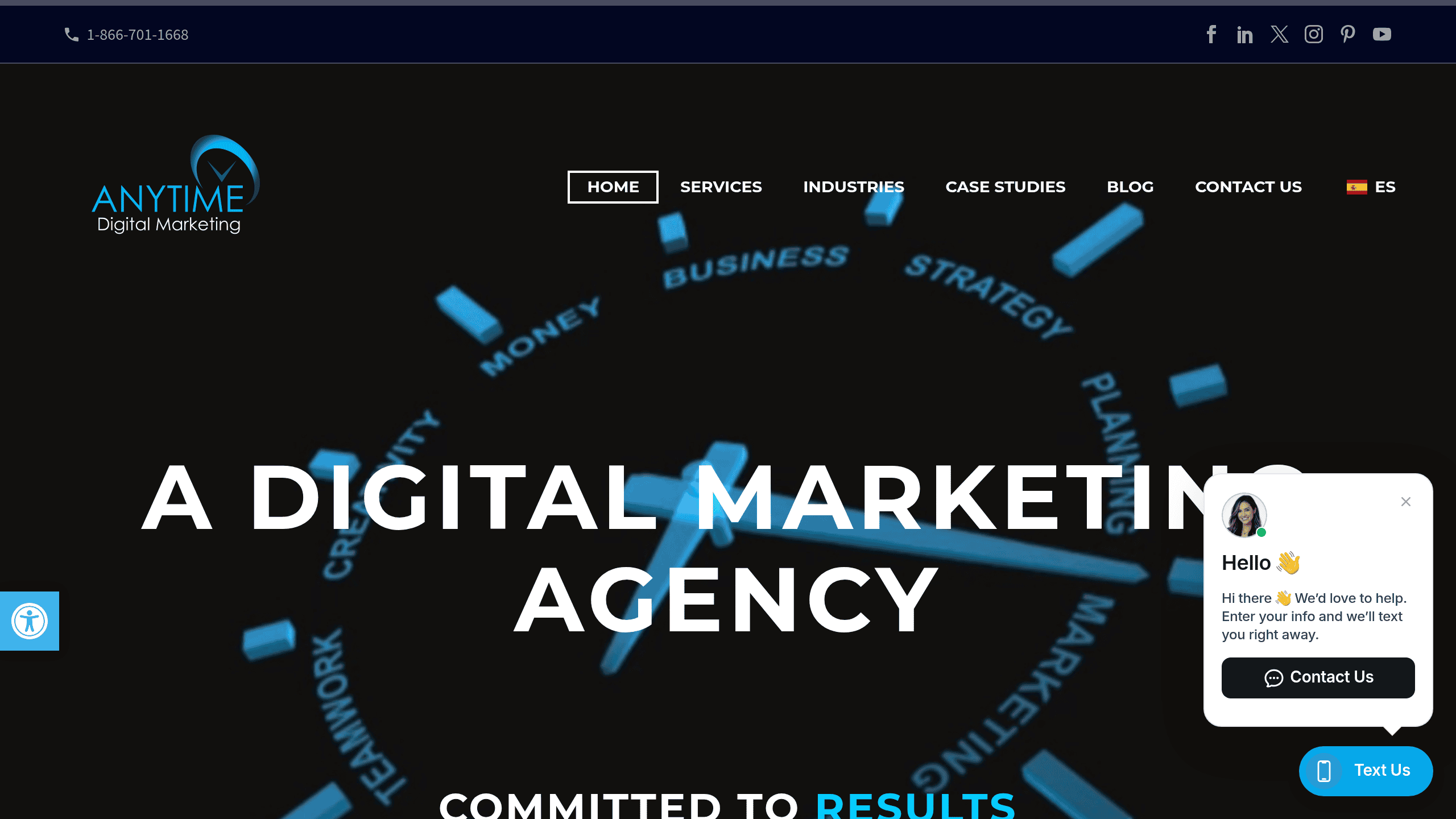 Homepage screenshot of Anytime Digital Marketing.
Headquarters: Tampa, FL
Anytime Digital Marketing runs a behavioral health PPC and paid social practice alongside its general digital offering. The team understands LegitScript and runs Meta day to day for BH clients. HIPAA tracking depth varies by account tier.
Best for: smaller BH operators wanting a generalist agency with credible behavioral health experience.
28. ForwardCare
Headquarters: US-based
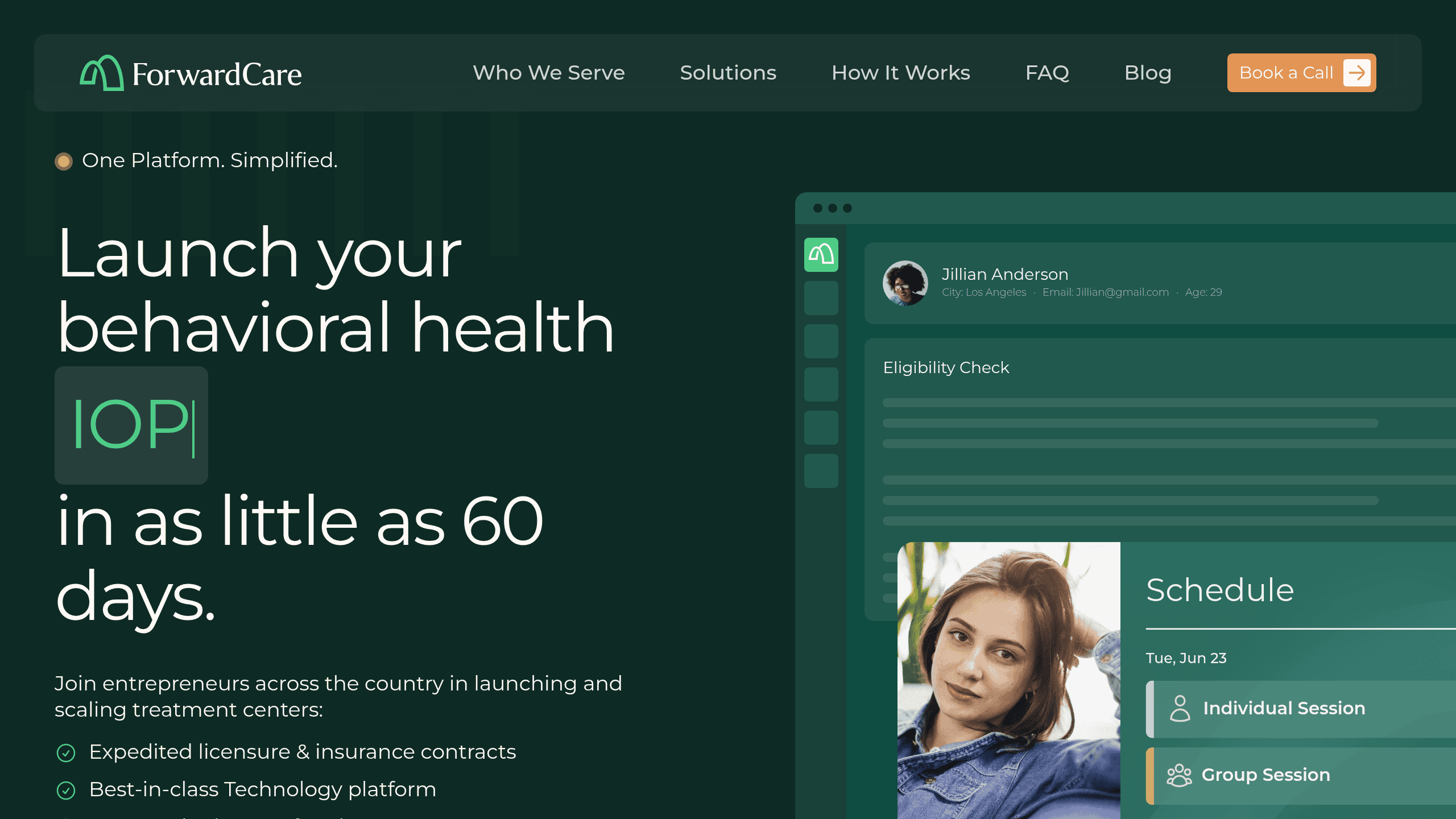
ForwardCare leans into compliance posture in both its content and its services. The agency runs Meta campaigns with HIPAA-aware tracking and is a strong fit for newer or smaller programs that want to launch their first paid social presence correctly rather than fix a broken account later.
Best for: newer facilities prioritizing compliance posture in their first paid social launch.
29. Drug Rehab Agency
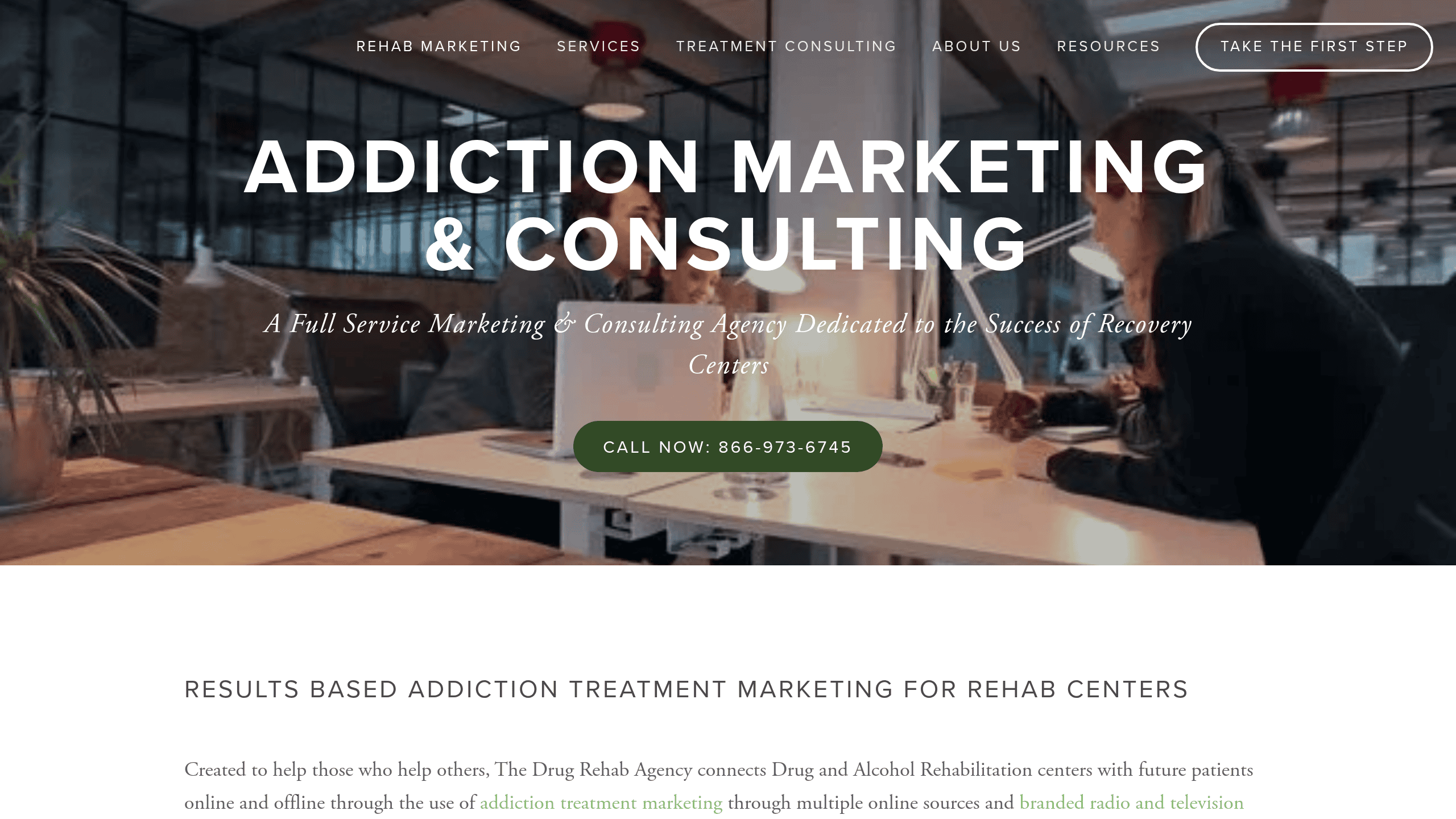 Homepage screenshot of Drug Rehab Agency.
Headquarters: US-based
Drug Rehab Agency runs the addiction treatment marketing playbook including paid social, search, SEO, and reputation. The buyer profile is smaller-to-mid-sized programs. Published case study depth is more limited than at specialists, which makes the agency harder to evaluate from the outside.
Best for: smaller programs needing an integrated PPC, paid social, and SEO partner.
30. Drive Lead Media
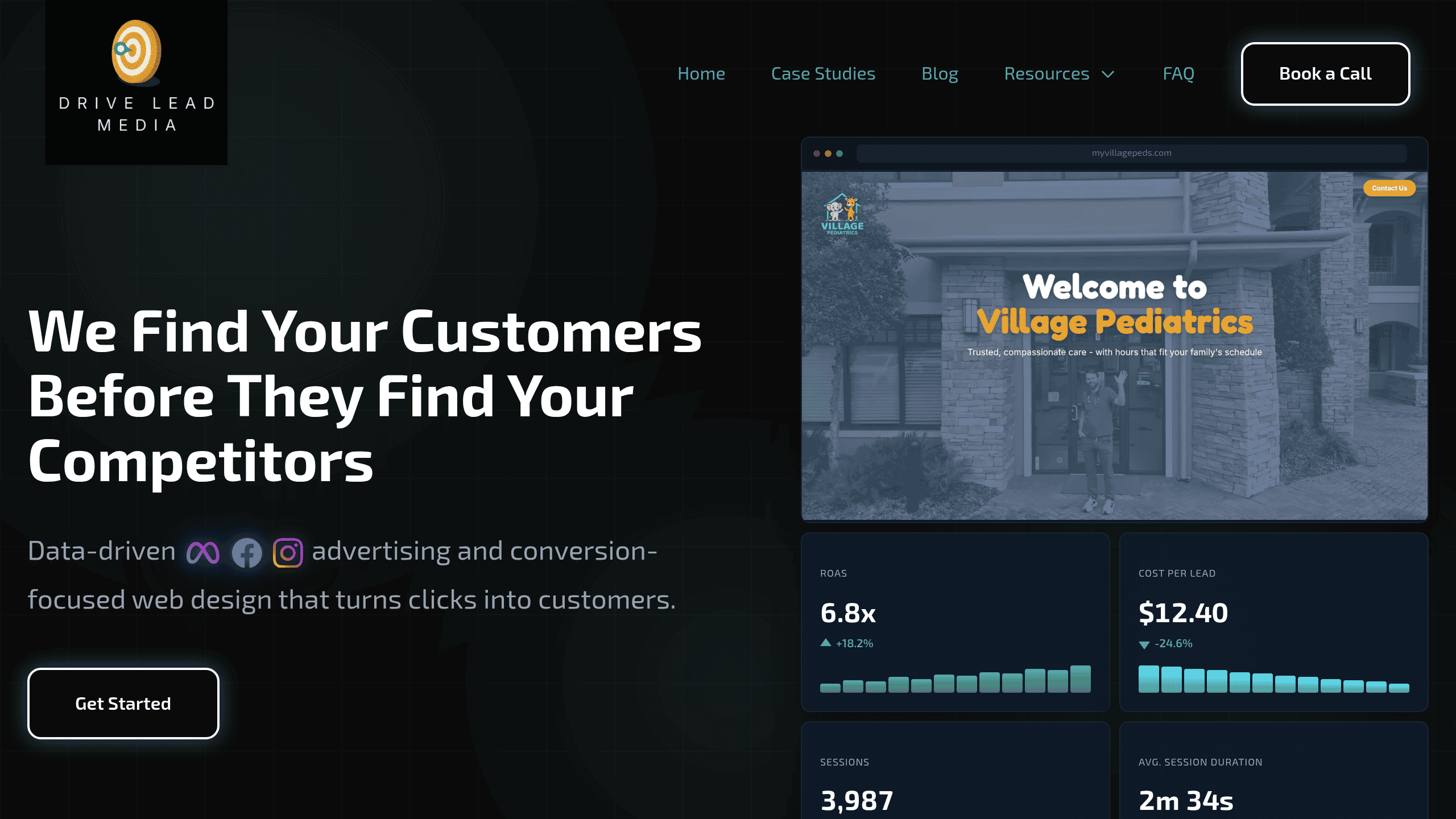 Homepage screenshot of Drive Lead Media.
Headquarters: Atlanta, GA
Drive Lead Media publishes one of the better operator guides on Meta ads for healthcare and HIPAA compliance specifically. The agency runs Meta for treatment centers and broader healthcare with the HIPAA tracking stack treated as a baseline deliverable. LinkedIn coverage is limited.
Best for: rehab and healthcare operators wanting a Meta specialist with compliance-first sales materials.
What separates a good paid social agency in this space
After a decade of running paid social for treatment centers, a few patterns hold. They are useful as a checklist when you talk to any agency on this list, including ours.
1. The HIPAA tracking stack is non-negotiable
Ask the agency to walk through their conversion event flow on a rehab client. The correct answer is some version of: “We remove the standard Meta pixel from your site. Conversion events are sent to a HIPAA-compliant intermediary with a signed BAA. The intermediary strips PHI and forwards a de-identified event to Meta via CAPI.”
If the answer is “we use the standard Meta pixel with conservative event configuration,” the agency is exposing your facility to HIPAA liability. The HHS Office for Civil Rights’ 2024 online tracking guidance explicitly names tracking pixels on pages tied to individual health condition lookups as a regulated disclosure, with covered entities responsible for what the pixel transmits. If the answer is “we use CAPI directly without an intermediary,” that is also a HIPAA exposure. See HHS’s HIPAA marketing guidance for what the regulation actually requires of any tracking pixel that touches PHI-adjacent signals. HHS-OCR’s 2024 online tracking guidance names tracking pixels on pages tied to individual health condition lookups as a regulated disclosure, with covered entities responsible for what the pixel transmits.
There is no compliant version of the work without the intermediary and the BAA.
2. They handle LegitScript on Meta specifically
LegitScript certification is one process. Getting that certification recognized inside Meta is a separate workflow with its own queue, dispute path, and review cycle. Ask the agency how many Meta-side LegitScript escalations they ran last quarter.
The Google Ads-side certification work is the easier half of the LegitScript posture. The LegitScript addiction treatment certification page details the operator-side requirements: clinical staffing standards, outcomes tracking, marketing claim limits, and the disqualifying business models that lead generators and call centers fall under.
The LegitScript certification process documentation gives the operator-side view, but the Meta-platform side is where most agencies lose the thread.
One 2026 change worth tracking: LegitScript certification is now available to Canadian drug and alcohol treatment centers for Google advertising, and the certification is recognized by Google, Meta, Microsoft, Nextdoor, and Recovery.com. For multi-site operators with Canadian locations, that turns a closed market into an addressable one.
Ask any agency pitching cross-border paid social whether they have run a Canadian LegitScript application through to platform recognition, or whether they are quoting the US process and hoping it maps.
3. They know what Meta’s addiction and personal attributes rules mean in practice
The platform’s own Ad Standards page for drug and alcohol addiction treatment requires LegitScript certification and Meta’s written permission before an addiction treatment ad can run. On top of that, Meta’s personal attributes policy bars copy that asserts or implies a viewer’s condition or a family member’s. Diagnostic questions fail it, and so do family-voice hooks like “When your son tells you he needs help.” Agencies running on autopilot routinely miss the second part.
Ask the agency to walk through their creative review checklist for SUD ads. If they cannot show you a list, the work has been getting through on luck.
4. They are honest about retargeting
There is no retargeting on Meta for addiction treatment. The Health and Wellness classification kills it. Agencies that pitch warm-audience retargeting funnels on SUD campaigns are either working off old documentation or planning to violate policy and hope they do not get caught.
Ask the agency how they replace the retargeting layer in the funnel. The right answer involves stronger landing page work, broader prospecting audiences, and LinkedIn for the post-conversion referral nurture. Not creative workarounds.
5. They understand LinkedIn is a B2B referral channel, not a DR channel
Treatment centers that try to run patient acquisition on LinkedIn are wasting budget. LinkedIn is where you build the referral network. EAP coordinators, primary care groups, school counselors, interventionists, behavioral health attorneys, HR benefits leads. Those are the people who decide where a patient gets sent six months from now.
Ask the agency whether they build LinkedIn presence for the facility brand page or for the clinical leadership profiles. Individual profiles outperform brand pages for B2B BH referral work, every time.
6. They report against admits, not impressions
Lead counts and CTR are not the deliverable. Admits are. The agency that reports lead volume without policy mix is reporting theater. The agency that reports admits and admit cost is reporting the business. The full attribution pattern is in our conversion tracking guide for addiction treatment.
Ask the agency to show you a client report. If the headline metric is not cost per admit (or cost per private-policy VOB for OON facilities), the engagement is selling activity rather than outcomes.
If you have gotten a cost per admit quote under $5,000, ask one question first: is that INN or OON?
Most agencies quote cost per admit using in-network facility data where insurance covers most costs and admit thresholds are lower. Out-of-network facilities operate under completely different conditions. Comparing those numbers is like comparing apples to surgery. It is the most common way agencies make their results look better than they are. Our 2025 benchmark report shows you what the real numbers look like across OON treatment center campaigns so you know what to ask.
Common buyer mistakes when shopping paid social agencies
COSTLIEST MISTAKE
Buying on creative volume instead of creative testing rigor. An agency that produces 40 ads per month with no structured testing framework will burn spend on the wrong variants. The right question is not “how much creative do you produce,” it is “how do you decide what wins, and how fast do you kill what loses?”
A handful of patterns we see operators repeat when picking an agency.
1. Assuming Google Ads competence transfers. A great Google Ads agency may not have the HIPAA tracking stack required to run paid social compliantly. The two channels are different products with different infrastructure requirements. Ask separately. The patterns from our compliance mistakes guide for Google Ads do not all transfer directly.
2. Skipping the BAA question. If the agency cannot produce the signed BAA with their tracking intermediary, the engagement is non-compliant. There is no version of “we’ll get you one later” that is acceptable. Ask on the first call.
3. Buying retargeting that does not exist. Pitches that promise warm-audience retargeting funnels on SUD campaigns are either policy-violating or working off deprecated documentation. Decline the pitch.
4. Confusing Meta competence with LinkedIn competence. Most Meta-specialist rehab agencies do not have meaningful LinkedIn B2B chops. If LinkedIn matters to you, ask separately and verify with case examples.
5. Mistaking lead volume for performance. Meta will give you cheap leads on a rehab campaign. Most of them will not be billable. The cost per private-policy admit is the only metric that matters.
6. Buying on creative quality alone. Beautiful Meta creative that violates the personal attributes policy gets rejected, and repeat rejections put the account at risk. Beautiful creative that passes review but does not align with the audience will not convert. The discipline matters more than the design.
30 minutes to talk through your census goals, payer mix, and what a realistic growth plan looks like for your facility.
No pitch. No pressure. Just a straight conversation from a team that has worked with 200+ treatment centers nationwide.
If you came here looking for a broader rehab marketing agency
This list is intentionally paid-social-focused. The 30 agencies above were screened on HIPAA pixel posture, LegitScript-on-Meta fluency, Meta policy handling, LinkedIn B2B coverage, and reporting against admits rather than impressions.
If your shortlist also needs to cover SEO, web build, content, or creative production alongside paid social, the ranking criteria here will not map cleanly onto those broader vendor decisions.
The right way to think about it: paid social agency selection is a separate procurement from full-service marketing agency selection, even when the same vendor can do both.
A great Meta and LinkedIn shop may not be the right partner for your SEO program. A great SEO partner is rarely the right partner for compliant Meta DR.
Buying paid social as one line item inside a bundled marketing engagement usually produces softer compliance posture than buying it from a specialist.
For operators evaluating a broader vendor stack, three sibling resources make the rest of the decision easier. Our Ultimate Guide to Behavioral Health Marketing for Treatment Centers lays out the full channel and capability map.
Our Ultimate Guide to Social Advertising for Rehabs covers the strategy layer that sits above any individual agency engagement. And for the Google Ads side specifically, our Google Ads Strategy guide for behavioral health providers is the parallel resource to this one.
If you are pitching for a full-service marketing partner rather than a paid social specialist, the question to anchor on is what your most expensive failure mode looks like.
For treatment centers, that is usually a HIPAA enforcement action triggered by ad tracking, which is why paid-social selection deserves its own list and its own discipline. The rest of the marketing stack can absorb a mediocre vendor. The paid social account cannot.
Frequently asked questions about hiring a paid social agency for behavioral health
What does HIPAA compliance actually require for a paid social agency running treatment center ads?
The Meta pixel firing on a treatment center website transmits browsing behavior to Meta in a way OCR’s online tracking guidance treats as an impermissible disclosure when the page collects PHI, such as intake and insurance forms. A June 2024 court ruling narrowed the guidance for unauthenticated informational pages, but form pages remain in scope. A compliant agency routes every conversion event through a HIPAA-aware intermediary with a signed BAA before any data reaches Meta’s Conversions API.
The full pattern involves three layers: a signed BAA with the intermediary, server-side event forwarding with PII stripped or hashed, and audience strategy built from non-PHI signals only (lookalikes from website-visitor data, not from patient lists). Agencies pitching Meta CAPI without naming the intermediary by vendor and showing the BAA paperwork are claiming compliance they have not built.
Treatment centers running paid social without this infrastructure carry exposure that compounds quietly. Tracking exposure has already produced seven-figure outcomes in behavioral health, including the FTC’s $7.8 million BetterHelp settlement over sharing sensitive data with advertising platforms. The cost of building the compliant layer is far smaller than the cost of an enforcement action.
What does Meta require for addiction treatment ads, and what does that mean for advertisers?
Meta requires LegitScript certification and Meta’s written permission before an addiction treatment ad can run. On top of that, its personal attributes policy bars ads that assert or imply a viewer’s medical condition, or a family member’s. Practical effect: hooks that work in other verticals, like “Are you struggling with addiction?”, get rejected here.
The agencies winning here learned the policy boundaries the hard way. They know which creative angles will pass and which will trip review even when the underlying offer is benign. Copy about the facility and the process clears; copy about the viewer’s or their family’s condition doesn’t. Educational framing clears more reliably than urgency framing.
For a treatment center, the right vendor-evaluation question is not “do you run Facebook Ads” but “what is your disapproval rate on rehab campaigns in the first 60 days, and what creative patterns produced that rate.” A specialist agency answers in specifics. A generalist answers with marketing copy.
Should we run paid social and paid search through the same agency or split them?
Most treatment centers do best when paid search and paid social run through the same agency, primarily because the conversion tracking architecture is a single integrated system rather than two parallel ones. Splitting agencies usually produces parallel pixel deployments, inconsistent conversion event definitions, and attribution gaps that hide the real channel mix.
The exception is when one channel is significantly more developed than the other. A program with strong existing paid search through a specialist who does not do paid social can add a specialist paid social agency without disrupting search. But the conversion tracking owner needs to be named and shared across both agencies, otherwise you get two competing measurement frameworks.
Webserv runs both channels under one team for this reason. The HIPAA-compliant tracking layer powers both. The full architecture is in our Meta Conversions API HIPAA guide and our conversion tracking guide for addiction treatment Google Ads.
What monthly budget makes paid social worth running for a treatment center?
Most treatment centers running disciplined paid social spend between $10,000 and $40,000 per month, with budgets scaling primarily by program capacity rather than facility size. Below $10,000 per month, the Meta algorithm does not get enough conversion data to optimize past basic targeting, and the agency overhead is large relative to spend.
For a program adding paid social to an existing paid search account, $15,000 per month is a realistic starting point. That funds enough creative testing to identify which angles produce qualified admissions and gives Meta’s algorithm sufficient signal to find lookalikes that convert. Below that, the program will see leads but struggle to confirm whether they translate to admits.
The budget conversation should always be downstream of the conversion-tracking conversation. A program without HIPAA-compliant Meta CAPI cannot defensibly measure paid social performance regardless of spend. Fix the tracking first, then size the budget against what the data shows is working.
How is Meta paid social for rehab different from other healthcare verticals?
Three differences matter. First, addiction treatment ads need LegitScript certification and Meta’s written permission before they run, which most healthcare advertisers never deal with. Second, HIPAA compliance is non-negotiable in a way that wellness or aesthetic categories never have to think about. Third, the conversion that matters is verified policy via VOB rather than form fill or appointment booking.
The third difference is the one most generalist agencies miss. A treatment center paid social account optimizing against raw form fills is feeding the algorithm the wrong signal. The lead with a Marketplace policy and the lead with a private PPO policy both show up as “1 conversion” but represent dramatically different revenue. Weighted conversion values in Meta require explicit setup.
The right Meta paid social account for a treatment center reports against verified VOBs as the primary conversion event. Form fills become a secondary metric. Most agencies have never configured this. The ones who have are visible quickly in how they answer the “what is your primary conversion event” question.
The hot take to close on
Most paid social engagements in this space are getting graded on lead volume because lead volume is what the agency can ship reliably. Compliant lead volume is the bar. Admit-driving compliant lead volume is the business.
The agencies on this list that win long term are the ones whose default workflow includes the HIPAA tracking stack, the LegitScript Meta posture, the Meta policy discipline, and the LinkedIn referral channel that compounds over years.
Ask every agency on your shortlist three questions before signing: Show me the BAA with your tracking intermediary. Walk me through your most recent Meta policy dispute. Tell me how you would build a LinkedIn referral network for our clinical director over 12 months. The answers will sort the shortlist faster than any feature comparison.
If you want to talk through whether Webserv is the right fit for your facility, book a discovery call. If we are not the right fit, we will tell you which agency on this list probably is.
Mitch Marowitz is the Director of Paid Admissions at Webserv. Webserv works with behavioral health and addiction treatment centers on paid media, SEO, and full-funnel admissions strategy.