In September 2026, Digiday and Search Engine Land reported that Google is testing an “AI contribution pilot” inside Search Console. It pays some publishers when their content contributes significantly to answers in the Gemini app, AI Overviews, and AI Mode, with earnings shown in a Search Console widget.
Google hasn’t published a formal announcement. The closest official statement is a June 2026 Google policy post describing a pilot to partner with websites whose content contributes to the freshness and factuality of generative AI responses through grounding.
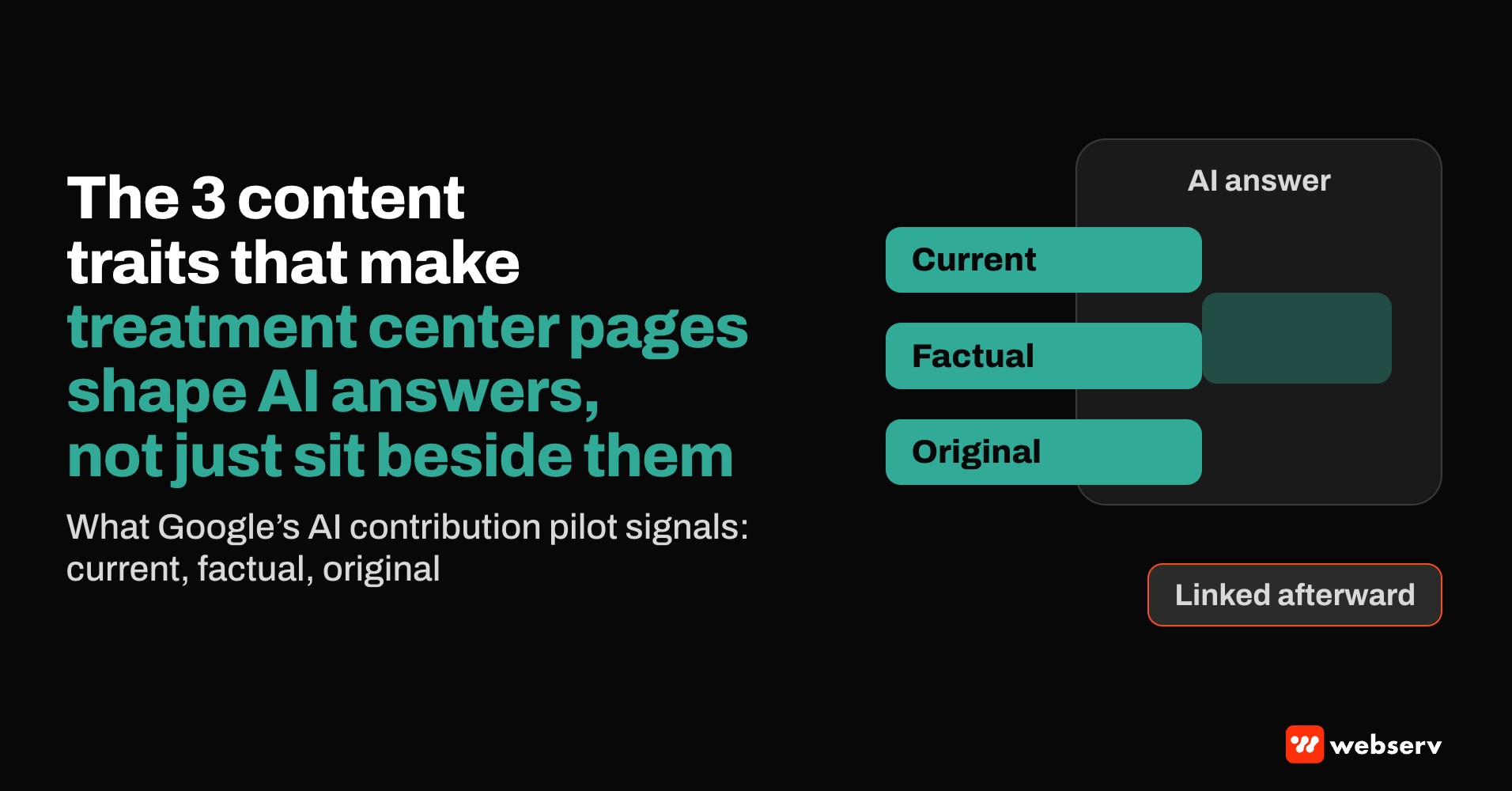
The help text, published in screenshots by Search Engine Roundtable, says content linked or used only to confirm facts after an answer is generated doesn’t qualify.
It’s unclear whether treatment centers can take part. Nothing published says whether health sites are eligible, and the payments reported so far are small for most participants. But the pilot is worth understanding anyway, because it shows what Google values in AI answers: content that shapes them, not just content that gets linked beside them.
This piece covers what’s known about the pilot, what isn’t, what it signals about AI search, and what treatment centers should do about it. It’s part of the work inside our AEO program for treatment centers.
Key Takeaways
- Google is testing an “AI contribution pilot” in Search Console that pays some publishers when their content contributes significantly to answers in Gemini, AI Overviews, and AI Mode.
- Google hasn’t announced it formally. Its June 2026 policy post describes partnering with sites whose content contributes to the freshness and factuality of AI responses through grounding.
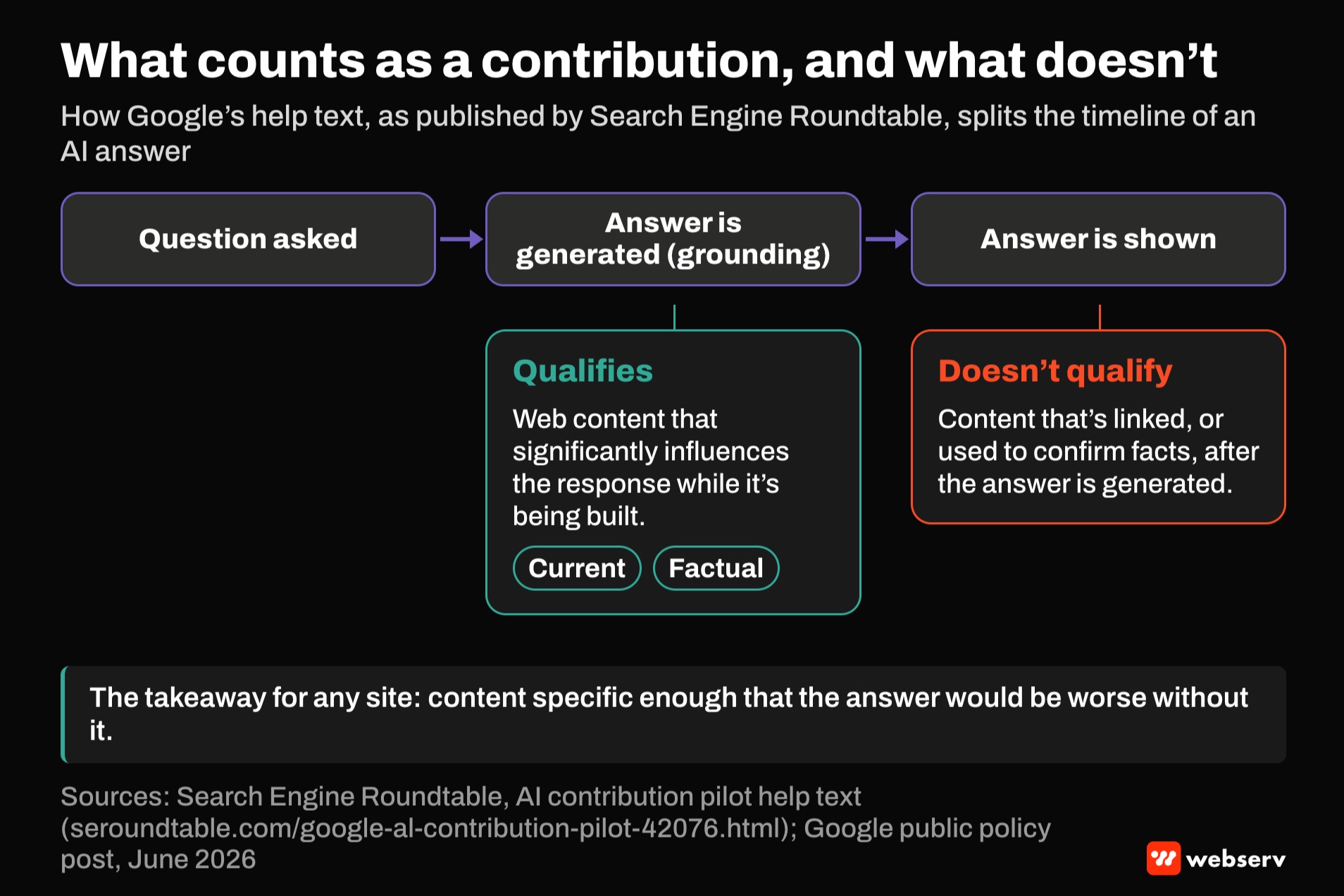
- The help text, as published by Search Engine Roundtable, focuses on content that influences the answer as it’s generated. Content used only to confirm facts afterward doesn’t qualify.
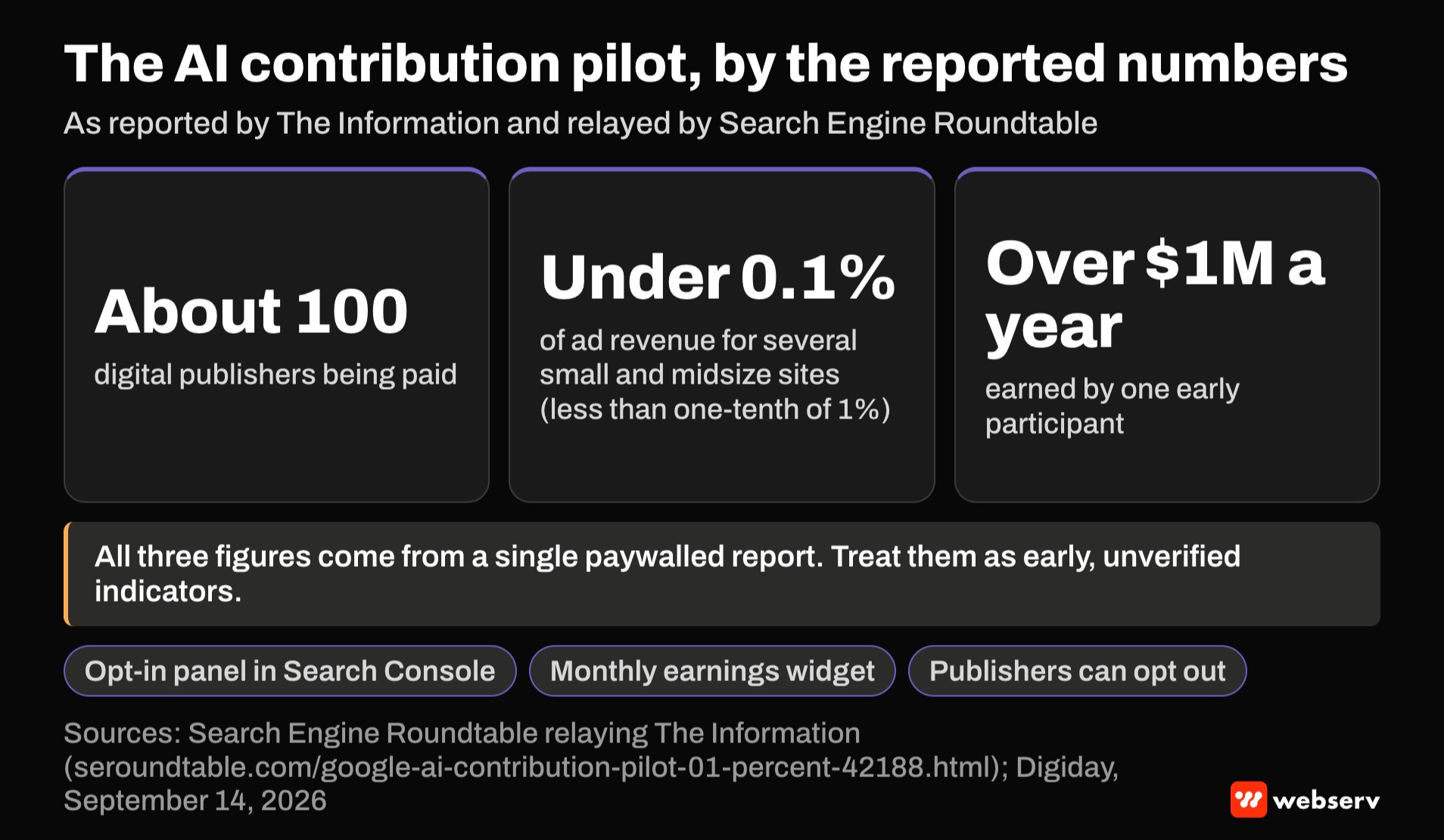
- According to The Information, Google is paying roughly 100 digital publishers, and for several small and midsize sites, payments were less than one-tenth of 1% of ad revenue. Those figures come from one paywalled report.
- Nothing published says whether health or treatment center sites are eligible.
- The signal for treatment centers: current, factual, original information is what grounds AI answers. That’s the content to invest in, whether or not anyone pays for it.
What’s known about the pilot
The program. Digiday’s September 14 report describes an opt-in “AI contribution” panel in Search Console, with an earnings widget showing a monthly figure.
It says Google has approached at least dozens of publishers, that payments are based more on value than raw usage, and that publishers can opt out. Digiday says the program has widened beyond news publishers.
Google’s position. Google pointed to its June 2026 policy post, which describes piloting a new way to partner with websites whose content contributes to the freshness and factuality of generative AI responses through grounding. The post doesn’t name the program or describe payment terms.
How contribution is judged. Search Engine Roundtable published the help text from inside Search Console. It says the program focuses on the phase of generation where web content can significantly influence the response, and that instances where content is linked or used to confirm facts afterward don’t qualify. The help page isn’t publicly accessible.
DEFINITION
Grounding. The process of an AI system pulling current content from the web while it builds an answer, so the answer reflects up-to-date facts rather than only what the model learned in training. Google’s pilot appears to pay for content that shapes an answer during grounding, not for citations added afterward.
The money. Search Engine Roundtable relayed reporting from The Information that Google is paying roughly 100 digital publishers, that payments for several small and midsize sites were less than one-tenth of 1% of their advertising revenue, and that one early participant earns more than $1 million a year.
These figures come from a single paywalled source.
What isn’t known
- Eligibility. No published source says which sites can join, or whether health, medical, or treatment sites are included or excluded.
- Countries. No source names the markets where the pilot runs.
- Measurement. Google hasn’t explained how it determines that content contributed significantly.
- Rates. No payment rates are published, and publishers quoted by Digiday described the system as opaque.
Treat any claim that goes beyond this, especially about eligibility for healthcare sites, with caution.
| What’s known | What isn’t known |
|---|---|
| The program: an opt-in “AI contribution” pilot in Search Console, with an earnings widget | Eligibility, including whether health or treatment sites can join |
| The surfaces: the Gemini app, AI Overviews, and AI Mode | The countries where the pilot runs |
| Payments based more on value than raw usage | How Google measures a significant contribution |
| Publishers can opt out | Payment rates |
| The focus: content that shapes the answer as it’s generated (grounding) |
What it signals about AI search
The pilot is small, but the distinction it draws is useful. Google’s help text separates content that influences the answer as it’s generated from content that’s linked or used to check facts afterward.
That matches Google’s broader guidance. Its AI optimization guide says AI search relies on core ranking systems to retrieve relevant, up-to-date pages. The June policy post ties the pilot to freshness and factuality.
For any site, the implication is the same: the content that matters most to AI answers is current, factual, and specific enough that the answer would be worse without it.
COMMON MISTAKE
Treating the pilot as a new monetization channel. Some coverage frames the pilot as a way for sites to earn from AI. For treatment centers, the reported payments are small, eligibility is unknown, and the business model doesn’t depend on content revenue.
The value for a treatment center is in being the source that shapes an AI answer about its programs, insurance, and admissions, and in the families who act on that answer.
What treatment centers should do
Publish facts AI systems can’t find elsewhere. Program schedules, levels of care, admission steps, insurance relationships, and clinical team credentials. Those are the facts an AI answer about your facility needs, and only you can provide them. Our AI information page guide covers a single reference page for them.
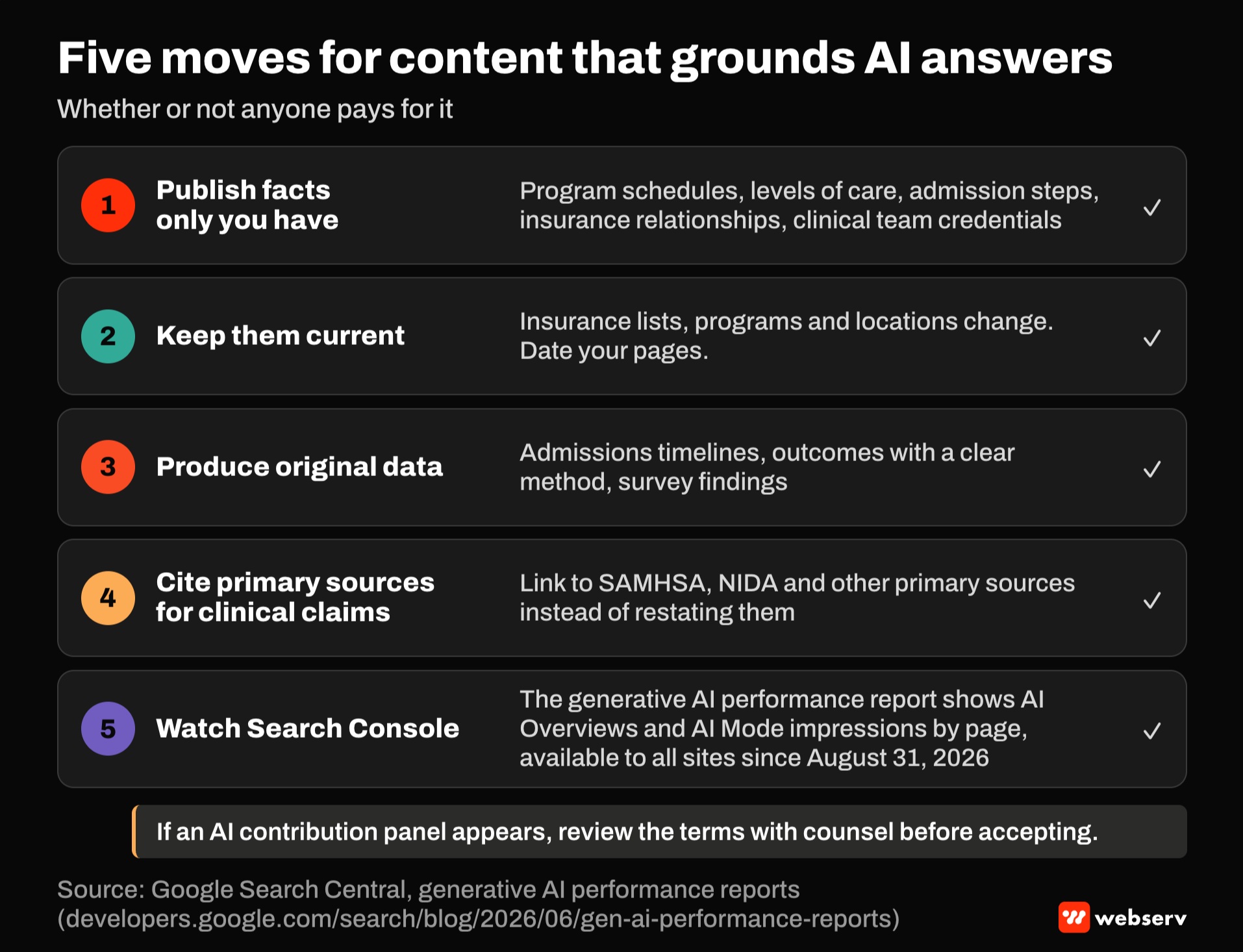
Keep those facts current. The pilot emphasizes freshness. Insurance lists, programs, and locations change; dated, accurate pages are more useful to grounding than stale ones.
Produce original data. Admissions timelines, outcomes measured with a clear method, or survey findings give AI answers something no other source has. Our guide to producing original behavioral health research covers how to do it credibly.
Cite primary sources for clinical claims. Link to SAMHSA, NIDA, and other primary sources rather than restating them. It supports accuracy and keeps the facility’s own content focused on what it uniquely knows.
Watch Search Console. Google’s generative AI performance report, available to all sites since August 31, 2026, shows impressions from AI Overviews and AI Mode by page. If an AI contribution panel ever appears in your account, review the program terms with counsel before accepting.
OPERATOR INSIGHT
Ask a simple question about each important page: would an AI answer about our facility be worse without this page? If the answer is no, because the page repeats what’s available elsewhere, it’s unlikely to shape an answer, paid or not.
The pages that pass that test tend to be the ones families need most: what the program involves, what it costs, how to get started.
Where this fits
The pilot is a signal, not a strategy. For the strategy, see the Full AI Search Stack, our guide to getting cited in Google AI Overviews and ChatGPT, the 12 SEO failure patterns diagnostic, and the 5-tier SEO priority framework. For the traffic side, see our guide on why blog traffic drops while rankings hold. For what happens when AI answers cite other sources, see our piece on citation displacement in AI Overviews.
For how AI search fits the rest of your marketing, see the complete guide to behavioral health marketing. If you want a second look at how AI answers describe your facility, book an intro meeting.
Frequently Asked Questions
Is Google paying websites for content used in AI answers?
Google is testing an AI contribution pilot that pays some publishers when their content contributes significantly to answers in Gemini, AI Overviews, and AI Mode, according to Digiday and Search Engine Land.
Google hasn’t formally announced it. Its June 2026 policy post describes partnering with sites whose content contributes to the freshness and factuality of AI responses.
According to The Information, about 100 publishers were being paid as of late September 2026.
Can treatment centers join Google’s AI contribution pilot?
Nothing published says whether health or treatment center sites are eligible. Digiday reported that Google approached publishers directly.
If an AI contribution panel appears in your Search Console account, review the program terms with counsel before accepting.
For most treatment centers, the more useful takeaway is what the pilot rewards, not the payment.
What kind of content does the pilot reward?
Google’s policy post refers to content that contributes to the freshness and factuality of AI responses through grounding. The help text, as published by Search Engine Roundtable, focuses on content that influences the answer as it’s generated.
Content used only to confirm facts after an answer is generated doesn’t qualify.
For treatment centers, that points to current, specific facility information and original data.
How much does the pilot pay?
Google hasn’t published rates. The Information reported that payments for several small and midsize sites were less than one-tenth of 1% of their advertising revenue, while one early participant earns more than $1 million a year.
Those figures come from a single paywalled report.
Treat them as early, unverified indicators.
Should treatment centers change their content strategy because of this?
Not because of the payments. The pilot reinforces what already works: current, factual, specific content that AI answers can’t get elsewhere.
Prioritize program, insurance, and admissions facts, keep them current, and publish original data where you have it.
Monitor Search Console’s generative AI report to see which pages appear in AI answers.
Trevor Gage is the Director of Marketing at Webserv, a digital marketing agency for treatment centers.