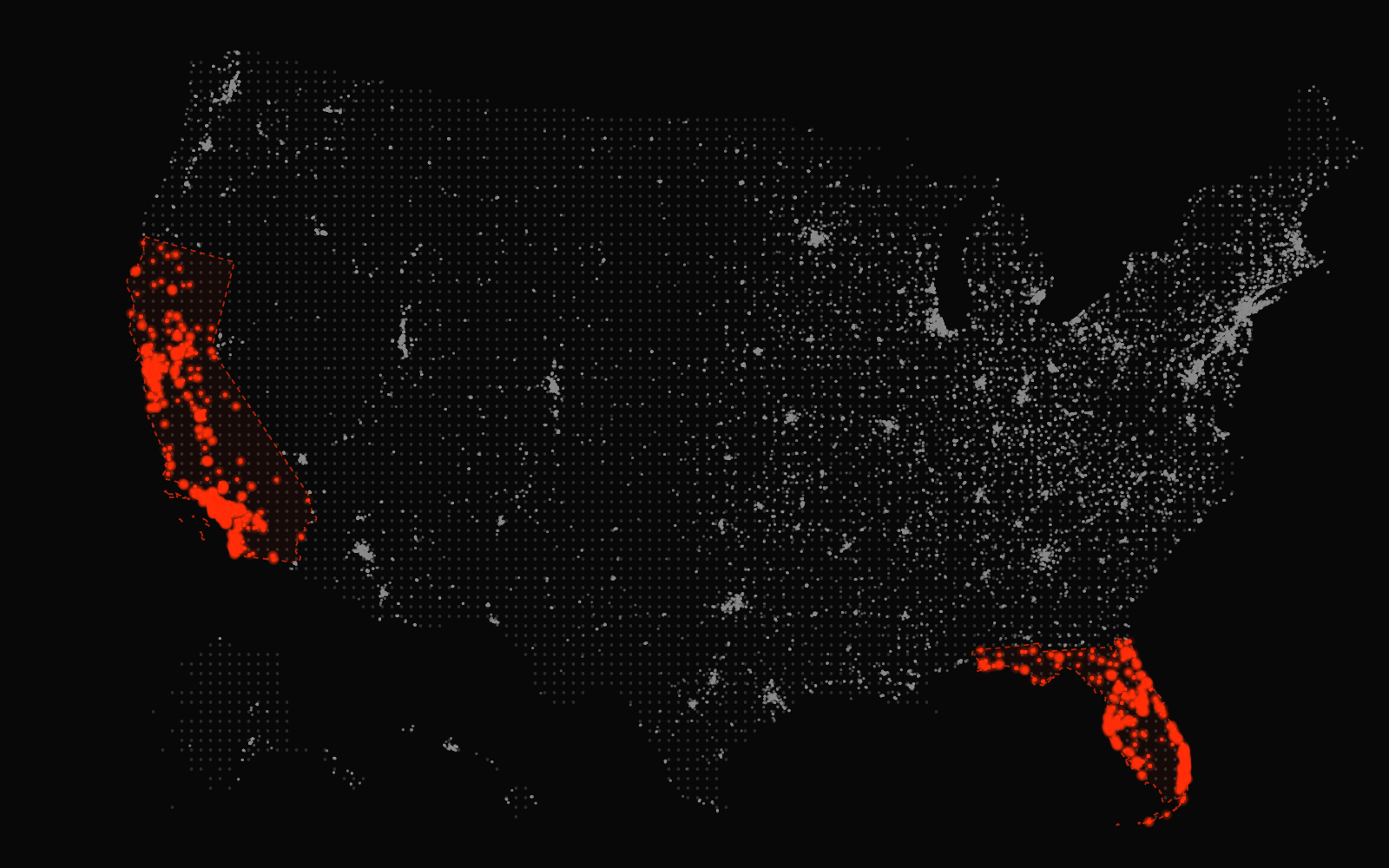
Treatment center marketing works differently from state to state. The payer mix changes, and so do the competition and the marketing laws.
A residential program in Palm Beach County competes for privately insured patients under some of the most specific state marketing statutes in the country. An outpatient program in Tampa Bay competes with neighbors who mostly take Medicaid.
Each guide covers one state or local market. It gives treatment center owners and marketing directors the local numbers, the rules that apply, and the rehab marketing agencies that work there. They’re built from public data and primary sources.
They’re part of how we approach SEO and paid media for treatment centers.
Key Takeaways
- SAMHSA’s FindTreatment.gov lists 27,591 treatment facilities in the U.S. About 31% are for-profit and accept private insurance, and those are run by about 3,000 operators with their own websites.
- California and Florida have the most for-profit operators that accept private insurance, followed by Maryland, New Jersey, and Utah.
- Each guide covers the local market, the state rules that shape marketing, and the agencies that work there.
- We only build a market guide where there’s enough local activity and enough local substance to make it useful.
- California and Florida are covered first, with guides for Los Angeles, Orange County, the Inland Empire, San Diego, Palm Beach County, Broward County, and Tampa Bay.
What’s in each guide
Every state and market guide answers the same four questions, with different answers in each place:
What does the market look like?
Facility counts, levels of care, and payer mix from FindTreatment.gov, with the date and method stated.
What’s specific about marketing here?
Competition, payer mix, local enforcement history, and what families in that market have reason to be wary of.
Which rules apply?
State laws on deceptive marketing, patient brokering, referrals, and call centers, plus the ad platform requirements.
Who does marketing here?
Webserv first, because it’s ours. Then agencies with a local office, grouped as rehab specialists, healthcare agencies, and general agencies with healthcare work. We list them alphabetically within each group and don’t rate them.
State guides
California and Florida are covered first. Each state guide links to its local market guides, each with its own data and local context.
| State | Guide | Markets covered |
|---|---|---|
| California | Rehab marketing in California | Los Angeles County, Orange County, Inland Empire, San Diego County |
| Florida | Rehab marketing in Florida | Palm Beach County, Broward County / Fort Lauderdale, Tampa Bay |
We’re adding states in the order of the national table below, starting with the states that have the most commercial treatment operators.
The national picture
These are the states with the most for-profit treatment operators that accept private insurance, counted by unique website.
| State | Facilities listed | For-profit and accepting private insurance | Operators (unique websites) |
|---|---|---|---|
| California | 2,229 | 886 | 344 |
| Florida | 1,188 | 500 | 227 |
| Maryland | 971 | 425 | 166 |
| New Jersey | 756 | 319 | 160 |
| Utah | 621 | 363 | 148 |
| Texas | 944 | 324 | 143 |
| Ohio | 1,298 | 404 | 138 |
| Pennsylvania | 1,070 | 352 | 137 |
| North Carolina | 881 | 323 | 122 |
| Arizona | 972 | 349 | 120 |
Source: SAMHSA FindTreatment.gov locator export, pulled November 9, 2026. Operators that work in more than one state are counted in each.
Facility counts and commercial activity don’t always line up. Ohio lists more facilities than Florida but has fewer commercial operators. Utah has about half of Ohio’s facilities and more commercial operators. That difference changes who you compete with, which channels pay off, and what families expect when they call.
How we choose markets
A market guide covers a county or Census metro area, not a single city. Most cities don’t have enough treatment centers on their own to support a useful page. A metro area matches how families search and travel for care.
We build a market guide only when two things are true:
- The market has at least 15 for-profit operators that accept private insurance, based on FindTreatment.gov.
- We can document what’s specific about marketing there. That means local rules, enforcement history, public health data, or verified local agencies, each from a primary source.
COMMON MISTAKE
One page per city with the name swapped. Pages that change only the city name don’t help readers, and they can mislead about where a business operates.
Florida’s marketing law prohibits misleading statements about “geographical locations,” and Google’s spam policies describe the pattern as doorway pages. Our guide to local SEO for multi-location treatment centers covers the right way to structure location pages.
How we keep the guides accurate
- Data refresh. We re-pull FindTreatment.gov every quarter and update the counts and “pulled” dates.
- Law review. We check state statutes after each legislative session.
- Agency listings. We only list an agency when its own website shows a local office and the kind of work its group describes, and we recheck twice a year.
- No local claims we can’t support. Webserv is based in Southern California. We don’t list local addresses or phone numbers for markets where we don’t have an office.
FindTreatment.gov lists facilities that complete SAMHSA’s annual survey and opt in. It undercounts some operators, so treat the numbers as a consistent comparison across markets, not a full census.
OPERATOR INSIGHT
Check your own FindTreatment.gov listing while you’re here. If your facility is missing or listed with the wrong services, families and AI answers that rely on the directory see the wrong information too. Our guide to AI Overviews for local rehab queries covers what families see before they call.
For how local marketing fits a full program, see our complete guide to behavioral health marketing. If you want a second look at your marketing in any of these markets, book an intro meeting.
These guides summarize public data, statutes, and enforcement actions. They aren’t legal advice.
Frequently Asked Questions
Where does the market data in these guides come from?
From SAMHSA’s FindTreatment.gov locator, the federal directory of treatment facilities, pulled November 9, 2026.
We map facilities to counties and Census metro areas by ZIP code and count for-profit operators that accept private insurance by unique website.
The directory lists facilities that respond to SAMHSA’s survey, so it undercounts some operators.
Which states have the most treatment centers marketing to commercially insured patients?
California has the most for-profit operators that accept private insurance, with 344, followed by Florida with 227.
Maryland, New Jersey, and Utah come next.
Total facility counts rank differently. Ohio lists more facilities than Florida but has fewer commercial operators.
Why aren’t there guides for every city?
Most cities don’t have enough treatment centers to support a useful page, and a page that only swaps the city name doesn’t help anyone.
We build guides for counties and metro areas with at least 15 commercial operators and documented local substance.
Smaller markets are covered in their state guide.
How are agencies chosen for the lists?
Webserv is listed first because it’s ours. Other agencies appear if their own website shows a local office, and they’re grouped as rehab specialists, healthcare agencies, or general agencies with healthcare work.
Within each group they’re listed alphabetically and described by what they say about themselves. We don’t rate them or link to them.
We recheck the lists twice a year.