A treatment center marketing director asked me last quarter which AI ad creative tool to buy. She had a $400-per-month Canva Pro subscription, was looking at a $1,200-per-month AdCreative.ai contract, and had been pitched a $25,000-per-quarter Pencil enterprise package.
She wanted to know which one would lower her cost per admit.
None of them would, on their own. The tool is not the lever. The lever is whether the operator runs a complete three-format creative production system (video, motion, static) at sufficient cadence with clinical compliance baked in. The right tools support that system; they do not replace it.
Inside Webserv’s ad creative practice for treatment centers, we run a curated stack of tools across video production, motion design, static design, AI generation, and creative analytics. The stack changes every 12 months as tools evolve and new options emerge.
This article walks through the 11 tools that earn a place in a behavioral health creative production system in 2026, what each one actually does for treatment centers, and how to think about the buy decision when budgets force prioritization.
Our creative strategy guide for rehab marketing covers the broader strategic context this tooling supports.
Key Takeaways
- The tool you buy is less important than the production system you run. Treatment centers running 2 to 3 net-new creatives per month with the best AI tools still underperform operators running 8 to 12 net-new concepts per month with mid-tier tooling and a working compliance workflow.
- The 2026 ad creative stack for behavioral health operators covers five tool categories: AI ad generation (Pencil, AdCreative.ai, AdStellar), AI video and UGC (Arcads, Creatify, HeyGen, Runway), motion design (The Brief AI, Canva), creative production and editing (Descript, Adobe, Figma), and creative analytics (Motion, Pencil’s prediction layer).
- Healthcare compliance constraints rule out some popular tools or require workaround configurations. AI-generated medical claims are disqualifying per Google’s quality rater guidelines. UGC-style avatar tools need careful scripting to avoid implying patient identification. Clinical reviewer workflow must sit alongside the tool stack.
- The right tool stack for a treatment center depends on three variables: in-house production capacity, monthly creative cadence target, and budget tier. Operators in different bands of those three variables converge on different tools.
- Webserv’s curated three-format production stack pairs tools with clinical reviewer workflow, brief framework, and the volume cadence that produces compounding returns. It is the system, not any single tool, that moves cost per admit.
DEFINITION
Three-Format Production Stack
The minimum creative coverage every behavioral health paid social program needs: hero family-story video, modular short-form variations (TikTok, Reels), and static unit ads. Programs that ship all three formats from the same production cycle out-produce single-format programs by 3-5x in creative volume per dollar spent.
The Five Categories of Ad Creative Tools
The 11 tools in this listicle cluster into five functional categories. Most behavioral health operators end up using 4 to 7 tools across the categories rather than one all-in-one platform.
Category 1: AI ad generation platforms. Tools that produce ad creative variations from a product URL, brief, or asset library. Examples: AdCreative.ai, AdStellar, Pencil.
Category 2: AI video and UGC generation. Tools that produce video ads using AI avatars, voice cloning, or video synthesis. Examples: Arcads, Creatify, HeyGen, Runway.
Category 3: Motion design and animation. Tools that produce animated graphics, kinetic typography, and motion-overlay creative. Examples: The Brief AI, Canva Magic Studio.
Category 4: Creative production and editing. Tools that handle the actual production work for live-action video, design, and collaboration. Examples: Descript, Adobe Creative Cloud, Figma.
Category 5: Creative analytics. Tools that measure creative performance by format, concept, and hook to inform what to scale and what to retire. Examples: Motion, Pencil’s analytics layer.
The decision is rarely which single tool to buy. It is which 4 to 7 tools across the five categories to combine into a production system that hits the cadence the operator’s facility economics require.
How an inpatient rehab scaled paid media to 95 admits while cutting cost per admission by 24%
Campaign consolidation and PMAX optimization drove 30% admission growth with improved efficiency, all while maintaining OON payer mix.
Read the case study →Q3 2025
1. The Webserv Three-Format Production Stack (Recommended)
Our default production stack for treatment center clients combines tools across the five categories with the clinical reviewer workflow and creative brief framework that behavioral-health-specific work requires. The combination is more important than any single tool.
For video, we use Riverside or Descript for clinician-led interview content, Adobe Premiere or Final Cut for professional editing, and Runway for cinematic B-roll generation.
For UGC-style content (avoiding patient identification per 42 CFR Part 2 requirements), we use Arcads or Creatify with carefully scripted dialogue, voice cloning kept off, and clinical reviewer approval before deployment.
For motion design, we use The Brief AI for templated animation at volume and Canva Magic Studio for rapid-cycle motion ads that need to ship in 48 hours.
For static design, we use Figma for collaborative design with clinical reviewers and Adobe for the high-craft static concepts. For analytics, we use Motion as the format-level performance layer alongside Meta Ads Manager and the operator’s CRM, which feeds back into the broader paid social performance picture.
The total monthly cost of this tool stack runs $800 to $2,500 in subscriptions across the platforms.
The cost is dwarfed by the production labor (in-house team or agency) needed to use the tools at the 8 to 12 concepts per month cadence. Tool cost is roughly 5 to 10 percent of the total creative production budget for a competitive behavioral health paid social program.
The verdict is that the Webserv production stack fits treatment center operators who want a clinical-compliant creative production system that pairs the right tools with the right workflow. Operators trying to buy a single tool to solve creative production are typically buying the wrong thing.
2. Canva Magic Studio
Canva is the most widely used ad creative tool in behavioral health and remains underrated for a reason. It does most of what 80 percent of treatment center campaigns need at a price point that scales across teams.
The Magic Studio AI features (Magic Design, Magic Expand, Magic Edit) add generative capabilities to the familiar Canva interface.
Pricing runs $15 to $30 per user per month for the Pro and Teams tiers. Canva for Teams at scale (10+ users) lands around $300 to $1,000 monthly for a treatment center marketing team.
The strength for behavioral health is the speed-to-ship and the clinical-reviewer collaboration. Canva’s commenting and version-control system lets a clinical director review designs in-platform rather than receiving exported files. Brand kit features keep accreditation badges, color systems, and font choices consistent across campaigns.
The relative weakness is that Magic Studio’s AI generation skews toward consumer aesthetics that read as “marketing” rather than “clinical.” For behavioral-health-specific creative that needs to look serious and credentialed, Canva still requires human design judgment to override the AI defaults.
The verdict is that Canva Magic Studio fits operators wanting a primary design tool that handles 60 to 70 percent of creative production volume. It does not replace specialized motion design, professional video editing, or AI ad generation for the campaigns that need those.
3. AdCreative.ai
AdCreative.ai is the most established AI ad generation platform for paid social, with batch generation of static, video, and UGC-style creative variations from product URLs, brand assets, or briefs. The platform’s strength is the scoring layer that predicts creative performance before launch.

Pricing runs $109 to $599 per month at the standard tiers, with enterprise pricing for teams running high creative volume.
The strength for behavioral health is the volume layer. AdCreative.ai can produce 50 to 100 creative variations from a single brief, which lets operators test ad concepts at higher cadence than human-driven production allows. The performance scoring adds a filter layer that flags the variations most likely to perform.
The relative weakness for behavioral health is the compliance gap. AdCreative.ai’s generation does not understand 42 CFR Part 2, LegitScript landing-page requirements, or the specific creative constraints Meta applies to healthcare advertising.
Every AI-generated concept needs clinical reviewer screening before deployment, which reduces some of the volume advantage.
The verdict is that AdCreative.ai fits operators running high-volume paid social with strong in-house clinical review capacity. Without the review layer, the AI volume produces compliance risk faster than it produces admits.
4. AdStellar
AdStellar is a newer AI ad platform that handles the full workflow from creative generation to Meta campaign launch. The platform generates image ads, video ads, and UGC-style avatar content from a product URL, then directly launches those creatives as Meta campaigns.
Pricing is custom retainer-based, with most engagements running $1,000 to $5,000 monthly for full-platform access.
The strength is the integrated workflow. Most ad creative tools produce assets that someone has to manually traffic into Meta Ads Manager. AdStellar collapses generation and launch into one workflow, which lowers the operational overhead of running 8 to 12 concepts per month.
The relative weakness is the same compliance gap that AdCreative.ai has. AdStellar’s healthcare understanding is generic rather than behavioral-health-specific. Operators using AdStellar in a behavioral health context need clinical review integrated upstream of the platform’s auto-launch flow.
The verdict is that AdStellar fits operators with strong workflow integration needs and the in-house bandwidth to add clinical review at the brief stage rather than the post-generation stage.
5. Pencil
Pencil is the most established AI video ad platform, focused on generating and predicting performance of video creatives for paid social. The platform produces video variations from existing assets (product images, footage, brand guidelines) with a performance prediction layer.
Pricing runs from $119 per month at the entry tier to enterprise contracts in the $25,000-per-quarter range for teams running at scale.
The strength is the video-specific focus. Most AI ad tools cover image, video, and UGC at moderate depth. Pencil goes deep on video specifically, which matters for behavioral health operators who need 60 to 70 percent of their creative mix to be video.
The relative weakness is the cost. Enterprise Pencil contracts approach the budget level where in-house video production starts to make economic sense, and the AI-generated video lacks the human-credentialed-clinician credibility that drives behavioral health conversion.
The verdict is that Pencil fits operators with established video creative libraries who want AI-driven volume generation on top of human-produced anchor content. It does not replace clinician-led video; it amplifies it.
6. Arcads
Arcads produces AI avatar videos in a UGC style that mimic user-generated testimonial content. The platform generates avatar speakers from a script, which lets operators produce testimonial-style video at scale without booking real people.

Pricing runs $110 to $500 per month depending on volume tier.
The strength is the speed-to-ship for UGC-style content. Family-member-targeted creative often benefits from a single person speaking to camera, and Arcads produces that format faster than booking and shooting real talent.
The relative weakness for behavioral health is the compliance frame. AI avatar videos that imply real patient testimony are problematic under 42 CFR Part 2 even when the avatar is clearly artificial, because the implied story can still suggest patient identification.
Arcads-generated content for behavioral health needs to be scripted as clearly hypothetical, educational, or operator-voice rather than patient-voice.
The verdict is that Arcads fits behavioral health operators who want UGC-format speed for educational or operator-voice content. It does not fit for patient testimonial content, and operators who try to use it that way create compliance and clinical-credibility risk.
7. Creatify
Creatify generates realistic AI avatar videos and UGC-style content from a product URL or description. The platform overlaps heavily with Arcads but adds product-URL ingestion that makes it useful for ecommerce-adjacent campaigns.
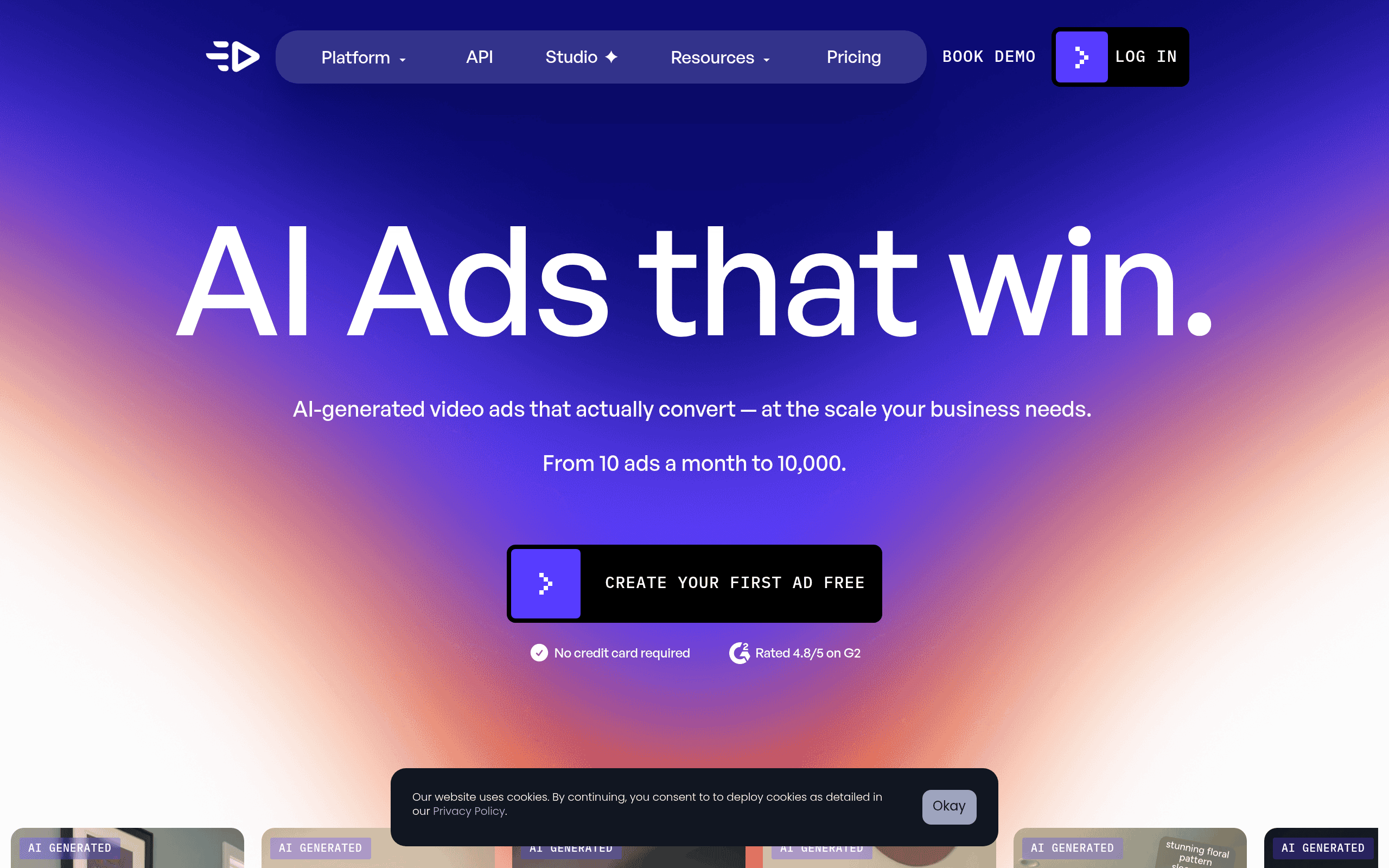
Pricing runs $29 to $499 per month across the tiers.
The strength for behavioral health is the lower entry price compared to Arcads and the broader UGC template library. For operators testing AI avatar formats before committing to a higher-volume contract, Creatify is the lower-risk starting point.
The relative weakness is the same as Arcads on the compliance front. AI avatar content in behavioral health needs scripting discipline that the platform does not enforce.
The verdict is that Creatify fits operators wanting to test AI avatar UGC formats at lower entry cost. The output quality is acceptable; the compliance discipline still has to come from the operator.
8. HeyGen
HeyGen is one of the most polished AI avatar platforms, with realistic avatar speakers, voice cloning, and multi-language output. The platform is used by enterprise marketing teams across verticals.
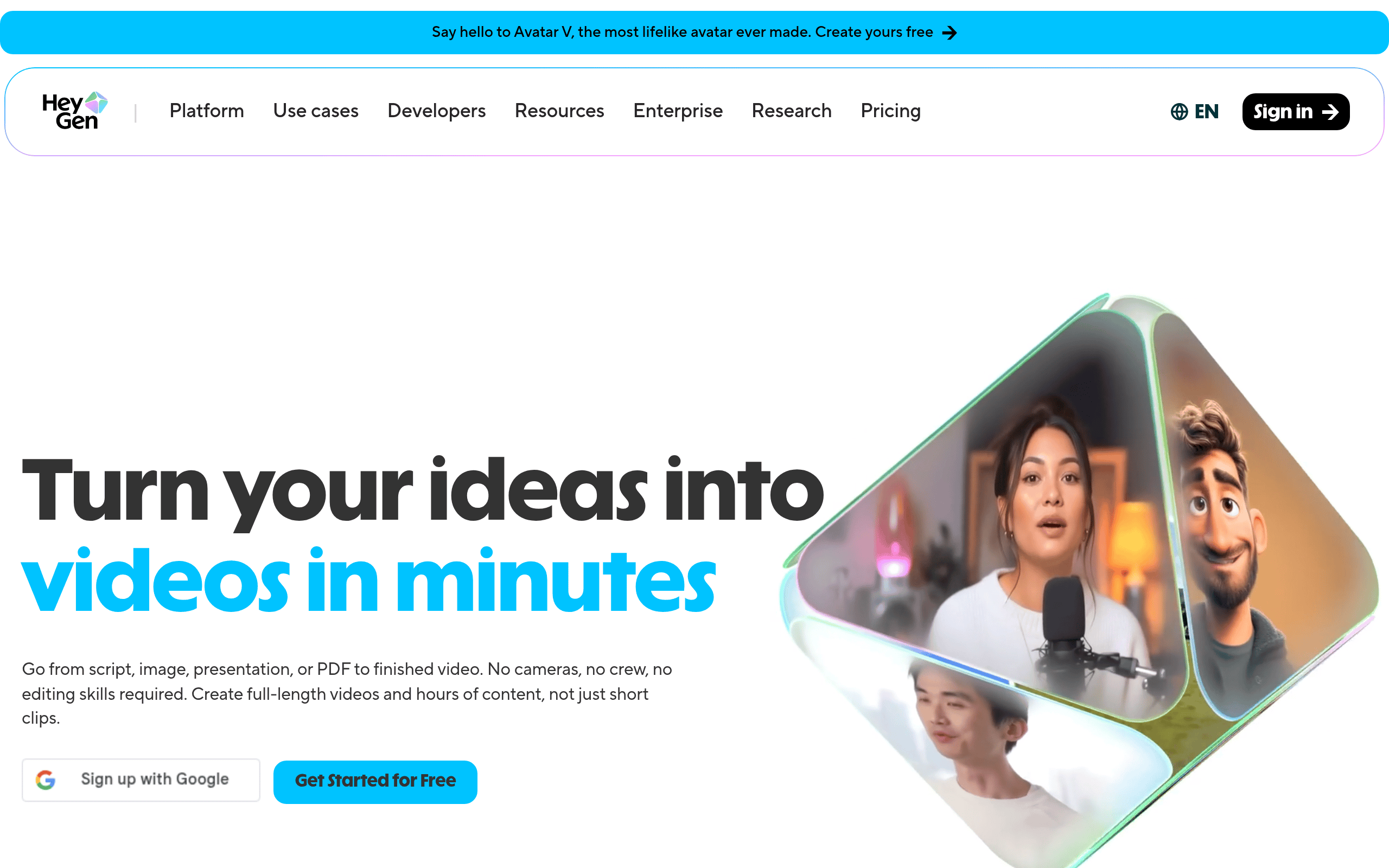
Pricing runs $24 to $89 per month at the standard tiers, with enterprise pricing above that.
The strength is avatar quality. HeyGen avatars look closer to real people than competitor outputs, which matters when the creative is meant to read as credible rather than as obvious AI synthesis.
The relative weakness for behavioral health is the cross-vertical positioning. HeyGen’s templates and avatar library are not behavioral-health-tuned, so the operator has to do the behavioral-health-specific scripting and compliance work themselves.
The verdict is that HeyGen fits operators willing to invest in higher-quality avatar production for educational or operator-voice content. The quality justifies the cost for facilities targeting higher-end markets where production quality matters more.
9. Runway
Runway is an advanced AI video generation platform used by creative professionals for cinematic video content. It is the high-craft end of the AI video tooling category, used more for B-roll and atmosphere creation than for full ad production.
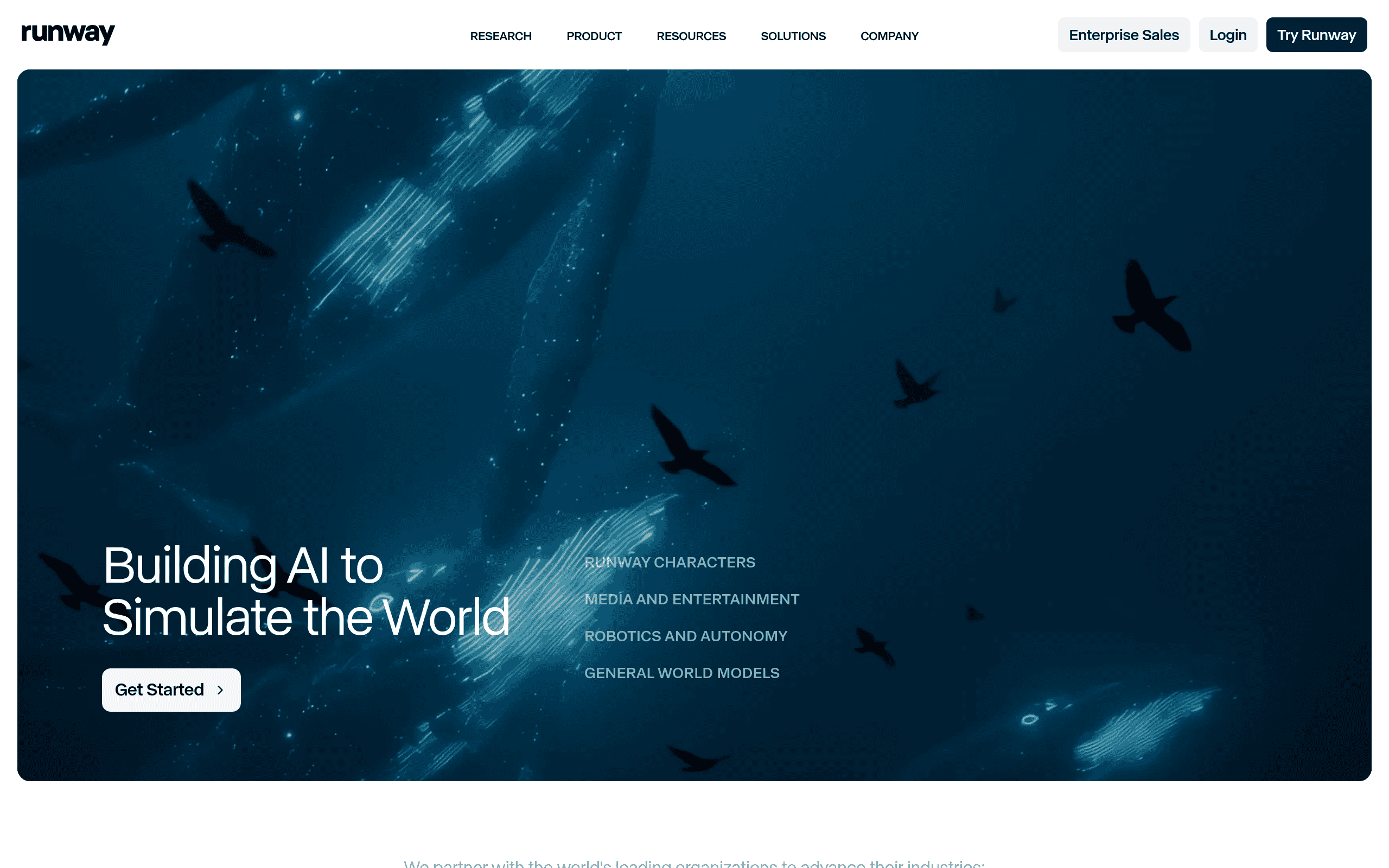
Pricing runs $15 to $76 per month at the standard tiers, with enterprise pricing for teams generating significant volume.
The strength is the cinematic quality. Runway can generate atmospheric facility imagery, abstract motion sequences, and B-roll that would cost $5,000+ to shoot live. For treatment centers with limited facility imagery, Runway-generated B-roll can fill the gap.
The relative weakness is the use-case fit. Runway is not an ad generation tool; it is a creative production tool. Operators wanting full ad workflow should pair Runway with Adobe Premiere or Final Cut for actual ad assembly.
The verdict is that Runway fits operators with sophisticated creative teams who want cinematic AI-generated B-roll and atmosphere. It is not a starting tool for operators new to AI video production.
10. The Brief AI (Formerly Creatopy)
The Brief AI (formerly Creatopy, which rebranded as The Brief in October 2025) is the strongest dedicated motion design platform for ads. The animation builder produces engaging motion ads without requiring video editing skills, with product reveals, text fades, and element movements available through a template-driven interface.

Pricing runs $39 to $149 per month at the standard tiers.
The strength for behavioral health is the motion-format depth. With motion ads sitting at 20 to 25 percent of the recommended behavioral health creative mix, dedicated motion tooling like The Brief AI produces better-quality motion at lower cost than trying to produce motion in Canva or full video tools.
The relative weakness is the single-purpose nature. Operators using The Brief AI will still need Canva or Adobe for static design and Premiere or Final Cut for live-action video. It is not an all-in-one tool.
The verdict is that The Brief AI fits operators committing to a serious motion design layer in their creative mix. For operators running motion ads as occasional one-offs, the dedicated tool is overkill.
11. Motion (Creative Analytics)
Motion is a creative analytics platform that organizes ad performance data by format, concept, hook, and creative type. The platform surfaces patterns across the creative library to identify which hooks, formats, or concepts consistently drive results.

Pricing runs from $99 to $999 per month at the standard tiers, with enterprise contracts above.
The strength is the analytical layer that most other tools in this listicle do not provide. Motion does not generate creative; it tells you which creative is working and why.
For operators running 8 to 12 concepts per month, that signal is the load-bearing input to refining the creative library over a 12-month cycle.
The relative weakness is the cost relative to what Meta Ads Manager and Google Analytics provide for free. Operators below a certain creative-cadence threshold do not generate enough data for Motion’s analytical layer to produce return on investment.
The verdict is that Motion fits operators producing 8+ concepts per month with sufficient media spend to make the analytics layer worthwhile. Below that threshold, manual analysis in Meta Ads Manager covers most of the need.
The single biggest mistake treatment center operators make on ad creative tools is buying the most expensive AI platform and assuming it will lower cost per admit. The tool is never the lever.
The lever is the production system, the compliance workflow, and the volume cadence that turns tool output into admit pipeline. The right tool stack supports the system; it does not replace it.
Preston Powell, CEO of Webserv
12. Meta Advantage+ Creative Studio
Meta’s native creative studio matured through Q2 2026 into a competitive option for behavioral health advertisers running Advantage+ campaigns. The suite covers AI-generated variant expansion from a single source asset, dynamic text overlay, background generation, and format-specific resizing across Reels, Stories, and Feed.
The category advantage is that Meta’s AI has direct signal on which creative variants are producing lift inside the account.
Third-party tools ship variants blind and rely on the media buyer to plug them into the account. Meta’s native suite tests variants against the account’s actual audience response in real time.
The category limits are two. First, Meta’s creative expansions default to consumer-goods aesthetics that require careful compliance guardrails in behavioral health.
Second, the tool operates only inside Meta and does not produce assets that can be re-used on Google, TikTok, or programmatic display. For a rehab account running 60%+ of paid spend inside Meta, that limit is acceptable. For a multi-platform account, it is not.
Best fit: treatment centers running Advantage+ Shopping Campaigns or Advantage+ Sales Campaigns as the primary paid channel, with a media buyer or agency partner comfortable auditing Meta’s creative expansions for compliance and brand fit before variants go live.
Pricing: bundled inside Meta Ads Manager. No incremental cost beyond ad spend.
How the May 2026 Core Update and AI Search reshaped ad creative tool selection
Two changes since this article’s original publication in June 2026 have reshaped how a treatment center should evaluate ad creative tools. Google’s May 2026 core update (May 21 to June 2) is a reminder that templated location pages and unnamed-author service content are the pages most exposed when quality systems are recalibrated.
Search Console’s Generative AI performance report gave operators the first quantitative view of how often their pages show up inside AI Overviews and AI Mode.
The strategic implication for tool selection is that ad creative does not live in isolation from the landing page it points at. A tool that produces high-performing ad creative that drives clicks to a templated location page is producing a creative-to-landing-page mismatch that the May update now actively penalizes.
The tools in the stack still matter, but the evaluation now extends to how the tool integrates with the landing page architecture.
Canva and AdCreative.ai are format-agnostic and connect to whatever page the operator chooses. Meta Advantage+ Creative Studio connects to the destination the campaign specifies. Pencil and AdStellar are agnostic to the landing page decision.
None of the tools solve the landing page problem for the operator. That problem sits inside the site architecture, the named clinical author bios, the visible clinical review workflow, and the primary-source citations on the pages the creative points at.
The tool stack decision has to be paired with a landing page discipline conversation, or the ad creative spend is landing somewhere the algorithm has decided not to reward.
How to Pick the Right Tool Stack for Your Program
Six questions narrow the tool stack decision for most treatment center operators.
What’s the target monthly creative cadence? Below 5 net-new concepts per month, Canva alone covers most needs. 5 to 12 concepts per month, Canva plus one AI generation tool (AdCreative.ai or AdStellar) plus one motion design tool.
13 to 30 concepts, the full Webserv-style stack across all five categories. 30+ concepts, custom enterprise contracts on AI platforms plus dedicated in-house production.
What’s the in-house production capacity? Operators with no in-house designer need tools with strong templates and AI defaults (Canva, AdCreative.ai).
Operators with in-house designers can take advantage of higher-craft tools (Adobe, Figma, Runway). Operators with in-house video producers can deploy Pencil and Premiere together for production scale.
What’s the clinical review workflow? Tools that support in-platform commenting and version control (Canva, Figma) work better for facilities with embedded clinical reviewers. Tools without collaboration features need a separate review layer (typically Google Drive or a dedicated review platform).
What’s the format mix focus? Operators heavy on video need Pencil, Arcads, Creatify, HeyGen, or Runway in the stack. Operators heavy on motion need The Brief AI or Canva’s motion features. Operators heavy on static need strong design tools (Canva, Figma) and AI generation (AdCreative.ai).
What’s the monthly tool budget? Sub-$500 monthly favors Canva + one AI tool. $500-$1,500 monthly enables a 3 to 4 tool stack. $1,500-$3,000 monthly supports the full five-category stack. Above $3,000 enables enterprise-tier contracts on the AI platforms.
Does the operator have an agency partner? Agency partners typically have their own tool stacks that the operator’s in-house tools need to integrate with. Operators duplicating their agency’s tool stack waste budget; operators with complementary tools amplify the agency’s output.
For most multi-facility behavioral health operators we work with, the answers point toward a 4 to 6 tool stack costing $800 to $2,500 monthly with clinical review embedded in the workflow.
The exact mix varies by operator profile, but the cost-tier and tool-count ranges are stable across the portfolio.
7. Where does the ad creative land after the click? This is the newest question in the 2026 evaluation. Tools that produce strong creative pointing at named-clinical-author landing pages with primary-source citations produce a compounding effect.
Tools that produce creative pointing at templated or unnamed-author pages are working against what Google’s quality systems reward. The tool decision has to be paired with a landing page discipline conversation, not evaluated in isolation.
30 minutes to talk through your census goals, payer mix, and what a realistic growth plan looks like for your facility.
No pitch. No pressure. Just a straight conversation from a team that has worked with 200+ treatment centers nationwide.
Frequently Asked Questions
Can AI ad creative tools replace human-led video production for behavioral health?
Not for the campaigns that require credentialed clinical credibility. AI-generated avatar videos cannot stand in for a clinical director speaking on camera, because the family member viewing the ad is reading authenticity signals that AI synthesis still gets wrong.
AI tools can replace human production for educational explainer content, operator-voice campaigns, motion-design statistic ads, and B-roll generation. They cannot replace clinician-led video where the human credibility is the load-bearing signal.
The right framing is that AI tools amplify human-led video production by generating supporting assets at higher volume. Operators trying to use AI tools as full replacement for human-led video typically see cost per admit climb 15 to 25 percent within 90 days as the family-member trust signal erodes.
How much should we budget for ad creative tools in 2026?
Tool budgets for behavioral health operators in 2026 cluster into four bands. Boutique single-facility operators land at $300 to $800 monthly in tool subscriptions, typically Canva Pro plus one or two AI tools.
Mid-market multi-facility operators (3 to 8 facilities) land at $800 to $2,500 monthly, supporting a 4 to 6 tool stack across the five categories. Larger multi-facility operators (8 to 20 facilities) land at $2,500 to $6,000 monthly, with enterprise contracts on the AI platforms and full motion + video + analytics tooling.
National operators above 20 facilities often land at $6,000 to $15,000 monthly with custom enterprise contracts plus production team subscriptions. Tool cost is typically 5 to 10 percent of total creative production budget; the labor to use the tools is the larger expense.
Which AI tool should I buy first if I can only afford one?
Canva Pro at the $15 to $30 per user per month tier. The reason is that Canva covers the broadest range of creative production needs (static design, basic motion, brand consistency, collaboration) at the lowest entry cost.
After Canva, the second tool depends on the operator’s biggest format gap. If video production capacity is the limiting factor, AdCreative.ai or Pencil at the entry tier. If motion design is the gap, The Brief AI. If AI generation volume is the priority, AdStellar’s integrated workflow.
The mistake to avoid is buying the most expensive AI ad platform first. Without supporting tools (design, motion, video editing), the AI platform produces output that the operator cannot finish or deploy at production quality.
Are AI avatar videos compliant for behavioral health marketing?
With careful scripting, yes. Without it, no. AI avatar videos that imply patient testimony create compliance and clinical-credibility risk even when the avatar is clearly artificial. The implied story can suggest patient identification, which 42 CFR Part 2 prohibits even for hypothetical scenarios when the implication is real-patient-like.
AI avatar videos that script the avatar as an educator, operator voice, or hypothetical narrator (clearly labeled) are compliant and useful. The discipline has to come from the scripting and review process, not the tool.
Operators using AI avatars without clinical review consistently produce content that creates regulatory exposure. Build the clinical review step into the script approval workflow, not into the post-production approval workflow, where catching issues costs more time.
How does tool choice affect cost per admit?
Indirectly, and less than most operators assume. The lever for cost per admit is the production system: format mix, creative cadence, clinical review quality, and the testing framework. Tool choice supports or limits that system but does not determine the outcome.
Two operators running identical tool stacks with different production systems will produce 30 to 50 percent different cost per admit numbers. Two operators running different tool stacks with identical production systems will produce nearly identical cost per admit numbers.
The strategic question is not “which tool moves the needle” but “what production system are we building, and which tools support it.” Operators framing the question correctly produce better creative at lower total cost than operators chasing tools.
Should we use one all-in-one platform or assemble a multi-tool stack?
Multi-tool stack for almost every operator. The all-in-one platforms (AdCreative.ai, AdStellar) cover broad ground at moderate depth in each category. The category-specific tools (Pencil for video, The Brief AI for motion, Motion for analytics) cover narrow ground at greater depth.
For behavioral health operators specifically, the depth matters more than the breadth because the compliance and clinical-credibility constraints require specialized handling in each format category. A specialized tool plus clinical review produces better output than an all-in-one platform that does not understand behavioral health compliance.
The exception is operators below 5 concepts per month, where a single tool (Canva or AdCreative.ai) is enough volume to not warrant the multi-tool complexity. Above that volume, the multi-tool stack consistently outperforms.
How does AI search affect which ad creative tools we should buy?
AI search does not change which tools produce the best ad creative. It changes what those tools have to be paired with to produce lift. A tool that ships strong creative pointing at a templated location page or an unnamed-author service page is now producing spend that lands somewhere the algorithm has decided not to reward.
The July 2026 evaluation criterion added to this framework is landing page fitness. Ask whether the tool integrates with a page architecture that carries named clinical author bios, visible clinical review dates, and primary-source citations. If not, budget for the landing page work alongside the tool.
Templated, unnamed-author pages are the weakest YMYL pages in Google’s quality systems, and that weakness compounds through every ad creative variant the tool ships into a mismatched landing page. The tool is only part of the decision.
Build a Tool Stack That Supports the Production System
Ad creative tools in 2026 are abundant. The Webserv approach is to combine 4 to 7 tools across the five functional categories, paired with clinical reviewer workflow and creative brief framework, to produce the 15 to 30 monthly concepts that move cost per admit.
We help treatment center operators build the right tool stack for their production system, integrate clinical review into the creative workflow, and scale creative cadence to the levels that compound across a 12-24 month engagement.
Book an intro meeting to walk through your current creative production setup, where the tool gaps are likely costing you admits, and what the right stack looks like for your facility profile.
The 2026 evaluation adds one more dimension the original build of this piece could not include. The tool stack decision now has to sit inside a broader conversation about the landing pages the creative points at.
A best-in-class stack that ships variants into a templated, unnamed-author page architecture is a partial optimization at best.
The operators producing the strongest results are treating the tool stack decision and the landing page decision as one workstream, not two. That coordination is where the compounding effect lives, and it is the reason the tool question and the site question have to be answered together.
For the broader picture of how creative tools fit inside a full treatment center marketing program, see our ultimate guide to behavioral health marketing and our creative strategy guide for rehab and addiction treatment marketing.
Mitch Marowitz is Director of Paid Media at Webserv, where he leads paid search, paid social, and CRO programs for behavioral health and addiction treatment centers across the U.S. He writes about treatment-center paid media performance, creative testing, and the operational realities of running high-acuity healthcare campaigns.