Most websites lose the majority of their visitors without a call, a form fill, or any next step. Conversion rate optimization (CRO) offers a systematic approach to transform visitors into customers, raising website performance without necessarily increasing traffic or marketing spend. This guide covers the fundamentals of CRO, why it matters, and practical techniques to boost conversion rates, with a section on how the work changes for addiction treatment and behavioral health websites.

What is Conversion Rate Optimization
Conversion rate optimization (CRO) is the systematic process of increasing the percentage of website visitors who take a desired action, such as making a purchase, signing up for a newsletter, or filling out a form. The goal of CRO is to improve the effectiveness of a website in converting visitors into customers or leads.
At its core, conversion optimization involves analyzing user interactions, identifying conversion barriers, and implementing enhancements to improve user experience and drive conversions. This data-driven approach typically includes:
- Analyzing user behavior through heatmaps and session recordings
- Conducting user surveys and gathering feedback
- Performing A/B testing to compare webpage variations
- Optimizing key elements like calls-to-action, forms, and layouts
- Improving site speed and overall user experience
A crucial aspect of conversion rate optimization is understanding the target audience and tailoring the website to meet their needs and preferences. This involves creating compelling content, simplifying navigation, and addressing pain points in the user journey.
The conversion optimization definition extends beyond increasing raw numbers. It focuses on improving the quality of conversions, so that the right visitors are attracted and converted into valuable, long-term customers.
With a well-run CRO program, businesses can maximize the value of existing traffic, reduce customer acquisition costs, and drive more revenue without necessarily increasing marketing expenditure.
The Importance of Conversion Rate Optimization Marketing
Building on the foundation of CRO, it’s essential to understand its critical role in digital marketing strategies. Conversion rate optimization marketing is a vital approach for businesses aiming to maximize the value of their web traffic and improve their bottom line. By focusing on optimizing websites and marketing efforts to increase conversions, companies can drive more leads, sales, and revenue without necessarily increasing marketing spend or site traffic.
A key benefit of CRO marketing is its ability to enhance the efficiency of the entire marketing funnel. By identifying and eliminating conversion barriers throughout the customer journey, a higher percentage of visitors are likely to take desired actions. This leads to improved return on investment for all marketing efforts, from paid advertising to content marketing.
Creating a conversion optimized website involves analyzing user behavior, conducting A/B tests, and making data-driven improvements to site design, content, and functionality. Key areas of focus include:
- Optimizing landing page layouts and messaging
- Enhancing site navigation and user experience
- Simplifying forms and checkout processes
- Improving page load speeds
- Crafting compelling calls-to-action
Website conversion rate optimization is an ongoing process requiring continuous testing and refinement. By consistently analyzing site performance and making incremental improvements, conversion rates can steadily increase over time. This iterative approach allows adaptation to changing user behaviors and preferences, so the site keeps driving conversions.
Another crucial aspect of CRO marketing is its ability to provide valuable insights into the target audience. Through testing and optimization, businesses gain a deeper understanding of what motivates visitors to take action. This knowledge can inform not only website design but also broader marketing strategies, product development, and customer service efforts.
Essential Conversion Rate Optimization Techniques
With a solid understanding of CRO’s importance, let’s explore practical techniques to enhance website performance and drive conversions. Implementing effective conversion rate optimization techniques is crucial for improving website performance and driving more conversions. Here are some key strategies to consider:
Conduct Thorough User Research
Understanding the target audience is fundamental to successful CRO. Use tools like surveys, heatmaps, and session recordings to gather insights into user behavior and preferences. This data will inform optimization efforts and help create more compelling experiences.
Optimize Landing Pages
Landing page optimization is often the first point of contact for potential customers. Focus on creating clear, concise messaging that highlights the value proposition. Use strong headlines, compelling visuals, and prominent calls-to-action to guide visitors towards conversion.
Implement A/B Testing
A/B testing is one of the most powerful conversion optimization strategies. Test different variations of page elements like headlines, images, and CTAs to determine which versions resonate best with the audience and drive more conversions.
Simplify Forms
Long, complicated forms can be a major barrier to conversion. Simplify forms by only asking for essential information and using smart design techniques like inline validation and progress indicators to reduce friction.
Use Social Proof
Incorporate customer testimonials, reviews, and trust badges throughout the site to build credibility and reassure potential customers. Social proof can be a powerful motivator for conversions.
A/B Testing for Improved Conversions
Expanding on the concept of A/B testing, it’s important to note that this technique is one of the most effective conversion rate optimization best practices available to marketers and website owners. This technique involves creating two versions of a webpage or element and showing each version to a portion of visitors to determine which performs better in terms of conversions.
To conduct an effective A/B test:
- Start with a clear hypothesis about what change might improve conversions
- Create two versions of the page, changing only one element at a time
- Use a reliable A/B testing tool to split traffic evenly between versions
- Run the test for a statistically significant period
- Analyze the results to determine which version drove more conversions
Common elements to test include:
- Headlines and copy
- Call-to-action buttons (color, text, placement)
- Images and videos
- Form fields and layout
- Pricing and offer presentation
Optimizing Landing Pages and CTAs
Building on the importance of A/B testing, it’s crucial to focus on the specific elements with the largest effect on conversion rates. Landing pages and calls-to-action (CTAs) are critical elements for improving conversion rates on websites. By optimizing these key components, you can raise your website conversion rate and drive more valuable actions from visitors.
For landing pages, focus on creating a clear and compelling value proposition that immediately resonates with the target audience. Use concise, benefit-driven headlines and subheadings to quickly communicate the core offering. Incorporate high-quality images or videos that showcase the product or service in action.
To improve conversion rate on your website, keep landing page content scannable and easy to digest. Use bullet points to highlight key features and benefits, and keep paragraphs short. Remove unnecessary navigation elements that could distract visitors from taking the desired action.
Optimizing CTAs for Higher Conversions
Your call-to-action is the gateway to conversion, so it’s crucial to optimize it for maximum impact. Here are some effective strategies to increase website conversion rate through CTA optimization:
- Use action-oriented, specific language that clearly communicates what will happen when the user clicks
- Make the next step concrete and time-bound where it is true (“Talk to admissions today”), and skip invented scarcity like “limited time,” which healthcare visitors read as a red flag
- Make your CTA button stand out visually with contrasting colors and ample white space
- Test different button sizes, shapes, and placements to find the optimal configuration
- Use first-person language (e.g., “Start my free trial” instead of “Start your free trial”) to increase personal connection

How to Improve Website Conversion Rates
While optimizing specific elements like landing pages and CTAs is crucial, it’s equally important to look at the whole site when improving conversion rates. To achieve this, businesses need to focus on several key areas:
Optimize Website Design and User Experience
A clean, intuitive website design is crucial for increasing website conversion rates. Make your site easy to move through, fast to load, and professional in appearance. Key elements include:
- Clear and prominent calls-to-action (CTAs)
- Simplified navigation menus
- Mobile-responsive design
- Fast page load times
Create Compelling and Relevant Content
High-quality content that addresses visitors’ needs and pain points can lift conversion rates. Focus on:
- Crafting persuasive product descriptions
- Developing informative blog posts and articles
- Using engaging visuals like images and videos
- Incorporating customer testimonials and reviews
Applying User Experience Design
Building on the importance of website design, user experience (UX) design plays a crucial role in website conversion rate optimization. By focusing on creating intuitive, user-friendly interfaces, businesses can improve their conversion rates and overall website performance.
A key aspect of UX design for conversion optimization is simplifying navigation. A clear, logical site structure allows visitors to easily find the information they need, reducing friction in the user journey.
This can be achieved through:
- Implementing a clear and concise menu structure
- Using descriptive labels for navigation items
- Providing a search function for quick access to specific content
Implementing Personalization Strategies
To further enhance the user experience and drive conversions, personalization is a powerful technique. By tailoring content and experiences to individual users, you can create more relevant and engaging interactions that drive conversions. Here are some effective personalization strategies to implement:
- Use dynamic content to display targeted messaging based on user attributes or behavior
- Implement product recommendations powered by machine learning algorithms
- Personalize email campaigns with user-specific offers and content
- Customize landing pages based on referral source or user segment
- Use geolocation to show location-specific content and offers
The Conversion Optimization Process
To tie together all the techniques and strategies discussed, it’s essential to understand the systematic approach to conversion rate optimization. The conversion optimization process is a data-driven methodology that involves several key steps:
- Research and Analysis: Begin with a thorough examination of current website performance. Analyze user behavior through tools like heatmaps, session recordings, and funnel analysis to identify areas for improvement and understand why visitors may be leaving without converting.
- Hypothesis Formation: Develop specific, measurable, and testable hypotheses based on research findings. For example, “Changing the call-to-action button color from blue to green will increase click-through rates by 10%.”
- Test Design: Design tests to validate hypotheses. A/B testing is a common method used in conversion rate optimization, comparing two versions of a webpage to see which performs better. Multivariate testing can also be employed to test multiple variables simultaneously.
- Implementation: Execute the designed tests on the website, confirming correct setup and sufficient traffic allocation to each variation to achieve statistical significance.
- Data Collection and Analysis: Collect data on user interactions with each variation and analyze it to determine which version performed better in terms of the desired conversion goals.
- Implementation of Winning Variations: If a variation beats the control with statistical significance, implement it as the new standard. Continue monitoring its performance over time.
- Iteration and Continuous Improvement: The conversion optimization process is cyclical. Use insights gained from each test to inform the next round of hypotheses and tests. This continuous improvement cycle is key to long-term success in conversion rate optimization.
Many conversion rate optimization blogs emphasize the importance of this iterative process. It’s not about making a single change and expecting dramatic results, but rather about making incremental improvements over time that compound into large gains in conversion rates.
By following this systematic approach and implementing the techniques discussed throughout this guide, businesses can improve their website’s conversion rates and drive more value from existing traffic. Remember, conversion rate optimization is an ongoing process that requires dedication, analysis, and a willingness to continually test and refine your website’s performance.
How CRO Changes for Treatment Center Websites
The techniques above were written for general websites. On an addiction treatment or mental health site, three things change. First, the conversion is usually a phone call or an insurance verification form, not a cart checkout, so call tracking and form completion are the numbers to test against.
Second, measurement is constrained. Standard pixels and session-recording tools can pass health information to third parties, so tests need a HIPAA-safe conversion tracking setup before any results can be trusted.
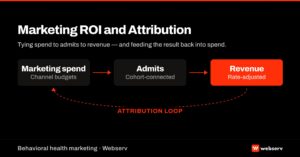
Third, the goal is admits, not form fills. A change that adds unqualified calls can raise the conversion rate while raising cost per admit. Compare your pages against rehab landing page conversion rate benchmarks, and read how to lower cost per admit without cutting ad budget for the downstream view.
For the treatment-center version of this playbook, see our conversion rate optimization guide for rehab marketing, and the behavioral health marketing guide for how CRO fits with SEO, paid media, and admissions.