Live virtual webinar
What 1,000 Treatment Center Websites Taught Us About Getting Recommended by AI
You'll leave with three things you can do this week to get seen in ChatGPT, Gemini and Google's AI.
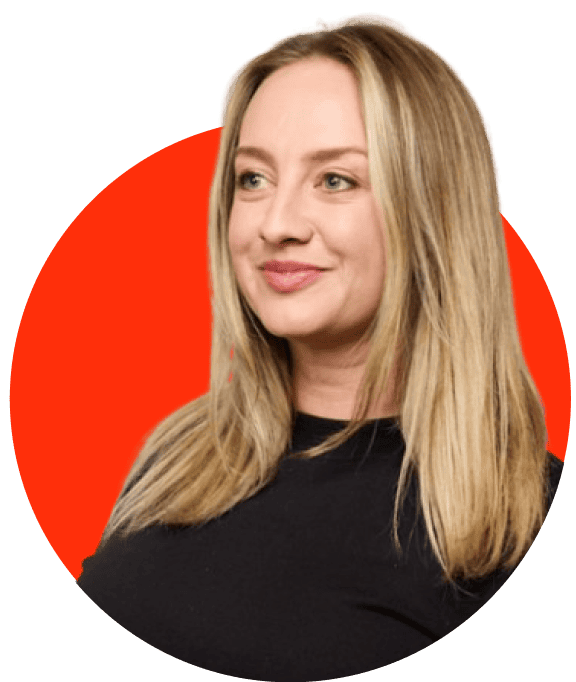 Hosted by Olivia Birkbeck, Director of Organic Growth at Webserv, who led the study
Reserve Your Spot
Get the full report the morning of the webinar, plus a free review of your center's trust stack.
Can’t make it live? Register and we’ll send you the recording.
Based on 1,000 treatment center websites and the AI answers for every state.


Your host
Olivia leads Webserv's SEO and AEO team, which runs organic search and AI visibility programs for addiction and mental health treatment centers. She designed this study, built its scoring and reviewed the AI answers behind every finding.
What you'll learn
Leave With a Clear Picture and a Plan
About the webinar
AI Doesn't Trust What You Say About Yourself
When a family asks AI where to find treatment, it leans on what the rest of the web can confirm.
Olivia tested that idea on 1,000 treatment center websites drawn at random from FindTreatment.gov, covering every state. She'll walk through the Trust Stack: five layers that run from the basics patients look for on your site, through credentials, listings and earned citations, up to Google visibility.
You'll also see something Google doesn't show: it returns zero search volume for "rehab near me" and "addiction treatment" in every state. Here’s an early look at where demand outruns the number of centers. Olivia will break it down by region on November 18.
Who this is for
- Owners and CEOs of treatment centers
- Multi-location network leaders
- Marketing and admissions leaders
- Anyone who wants to know what AI says about their center, and what to fix first
Early data: try your state
Where Search Demand Outruns the Number of Centers
Because Google shows no volume for those searches, we built our own demand measure. Each dot is a state. Above the line, people search for treatment more than the number of centers would suggest.
Hover a dot or pick your state to see how its search demand compares with its share of treatment centers.
Sources: treatment facility counts from SAMHSA's FindTreatment.gov (27,555 listed facilities). Search demand is Webserv's index built from Google search data. Wyoming's search volume is too low for Google to score, so it is estimated. Axes use a log scale.
A preview of the findings
Three Things We Found Before the Big Reveal
We asked ChatGPT, Gemini, Perplexity, Claude and Google's AI the questions families ask about treatment in every state. Here's a taste of what came back.
0 of 151
Times Google showed an AI Overview when we searched "best addiction treatment centers in [state]" across the country.
About half
Of the sources AI cited in state treatment answers were government sites and directories. Treatment centers in our sample made up 7%.
Ask twice
And you get a different list. When we asked the same questions again, only about half the centers AI named showed up a second time.
0.00
Which trust layer goes with AI visibility once you account for the size of a center's site.
00%
Share of treatment center sites showing the basic transparency signals patients look for.
3 fixes
The first things to change on your site and listings.
Results from the AI answers we collected in October 2026. AI answers change over time and by location. No individual treatment center is named in the study.
What AI actually said
Same Question, Four Very Different Answers
We asked every engine "best addiction treatment centers in Ohio" on October 15, 2026. Flip between them. Center names are blacked out because we never name a provider from the study.
Real answers from our study data, redacted. Chips show what each answer linked to.
Inside the study
How We Studied 1,000 Treatment Center Websites
- 1A random, national sample. 1,000 websites drawn at random from the 27,555 facilities SAMHSA lists on FindTreatment.gov. Each state got a share that matches its share of listed facilities, with at least 5 sites per state.
- 2Both sides of the field. 509 substance use and 491 mental health providers, from single locations to multi-site networks.
- 3Five trust layers on every site. The basics patients look for, credentials, listings, earned citations and Google visibility.
- 4Real AI answers. We asked ChatGPT, Gemini, Perplexity, Claude, Google AI Mode and AI Overviews a fixed set of treatment questions about each site's state, and ran them more than once to see how much answers change.
- 5No center is named. Results are reported nationally and by region. The full method is published with the report.
Weren't in the study?
Get Your Own Trust Stack Review
Register to see the findings live, get the full report the morning of the webinar, and request a free review of your own center's trust stack.
Reserve My Spot