You’re running a treatment center, you already know that organic search drives high-intent admissions. But most rehab operators aren’t SEO specialists. You’re managing clinical operations, dealing with insurance delays, and trying to keep census stable.
The problem is that SEO for addiction treatment isn’t guesswork anymore. Your competitors are using tools to find keyword gaps, track rankings, and fix technical issues that tank your visibility. If you’re not doing the same, you’re losing admissions to centers that are.
This list covers the seven tools that actually matter for treatment center SEO. Not every tool on the market. Not the ones agencies use to justify their retainer. These are the tools that help you understand what’s working, fix what’s broken, and make better decisions about where to invest.
Quick Comparison Snapshot
| Tool | Best For | Core Strength | Pricing |
| 1. Google Business Profile | Local search and map pack visibility | Free local exposure and review management | Free |
| 2. Google Search Console | Technical SEO and query insights | Direct data from Google on site performance | Free |
| 3. Google Analytics 4 | User behavior and conversion tracking | Understanding how visitors become admissions | Free |
| 4. Ahrefs | Competitive keyword research and backlinks | Finding keyword opportunities competitors own | $129+/month |
| 5. Semrush | All-in-one SEO and content strategy | Comprehensive suite for keyword, audit, and local | $139+/month |
| 6. Screaming Frog | Technical site audits | Finding and fixing technical issues at scale | Free (limited) / $259/year |
| 7. BrightLocal | Local SEO and citation management | Managing local listings and map pack rankings | $35+/month |
7 SEO Tools Rehabs Should Be Using
1. Google Business Profile (GBP)
Cost: Free
Best For: Local search performance and high-intent call tracking
Overview
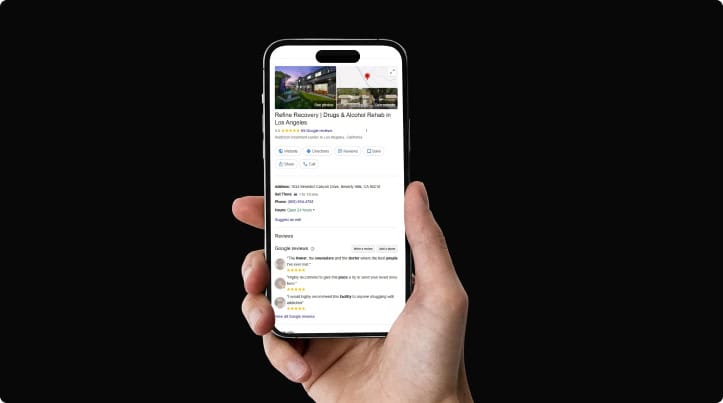
Google Business Profile is the single most important tool for treatment centers targeting local search. When someone searches “rehab near me” or “addiction treatment in [city],” your GBP listing determines whether you show up in the map pack—the three local results that appear at the top of search results.
Most admissions directors underestimate how many high-intent calls come directly from GBP. These are people who found you on Google Maps, read your reviews, saw your hours, and called immediately. That’s why your GBP listing needs constant attention.
What You Actually Use It For
- Managing and responding to reviews: Reviews directly impact your map pack ranking and whether someone calls you. Respond to every review, positive or negative, within 24 hours.
- Tracking where calls come from: GBP shows you how many people called directly from your listing. This is high-intent traffic you can’t afford to ignore.
- Posting updates and content: Regular posts keep your listing active and give you more real estate in search results. Share events, new programs, or educational content weekly.
- Monitoring search queries: GBP Insights shows you what search terms triggered your listing. If you’re not showing up for the terms that matter, you know where to focus.
Critical for Rehabs Because: Local search drives immediate admissions. When someone searches for treatment, they’re often in crisis or making a decision that day. Your GBP listing is the first impression, and it needs to be complete, current, and actively managed.
Red Flags to Avoid:
- Incomplete business information or inconsistent NAP (name, address, phone) data
- Ignoring negative reviews or responding defensively
- Not verifying your listing or letting it go unmanaged for weeks
2. Google Search Console
Cost: Free
Best For: Real query insights and technical SEO monitoring
Overview
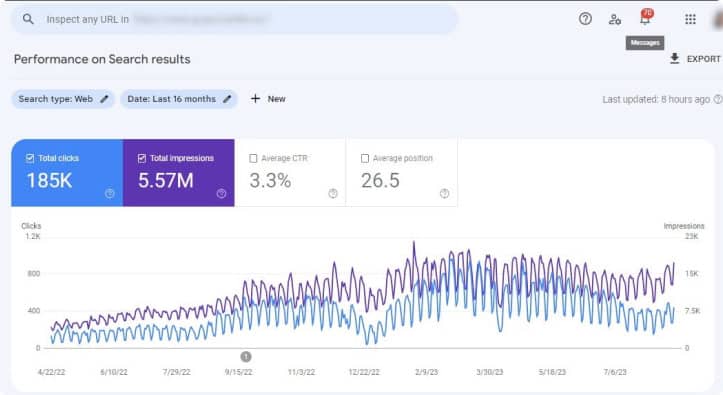
Google Search Console shows you exactly what people type into Google before they find your site. It also tells you which pages are ranking, which ones have technical problems, and where you’re losing visibility.
Most treatment centers never look at Search Console. That’s a mistake. This tool tells you what’s actually working in your SEO strategy and what’s broken. It’s direct data from Google about your site’s performance.
What You Actually Use It For
- Identifying high-value queries: See which search terms are driving impressions and clicks. If you rank on page two for “luxury rehab California,” you know where to focus content efforts.
- Finding indexing issues: Google can’t rank pages it hasn’t indexed. Search Console shows you which pages are blocked, have errors, or aren’t being crawled properly.
- Tracking performance over time: Monitor how your rankings and click-through rates change after you update content, fix technical issues, or launch new pages.
- Spotting manual actions or penalties: If Google penalizes your site for low-quality content or link schemes, you’ll see it here first.
Critical for Rehabs Because: You need to know which addiction-related search terms are driving traffic and which ones you’re losing to competitors. Search Console gives you that data without guessing.
3. Google Analytics 4 (GA4)
Cost: Free
Best For: Understanding user behavior and conversion paths
Overview
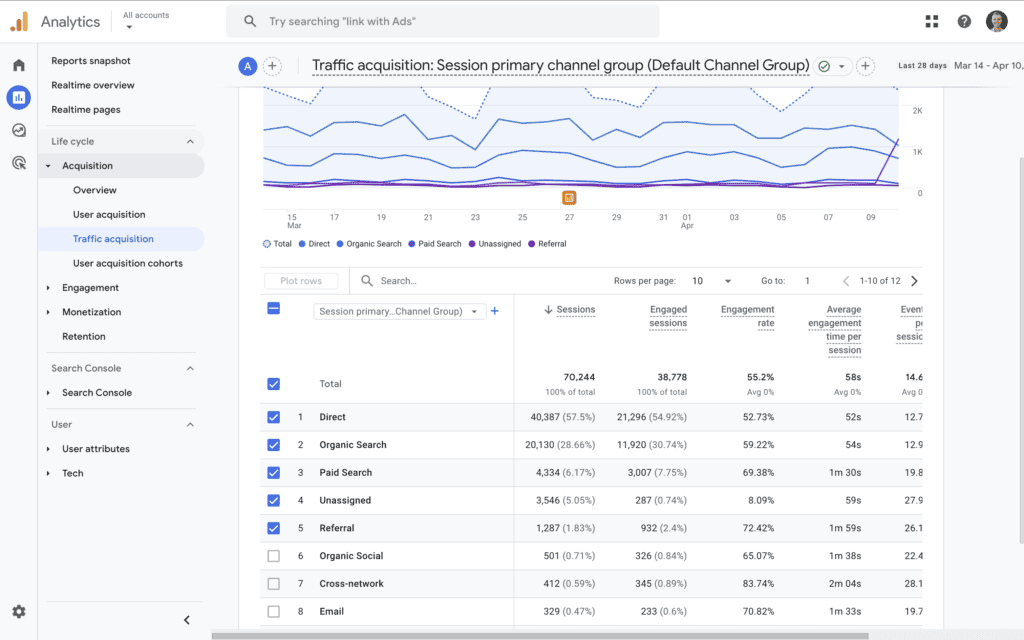
Google Analytics 4 tracks how visitors interact with your website. Where they land. What pages they visit. How long they stay. Whether they fill out a contact form or call your admissions line.
For treatment centers, this matters because not every visitor becomes an admission. GA4 helps you understand which traffic sources send qualified leads, which pages lose people, and where your site is working versus where it’s broken.
What You Actually Use It For
- Tracking conversions: Set up goals for form submissions, phone clicks, and chat interactions. Know which marketing channels drive actual admissions, not just traffic.
- Understanding traffic sources: See whether your visitors come from organic search, paid ads, social media, or referrals. Allocate budget based on what’s working.
- Analyzing user paths: Identify which pages people visit before they convert. If most admissions come through your IOP page, invest more there.
- Spotting drop-off points: If visitors land on your contact page but don’t submit the form, something’s broken. GA4 shows you where people leave.
Critical for Rehabs Because: Traffic doesn’t matter if it doesn’t convert. GA4 helps you focus on what drives admissions instead of vanity metrics like page views.
4. Ahrefs
Cost: Starts at $129/month
Best For: Competitive keyword research and backlink analysis
Overview
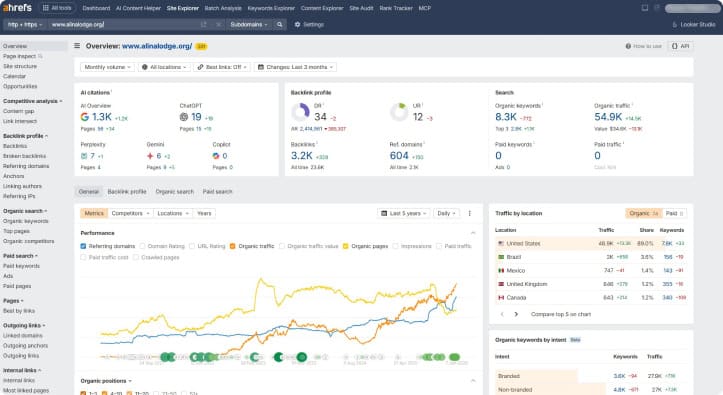
Ahrefs is one of the most powerful tools for understanding what your competitors rank for, which keywords drive their traffic, and where you have opportunities to compete. It’s expensive, but for treatment centers serious about SEO, it’s worth it.
Ahrefs also tracks backlinks—the external sites linking to yours. Backlinks are still one of the strongest ranking factors, and Ahrefs shows you who links to your competitors and how you can earn similar links.
What You Actually Use It For
- Finding keyword gaps: See which addiction treatment keywords your competitors rank for that you don’t. Build content to close those gaps.
- Analyzing backlink profiles: Identify high-authority sites linking to competitors. Reach out for similar opportunities or find gaps in their link strategy.
- Tracking keyword rankings: Monitor your position for target keywords over time and see how changes to your site impact rankings.
- Content research: Discover which pages on competitor sites drive the most traffic. Use that insight to create better, more comprehensive content.
Critical for Rehabs Because: Addiction treatment SEO is brutally competitive. Ahrefs shows you exactly what competitors are doing to win search traffic, so you can compete strategically instead of guessing.
5. Semrush
Cost: Starts at $139/month
Best For: All-in-one SEO suite and content strategy
Overview
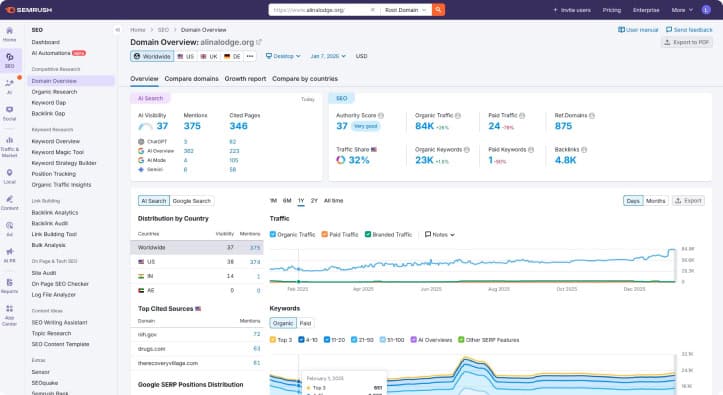
Semrush is the closest thing to a complete SEO platform. It handles keyword research, site audits, rank tracking, backlink analysis, content optimization, and local SEO—all in one tool. For treatment centers managing SEO internally or working with an agency, Semrush centralizes almost everything you need.
The downside is the learning curve. Semrush has so many features that it’s easy to get overwhelmed. Focus on the core tools that matter most for addiction treatment SEO.
What You Actually Use It For
- Site audits: Semrush crawls your site and flags technical issues like broken links, slow pages, duplicate content, and missing metadata. Fix these to improve rankings.
- Keyword research and tracking: Identify high-value addiction treatment keywords and track your rankings over time. See which keywords are moving up or down.
- Local SEO tracking: Monitor your visibility in local map packs and track how you compare to competitors in your geographic area.
- Content optimization: Semrush’s content tools analyze top-ranking pages for target keywords and recommend improvements to help you compete.
Critical for Rehabs Because: If you don’t have a dedicated SEO team, Semrush gives you a comprehensive view of your site’s health and performance in one place. It’s particularly strong for local SEO, which matters for most treatment centers.
6. Screaming Frog SEO Spider
Cost: Free (up to 500 URLs) / $259/year (unlimited)
Best For: Technical site audits and finding hidden issues
Overview
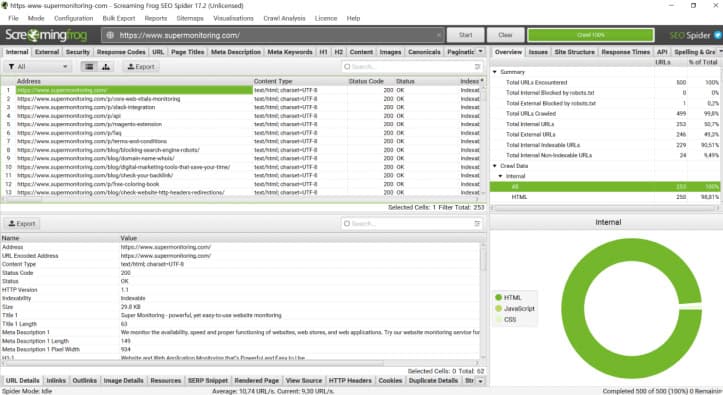
Screaming Frog is a desktop tool that crawls your website the way Google does. It finds broken links, duplicate content, missing title tags, redirect chains, and other technical issues that hurt your SEO performance.
Most treatment center websites have technical problems they don’t know about. Screaming Frog surfaces those issues quickly so you can fix them before they cost you rankings.
What You Actually Use It For
- Finding broken links: Internal and external links that lead to 404 errors hurt user experience and SEO. Screaming Frog finds them all so you can fix or remove them.
- Identifying duplicate content: If multiple pages on your site have identical or near-identical content, Google may not rank them. Screaming Frog flags duplicates.
- Auditing metadata: Missing or duplicate title tags and meta descriptions hurt click-through rates. Screaming Frog shows you which pages need updates.
- Analyzing site structure: See how pages link to each other and identify orphan pages that aren’t connected to your site architecture.
Critical for Rehabs Because: Technical issues are invisible until they cost you rankings. Screaming Frog gives you a complete picture of your site’s technical health in minutes, not hours.
7. BrightLocal
Cost: Starts at $35/month
Best For: Local SEO and citation management
Overview
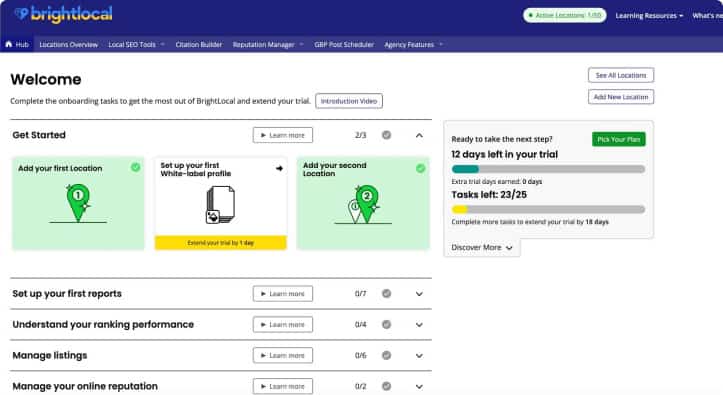
BrightLocal is built specifically for local SEO. For treatment centers that rely on local search traffic—”rehab near me,” “addiction treatment in [city],” or regional queries—BrightLocal handles citation management, review monitoring, and map pack tracking.
If your center serves a specific city or region, BrightLocal helps you dominate local search results by ensuring your business information is consistent across directories and your map pack rankings are improving.
What You Actually Use It For
- Managing citations: Your NAP (name, address, phone) needs to be consistent across hundreds of directories. BrightLocal tracks and updates citations to prevent confusion and ranking drops.
- Monitoring local rankings: Track your position in Google’s map pack for target keywords. See how you compare to local competitors.
- Tracking reviews across platforms: Monitor reviews on Google, Facebook, Yelp, and other platforms from one dashboard. Respond quickly to maintain your reputation.
- Local SEO audits: BrightLocal scans your local SEO health and flags issues like inconsistent NAP data, missing citations, or weak map pack visibility.
Critical for Rehabs Because: Local search drives admissions for most treatment centers. If your business information is inconsistent or your map pack rankings are weak, you’re losing high-intent calls to competitors.
What the Best Treatment Centers Do Differently with SEO Tools
HOW WE PICKED THE 7
We ranked tools by the specific job they do for a treatment center — local map-pack presence, Google-side query data, admit-attributed traffic tracking, competitive keyword research, technical crawl, and citation management. Every tool on this list either owns its category or beats the alternatives on a workflow that recurs weekly in a real BH marketing program. We cut anything that duplicates coverage the free stack already gives you, and anything that requires a five-figure annual spend to deliver value a $259 tool matches for smaller operators.
Most rehabs install tools and then ignore them. They check rankings occasionally, but they don’t act on the data.
The best treatment centers use these tools to drive decisions. They check Search Console weekly to see which keywords are gaining or losing traction. They audit their site quarterly with Screaming Frog and fix every broken link. They monitor GBP daily and respond to reviews within hours.
They also stack tools strategically. Ahrefs identifies keyword opportunities. Semrush audits the site for issues. Screaming Frog fixes technical problems. GA4 tracks whether those changes drive admissions.
None of these tools work in isolation. The value comes from using them together to understand what’s working, what’s broken, and where to focus next.
How to Choose the Right SEO Tools for Your Treatment Center
Start with the Free Tools First
If you’re not already using Google Business Profile, Search Console, and GA4, start there. These tools are free, they give you essential data, and they’re critical for any treatment center doing SEO.
Don’t pay for premium tools until you’re actively using the free ones. Most treatment centers have enough low-hanging fruit in Search Console and GBP to drive meaningful traffic improvements without spending a dollar.
Invest in Paid Tools Only When You Have Capacity
Ahrefs, Semrush, and BrightLocal are powerful, but they require time and expertise to use effectively. If you don’t have someone on your team who can dedicate hours each week to SEO, these tools will sit unused.
Consider whether you need an agency to manage these tools for you, or whether you’re ready to bring the work in-house. Either way, don’t pay for tools you can’t use.
Prioritize Local SEO Tools If You Serve a Specific Region
If your treatment center primarily serves one city, county, or region, tools like BrightLocal and the local SEO features in Semrush are essential. Map pack visibility drives immediate calls from high-intent searchers.
National facilities with multiple locations need broader keyword research and competitive analysis tools like Ahrefs.
Don’t Expect Tools to Replace Strategy
Tools show you data. They don’t tell you what to do with it. You still need someone who understands SEO strategy, the addiction treatment market, and how to prioritize fixes that move the needle.
If you’re using tools without a clear strategy, you’ll waste time chasing metrics that don’t drive admissions.
Common Mistakes Rehabs Make with SEO Tools
Most treatment centers make predictable mistakes with SEO tools. They install them but never check them. They track rankings without tracking conversions. They focus on vanity metrics like traffic instead of whether that traffic converts.
Here’s what to avoid:
- Not setting up conversion tracking in GA4: Traffic means nothing if you don’t know whether it drives admissions. Set up goals for form submissions, phone clicks, and chat interactions.
- Ignoring Google Business Profile: Your GBP listing is often the first thing high-intent searchers see. If it’s incomplete or has unanswered reviews, you’re losing calls.
- Letting technical issues pile up: Broken links, duplicate content, and missing metadata hurt your rankings. Run quarterly audits with Screaming Frog and fix issues immediately.
- Paying for tools you don’t use: If you’re not logging into Ahrefs or Semrush weekly, cancel the subscription. Use free tools until you have the capacity to act on paid tool data.
- Tracking rankings without tracking context: A keyword moving from position 15 to position 10 doesn’t matter if it drives zero admissions. Focus on high-intent keywords tied to conversions.
Scaling your Rehab with the best SEO Tools
SEO for treatment centers isn’t optional anymore. Your competitors are using tools to find opportunities, fix technical problems, and dominate local search. If you’re not doing the same, you’re falling behind.
Start with the free tools. Master Google Business Profile, Search Console, and GA4 before you invest in anything else. These three tools give you the foundation to understand your site’s performance, track conversions, and manage local visibility.
When you’re ready to scale, add tools that match your goals. If you’re targeting competitive national keywords, invest in Ahrefs or Semrush. If you’re focused on local search, prioritize BrightLocal. If your site has technical issues, use Screaming Frog to find and fix them.
But don’t expect tools to replace strategy. You need someone who knows how to interpret the data, prioritize fixes, and connect SEO efforts to admissions. Tools are powerful, but only if you use them consistently and act on what they show you.
If you need help building an SEO strategy that actually drives admissions—or if you’re ready to move beyond guessing and start using these tools effectively—Webserv works exclusively with treatment centers to do exactly that.
Frequently asked questions about SEO tooling for treatment centers
How many SEO tools does a treatment center actually need?
Most treatment centers can run a strong SEO program with 3 to 5 tools that cover the core jobs: keyword research and rank tracking, technical site auditing, on-page optimization, link analysis, and Google Business Profile management. Stacking more than that usually duplicates capability without adding signal.
The right stack depends on team size and channel mix. A program managing SEO in-house often needs more tooling because the marketer is doing every job manually. A program with an agency partner typically needs less direct tooling because the agency runs most of the heavy analysis in their stack and reports out.
The trap is buying the same capability twice. Many treatment centers pay for Ahrefs, Semrush, and Moz simultaneously because different team members have preferences. Pick one, invest in mastering it, and reallocate the other budget to execution.
Are free SEO tools enough, or do we need premium platforms?
Free SEO tools (Google Search Console, Google Analytics, Google Business Profile, Lighthouse) cover the foundational jobs every treatment center needs. They will tell you what is ranking, what is broken, what users do once they arrive, and how your local presence performs. For programs in the first 6 to 12 months of SEO investment, the free stack often suffices.
Paid platforms (Ahrefs, Semrush, Screaming Frog Pro) add three capabilities the free tools cannot: competitor visibility (what your competitors rank for and how their authority compares), large-scale keyword discovery, and deep technical site auditing. As the program scales past basic foundation work, paid tools start producing meaningful ROI.
The cost question is usually about timing, not necessity. Most programs save money by waiting on paid tooling until they actually need the capabilities, then investing in one or two well-chosen platforms rather than the full stack.
Should our marketing team or our agency manage these tools?
Most treatment centers benefit from the agency holding the heavy analytical tools (Ahrefs, Semrush) and the in-house marketer holding the operational tools (Google Search Console, Google Business Profile, Lighthouse). The split aligns with who does the work each tool supports.
The full DIY model creates two problems. The in-house marketer becomes the bottleneck for every analysis, and the cost of paid platforms is harder to justify against the marketer’s salary. The full agency-managed model creates a different problem: the in-house team loses visibility into what is happening day to day.
The hybrid model with shared access produces the best results in our experience. The agency runs the heavy analysis and reports in plain language. The in-house marketer maintains operational ownership over the day-to-day tools and uses the agency’s analysis to direct execution.
How often should treatment centers review SEO tool data?
Daily for Google Search Console (anomalies, crawl errors, sudden ranking drops), weekly for Google Business Profile (review responses, posts, photos, Q&A), monthly for rank tracking and traffic analysis, and quarterly for deep audits (Ahrefs, Semrush, Screaming Frog). The cadence aligns with how quickly each data source changes.
The mistake operators make is treating all SEO data on the same cadence. Reviewing rank tracking daily creates noise without signal. Reviewing GBP monthly misses time-sensitive review response opportunities that affect local rankings. The cadence has to fit the volatility of the underlying signal.
At Webserv, the agency-side cadence is daily for anomaly detection, weekly for operational reviews, monthly for performance reporting, and quarterly for strategy updates. We pass the relevant data up to operator dashboards on whatever cadence operators need to act on it.
How do we know if an SEO tool is actually paying for itself?
An SEO tool is paying for itself when the decisions it produces drive measurable revenue improvements that exceed its subscription cost. For a $400 per month tool, that bar is low (one extra admit per year usually clears it). For a $25,000 per year enterprise platform, the bar is meaningful and worth measuring.
The way to evaluate is to track which decisions came from which tools over a quarter, then trace those decisions to admit volume, cost-per-admit, or organic traffic lift. Most treatment centers find that 2 to 3 of their tools produce 80 percent of the actionable insights, and the rest are paid for out of habit.
We recommend a tool audit once per year. Cancel anything that has not produced an actionable decision in the prior 12 months. Reinvest the saved budget into either expanding the tools that are producing value or adding execution capacity to act on the insights they generate.