




PR earns coverage, expert citations, and high-authority backlinks that compound your SEO performance and establish your facility as the trusted choice.
Trusted by 200+ Treatment centers nationwide


THE DIGITAL PR CHALLENGE
Traditional PR tactics don’t translate to digital visibility. Here’s what’s holding treatment centers back from building real online authority.
Most treatment centers don't create content worth linking to. Blog posts about "signs of addiction" won't earn backlinks from authoritative sources. Without original research, unique data, or expert insights, there's nothing for journalists, researchers, or industry publications to reference.
Blasting press releases to generic PR distribution services doesn't build authority in behavioral health. Treatment centers need relationships with addiction journalists, mental health writers, healthcare editors, and local media who actually cover substance abuse and recovery topics.
Most PR efforts are disconnected from SEO strategy. Media mentions without backlinks don't move rankings. Coverage on irrelevant sites doesn't build topical authority. Without integration between PR and content strategy, you're missing the compounding effect of earned media on organic visibility.
It’s not traditional PR. It’s strategic content that earns authority, links, and trust.
Strategic content that earns authority and links
Digital PR for treatment centers means creating newsworthy content—original research, expert commentary, data-driven insights, or unique clinical perspectives—that journalists, healthcare writers, and industry publications want to reference and link to. It's the intersection of content marketing, SEO, and relationship building. When done right, digital PR earns your facility mentions in reputable publications, citations in research articles, backlinks from high-authority domains, and expert positioning that both Google and potential patients recognize.
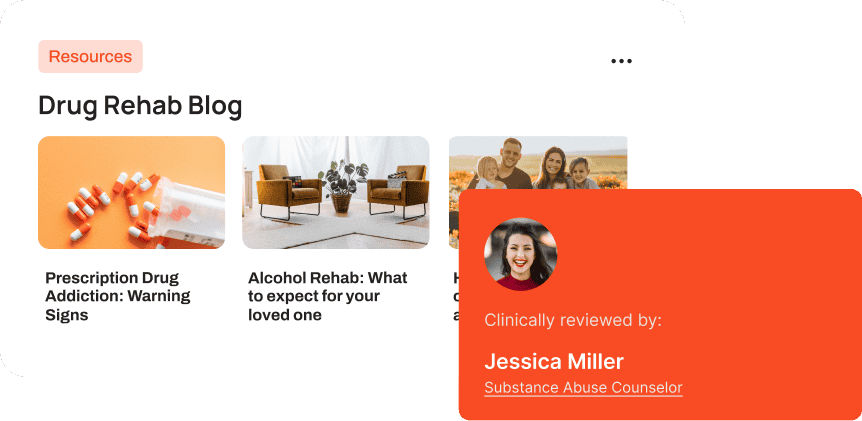
Common misconceptions about digital PR
Digital PR isn't press release distribution to wire services. It's not buying "guest post" links on random blogs. It's not pitching generic addiction content to anyone with a website. It's also not a replacement for SEO or content strategy—it's a multiplier. Digital PR works because you have something worth covering: original data, clinical expertise, unique treatment approaches, or insights that add value to the addiction and mental health conversation.
Essential elements of effective digital PR
Digital PR in behavioral health requires specific elements working together: linkable assets like original research and expert guides, established relationships with addiction and mental health journalists, thought leadership that demonstrates clinical authority, strategic outreach to relevant publications, and seamless integration with your existing SEO and content strategy. The goal isn't volume—it's authority. One backlink from a respected healthcare publication is worth more than fifty links from generic content sites.
Digital PR amplifies your content strategy
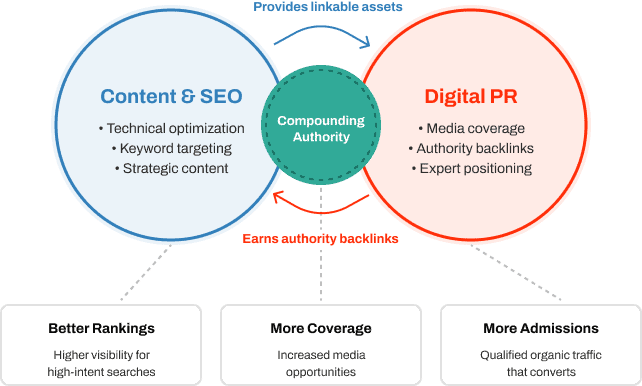
Digital PR amplifies your content strategy by earning authoritative backlinks that improve domain authority and search rankings. When your treatment center is cited in reputable publications, Google recognizes that authority signal. Combined with strategic content and technical SEO, digital PR creates a compounding effect—better rankings lead to more visibility, which leads to more coverage opportunities, which leads to even stronger rankings. This integration is what separates effective digital PR from traditional public relations.
THE KEY DIFFERENCES
One builds temporary awareness. The other builds compounding authority that improves rankings and drives organic admissions.
THE OLD WAY
Press releases to wire services
Media coverage without backlinks
Brand awareness focus
Vanity metrics (impressions, reach)
Disconnected from SEO strategy
One-time exposure with no lasting value
THE DIGITAL PR APPROACH
Strategic content creation & outreach
Earned backlinks from authoritative sources
SEO authority & rankings focus
Performance metrics (links, domain authority, rankings)
Integrated with content & technical SEO
Compounding long-term value that drives organic admissions
THE AUTHORITY COMPOUND EFFECT
Every quality backlink signals to Google that your treatment center is a trusted authority and strengthens your rankings and organic visibility.
STEP 1
STEP 2
STEP 3
STEP 4
THE INTEGRATION ADVANTAGE
Digital PR isn’t standalone. It multiplies the impact of your existing content marketing and technical SEO by earning the authoritative backlinks that move rankings.
Organic Admissions
Director of Organic Growth
Olivia leads organic growth at Webserv, bringing strategic experience from SaaS and B2B to regulated industries where precision matters. She's...
Organic Admissions
Organic Admissions Editor
Max is an SEO Content Editor at Webserv, where he writes, edits, and refines articles to help websites build authority...
Organic Admissions
Organic Admissions Account Manager
Chris Bannister brings a decade of ecommerce and website optimization experience to client engagements, with deep expertise in Shopify, conversion...
Organic Admissions
Organic Admissions Account Manager
Carmen started in traditional publishing, but fell in love with digital marketing and SEO. She prides herself on having an...
Organic Admissions
Organic Admissions Account Manager
Brennan is a results-driven digital marketing professional focused on helping brands grow through data-informed strategy and thoughtful execution. With experience...
COMMON QUESTIONS
Digital PR for treatment centers is the practice of earning authoritative backlinks and media citations by publishing newsworthy content that healthcare journalists, researchers, and trade publications want to reference. Done well, it builds domain authority, lifts organic rankings, and positions your facility as a recognized voice in addiction and mental health.
It is not press release distribution. Wire services produce volume, not authority. Treatment center digital PR is built on original research, proprietary data, clinical expert commentary, and pitching to journalists who actually cover behavioral health. The work is slower than buying links and far more durable.
For Webserv clients, digital PR runs in parallel with SEO and authority content. Earned mentions compound your existing rankings, and authority content gives journalists something credible to cite. The two channels were not designed to work alone.
Traditional PR optimizes for impressions and awareness. Digital PR optimizes for earned backlinks, search authority, and compounding rankings. A treatment center mentioned in a newspaper without a link gets short-term visibility. A treatment center cited by a healthcare publication with a follow link gets a permanent authority signal that lifts organic admissions for years.
The day-to-day work also looks different. Traditional PR focuses on press releases, media kits, and broad announcements. Digital PR for behavioral health requires research-grade content assets, beat reporter relationships, and targeted outreach to publications that influence both readers and Google's view of your site.
The metrics are different too. Traditional PR reports on impressions, share of voice, and reach. Digital PR reports on referring domains, domain authority lift, rankings, and organic admissions. Treatment center operators care about the second list, not the first.
Most treatment centers see referring-domain growth and ranking lifts within 4 to 6 months of consistent digital PR work, with admissions impact compounding from month 6 onward. Linkable assets need time to be created, pitched, and picked up. The earliest wins are usually local and trade publications, with larger national mentions coming later in the engagement.
The work is not linear. A single placement in a high-authority healthcare publication can outperform a dozen mid-tier links over time. We plan engagements with this in mind, prioritizing fewer, higher-quality assets over volume.
Programs that stay disciplined for 12 months see the strongest authority gains. Digital PR compounds, and the rankings improvements you earn in month 8 are still working for you 18 months later. Operators that rotate agencies every 6 months tend to lose this compounding effect.
Realistic placements for a behavioral health digital PR program include healthcare trade publications, addiction industry outlets, regional newspapers, clinical journals, podcast features, expert roundups, and citations in research articles. The mix depends on your geography, payer mix, clinical specialties, and the type of linkable assets we can build with your team.
We do not pitch generic addiction content to anyone with a website. We build expert positioning around what makes your facility credible, then pitch journalists and editors who cover the specific topics where your authority is strongest. That can be specialty programs, executive leadership, clinical innovation, or compliance.
One credible mention in a publication that healthcare journalists trust is worth more than fifty placements on low-authority content sites. We measure success by the quality and relevance of the publication, not the raw link count.
Direct link building (guest posts, paid placements, generic outreach) generates volume but rarely produces the high-authority links that move rankings for a treatment center. Digital PR is more expensive per link, but the links it earns are durable, high-authority, and signal to Google that real journalists vetted your facility. For most behavioral health operators, that quality gap is what determines whether organic admissions actually grow.
Treatment center backlinks are also under more scrutiny than most industries. Google's medical content quality guidelines penalize sites with low-quality or paid-looking link profiles. Digital PR generates the kind of organic, earned coverage that holds up under that scrutiny.
The math usually works in digital PR's favor for facilities investing in long-term organic admissions. The links compound, the brand authority compounds, and the cost-per-admit from organic search drops as the authority gap widens between your facility and competitors who only buy links.
Digital PR alone will improve your authority and produce some ranking lifts, but it works best as one part of an integrated organic strategy. Backlinks influence rankings. They do not replace technical SEO, on-page optimization, or content that matches search intent. Centers that try to grow organic admissions through digital PR alone usually plateau.
We sequence digital PR after the foundational SEO work is in place. Once your site can actually capture and convert organic traffic, the authority signals from PR compound much faster. Pitching links to a site that cannot rank for its own service pages is wasted effort.
The integration is what makes the model work. Digital PR amplifies content marketing, content marketing supports SEO, and SEO turns the authority signals into admissions. Operators who buy them as separate line items from separate agencies usually pay more for less.
MARKETING SERVICES FOR REHABS
Build sustainable, long-term patient acquisition through search visibility and content authority.
Drive immediate results with targeted advertising and optimized conversion experiences.
Streamline your admissions process with data-driven operations and conversion tracking.
Websites, landing pages, and ad creative built as part of the patient acquisition system.
Ready to Grow?
30-minute strategy session to discuss your census goals, current challenges, and how we can help you scale admissions sustainably.
Trusted by 200+ Treatment centers nationwide